EPA Set to Overturn Its Own Findings on Greenhouse Gases and Public Health
The Environmental Protection Agency (EPA) is preparing to dismantle the legal foundation that empowers it to regulate greenhouse gas emissions, a move set to reshape U.S. climate policy significantly.
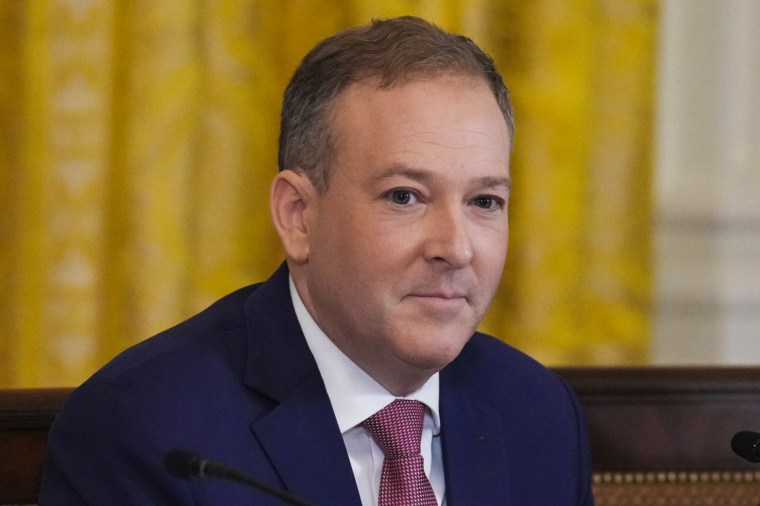
“President Trump will be joined by Administrator Lee Zeldin to formalize the rescission of the 2009 Obama-era endangerment finding,” stated White House press secretary Karoline Leavitt during a briefing. “This will be the largest deregulatory action in American history, and it will save the American people $1.3 trillion in crushing regulations.”
The endangerment finding, established in 2009, identifies greenhouse gases such as carbon dioxide and methane as contributors to global warming, posing threats to public health and welfare. This ruling serves as a critical element under the Clean Air Act, enabling regulations that set emissions standards for vehicles and require fossil fuel companies to disclose their emissions.
Should the repeal withstand anticipated legal challenges from environmental advocates, it could dismantle numerous U.S. policies aimed at curbing climate pollution.
Details surrounding the repeal remain sparse as the official text has yet to be released. However, a draft version from August hinted at the removal of all greenhouse gas emissions standards for motor vehicles. Leavitt indicated that this deregulation would lower costs for cars, SUVs, and trucks, suggesting that the final draft may also include vehicle emissions rollbacks.
Other climate regulations are also at risk. In June, Administrator Zeldin proposed a rule to eliminate carbon dioxide standards for power plants and has committed to reevaluating other policies reliant on the endangerment finding, including those governing methane emissions.
Manish Bapna, president and CEO of the Natural Resources Defense Council, characterized the expected repeal as “the single biggest attack in U.S. history on federal authority to tackle the climate crisis.”
“More and more people are suffering from man-made disasters, from heartbreaking flooding in Texas and North Carolina to the horrific fires around Los Angeles,” Bapna remarked. “Eliminating the endangerment finding is denying these events and the existence of climate change writ large.”
Conversely, The Heartland Institute praised the impending changes. James Taylor, its president, criticized the Obama administration’s determination that CO2 endangered human health as “scientifically flawed and blatant political pandering.”
The EPA now contends that the 2009 decision “unreasonably analyzed the scientific record,” claiming its scientific basis was overly pessimistic and not supported by subsequent data.
In its preliminary draft, the EPA asserted that the endangerment finding exaggerated heat wave risks and projected more warming than has occurred while downplaying benefits associated with increased carbon pollution, such as enhanced plant growth. Prominent scientific organizations have challenged these claims.
The agency also referenced court rulings since 2009, including West Virginia v. EPA, which limited its authority to regulate greenhouse gases. The Supreme Court ruled that the EPA lacks broad authority to shift energy production from coal to cleaner sources.
Many arguments in the preliminary rule stem from a controversial report commissioned by Energy Secretary Chris Wright. A judge recently ruled that Wright and the Energy Department violated transparency laws in forming the working group behind this report.
It remains uncertain whether the final rule will maintain these arguments or adapt based on public feedback.
In response to the EPA’s draft rule, scientific groups criticized the DOE report for suggesting that increased atmospheric carbon dioxide has a “greening” effect on the planet. The report also claimed no clear trend in extreme weather events, complicating attributions to climate change due to “natural climate variability, data limitations, and inherent model deficiencies.”
The American Geophysical Union condemned the report as “inaccurate and cherry-picked.”
“The climate is changing faster than ever before, driven by human activities,” they stated, emphasizing that greenhouse gas levels are at their highest in 800,000 years.
“The changing climate is directly causing or exacerbating global average temperature increases and extreme weather events such as hurricanes, floods, wildfires, and drought,” they added.
The National Academies of Sciences, Engineering and Medicine affirmed the accuracy of the endangerment finding in their own report.
A group of 85 climate scientists submitted a detailed rebuttal of the DOE report, asserting it “exhibits pervasive problems with misrepresentation” and fails to meet necessary standards for policy-making support.
According to Copernicus, last year was among the three warmest on record. The past eleven years have consistently ranked as the warmest in history.
Under President Trump’s administration, the EPA has aggressively rolled back environmental regulations. Zeldin previously vowed in an op-ed to drive “a dagger through the heart of climate-change religion.”
This rollback of the endangerment finding is expected to ignite significant legal battles ahead.
The Natural Resources Defense Council has pledged to contest the EPA’s actions vigorously. David Doniger, one of its lawyers, stated it would be “impossible” for the agency to defend its rule change in court due to overwhelming evidence linking greenhouse gas pollution to climate change and its associated impacts like wildfires and floods.