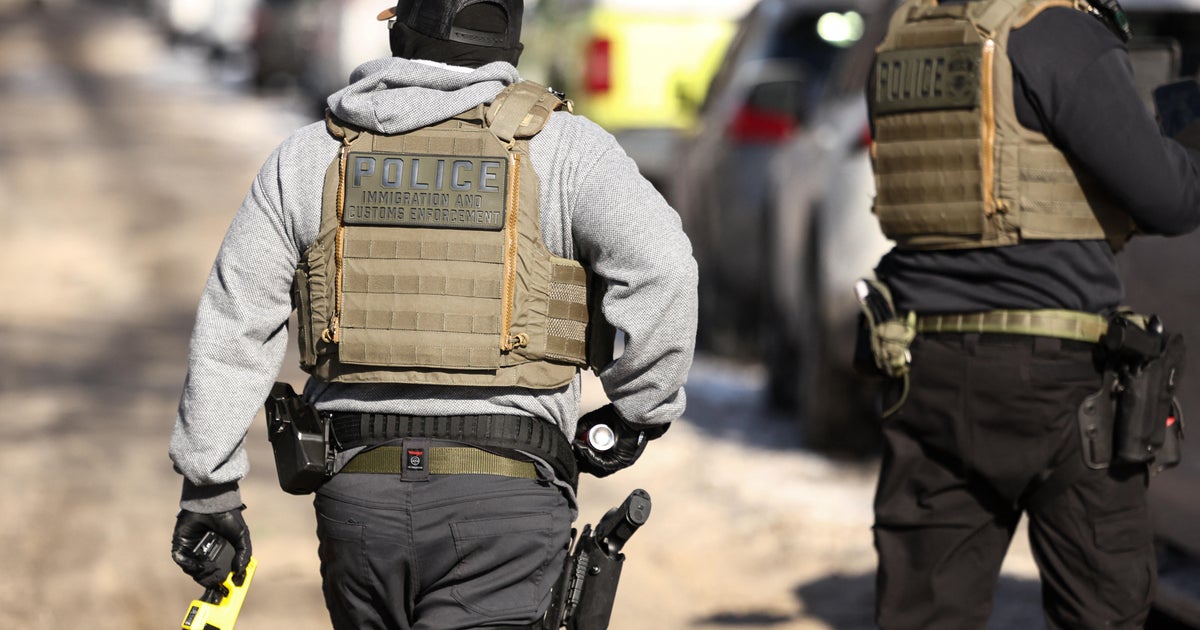
Fewer than 14% of Immigrants Arrested by ICE in Trump's First Year Back in Office Had Violent Criminal Records, Documents Reveal
Less than 14% of nearly 400,000 immigrants apprehended by Immigration and Customs Enforcement (ICE) during President Trump's first year back in office had violent criminal records, according to an internal Department of Homeland Security (DHS) document. This information, previously undisclosed, sheds light on the nature of arrests made under the Trump administration's extensive deportation efforts.
The statistics reveal a stark contrast to the Trump administration's claims that its immigration enforcement primarily targets the most dangerous individuals. The document indicates that while ICE has ramped up arrests significantly since Trump resumed his presidency, the majority of those apprehended do not have violent crime convictions.
For instance, despite frequent assertions from Trump and his aides about focusing on murderers and rapists, the data shows that fewer than 2% of those arrested faced homicide or sexual assault charges. Additionally, only 2% were linked to gang affiliations. This raises questions about the narrative surrounding the deportation strategy.
Notably, nearly 40% of individuals arrested by ICE during this period had no criminal record whatsoever. They were primarily accused of civil immigration violations, such as overstaying visas or residing in the U.S. without legal status. These cases are typically handled in civil court rather than criminal proceedings.
Public sentiment regarding Trump's deportation policies has shifted since he took office. While initial support was robust during the 2024 presidential campaign, recent polls indicate a decline in approval. A survey conducted last month revealed that support for Trump's immigration enforcement dropped to 46%, down from 59% at the beginning of his second term. Over 60% of respondents expressed concerns that immigration agents were being excessively harsh in their operations.
The DHS document outlines that ICE made approximately 393,000 arrests between January 21, 2025, and January 31 of this year. Of these arrests, around 229,000 were classified as "criminal aliens," meaning they had prior criminal charges or convictions. In contrast, about 153,000 arrests fell under "other administrative arrests," involving individuals without any criminal history.
In total, ICE's administrative arrests—including those with criminal backgrounds—more than tripled compared to fiscal year 2024 under the Biden administration, which recorded only 113,000 administrative arrests. However, the proportion of arrests involving individuals with criminal histories decreased from 72% in fiscal year 2024 to nearly 60% during Trump's first year back in office.
The data also highlights that approximately 7,500 arrests—about 1.9%—involved individuals accused of gang affiliations, specifically with groups like Tren de Aragua, a criminal organization originating from Venezuelan prisons. Trump had previously emphasized targeting this gang in his crackdown, deporting over 200 alleged members to a notorious prison in El Salvador. Investigations revealed that many of these individuals lacked significant criminal records.
The internal DHS document details the most serious charges against those arrested with criminal histories. It lists 2,100 arrests for homicide-related offenses; 2,700 for robbery; and 5,400 for sexual assault. Additionally, around 43,000 individuals faced assault charges or convictions. Other notable figures include approximately 1,100 arrests for kidnapping and 350 for arson.
When combined, these violent crime-related arrests account for roughly 13.9% of all ICE apprehensions during this period. The document further notes that ICE arrested 22,600 individuals with drug-related charges and another 6,100 for weapons offenses. Nearly 30,000 were charged with driving under the influence or intoxication, while about 5,000 faced burglary charges.
Moreover, around 118,000 detainees had charges for "other" crimes, which may include immigration-related offenses such as illegal entry or re-entry after deportation—misdemeanors or felonies depending on circumstances.
It is important to note that this data does not encompass arrests made by Border Patrol agents, who have been deployed far from the U.S.-Mexico border to cities like Los Angeles and Minneapolis. In these urban areas, aggressive arrest operations have targeted day laborers and questioned individuals about their immigration status indiscriminately.