RFK Jr. Reveals How Mike Tyson Landed in a Super Bowl Ad Tackling Junk Food Addiction

On Sunday, Health and Human Services Secretary Robert F. Kennedy Jr. lauded boxing icon Mike Tyson for his heartfelt appearance in a Super Bowl advertisement that confronts junk food addiction while championing healthier dietary choices.
“This ad is extraordinarily powerful,” Kennedy remarked during an interview on The Sunday Briefing. “I believe it stands as the most significant advertisement in Super Bowl history.”
He described junk food as a form of “spiritual warfare” that has inflicted “devastating” consequences on the health of Americans.
Initially, Tyson received a scripted version of the ad, but he soon began to share his own struggles with food addiction, adding a personal touch to the message.
In the poignant black-and-white clip released on Friday, Tyson reflects on the death of his sister due to obesity-related issues and opens up about his own battles with junk food. “I was so fat and nasty, I would eat anything,” he admits, revealing he once weighed around 345 pounds.

“Something has to be done about processed food in this country,” Tyson insists, as the video encourages viewers to visit RealFood.gov, a new initiative from the Trump administration promoting revised healthy eating guidelines that advocate for the elimination of processed foods.
The advertisement is backed by MAHA Center Inc., a governmental advocacy organization closely associated with Kennedy.
Leading the group is Tony Lyons, a supporter of Kennedy who also manages an MAHA fundraising initiative.
However, not all experts are convinced by the ad's approach. Lindsey Smith Taillie, an associate professor of nutrition at the University of North Carolina Gillings School of Global Public Health, expressed concerns about the ad’s focus on shame. “It certainly isn’t an effective strategy for promoting better eating; individual shame doesn’t work,” she stated.
While many have applauded the administration's push for whole foods, there are hesitations regarding its new food pyramid. This model emphasizes cutting out processed foods and features an inverted pyramid design that places meat, cheese, and dairy at the forefront.
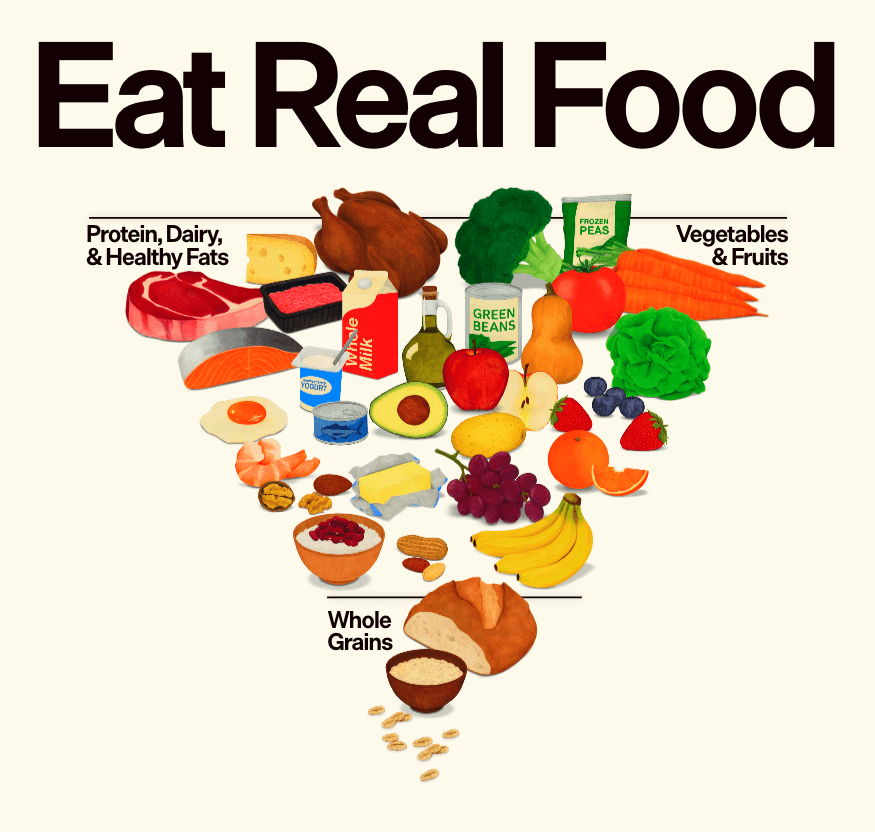
“What first struck me was the new inverted pyramid, where meat, butter, and whole milk are given significant prominence,” noted Susan Mayne, a professor of epidemiology at Yale School of Public Health, in a recent interview. “Protein is highlighted, yet plant-based proteins like beans are overlooked.”
“This pyramid suggests a shaky foundation, which ironically aligns with some of the underlying science,” she added, critiquing the new guidelines.