Trump Administration Faces Legal Action Over Historical and Scientific Censorship in National Parks
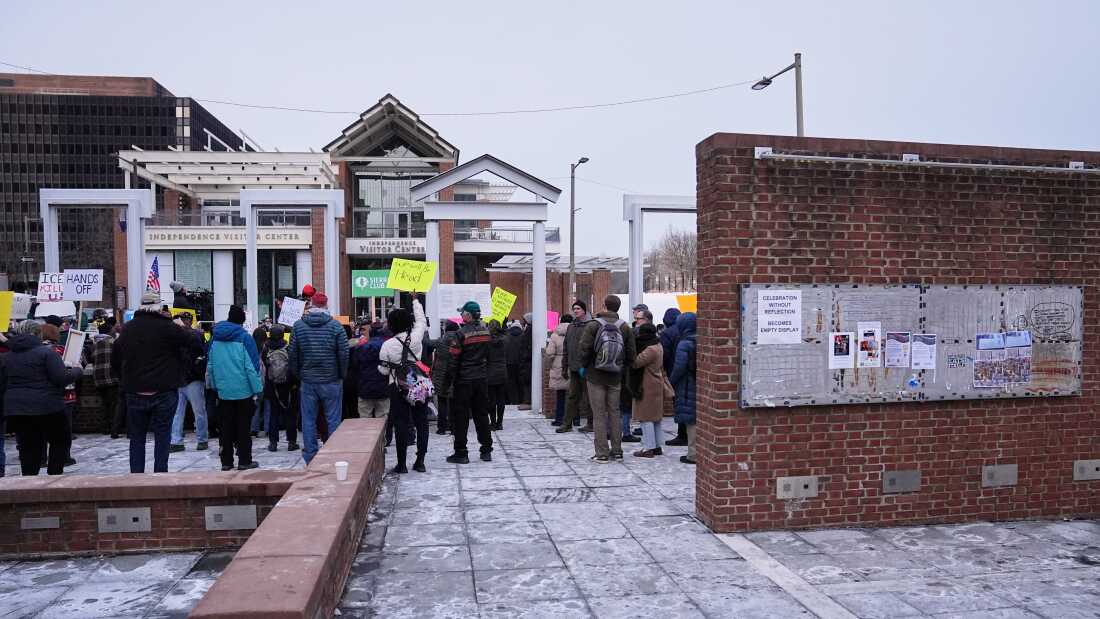
Protesters gathered outside the President's House Site in Philadelphia on February 10, 2026, voicing their discontent over the removal of panels that detailed the history of slavery. The scene was a stark reminder of the ongoing battle over how history is presented in public spaces.
In a significant legal move, conservation and historical organizations have initiated a lawsuit against the Trump administration, claiming that recent policies from the National Park Service are systematically erasing vital historical and scientific information from America's national parks.
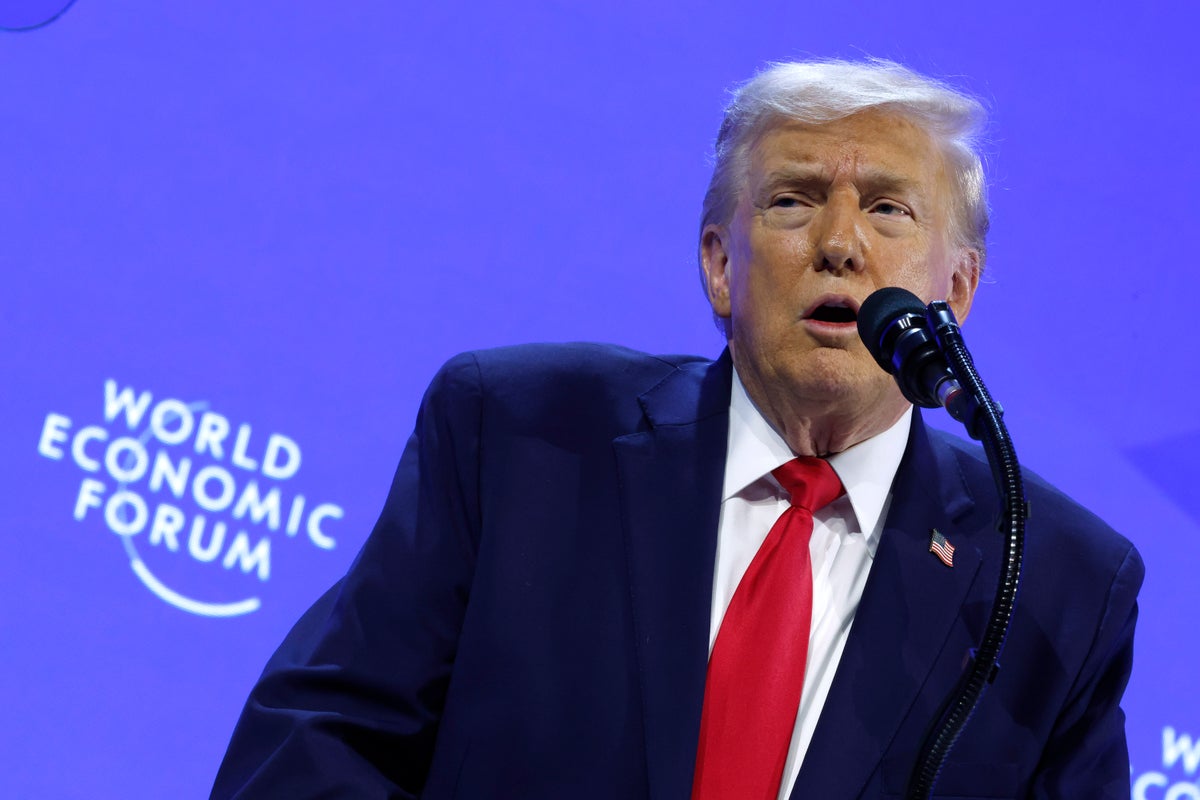
The lawsuit, lodged in Boston, asserts that directives from President Donald Trump and Interior Secretary Doug Burgum have compelled park staff to eliminate or modify exhibits that convey accurate accounts of U.S. history and scientific facts, particularly regarding slavery and climate change.
In a related case, LGBTQ+ rights advocates and historic preservationists have also taken legal action against the park service for the removal of a rainbow Pride flag from the Stonewall National Monument, a site pivotal to the LGBTQ+ rights movement.
These changes stem from an executive order issued by Trump aimed at "restoring truth and sanity to American history" across museums, parks, and landmarks. This directive instructed the Interior Department to ensure that these sites refrain from displaying content that could be perceived as disparaging to Americans, both past and present. Following this, Burgum mandated the elimination of what he termed "improper partisan ideology" from federally controlled public exhibits.
The coalition behind the lawsuit contends that a federal initiative to scrutinize interpretive materials has intensified recently, resulting in the removal of numerous exhibits addressing slavery, civil rights, Indigenous peoples' treatment, climate science, and other essential aspects of American history.
This legal action involves several prominent organizations, including the National Parks Conservation Association and the American Association for State and Local History. It coincides with a federal judge's ruling mandating the restoration of an exhibit detailing nine enslaved individuals who lived at George Washington's former residence in Philadelphia.
Last month, explanatory panels were taken down from Independence National Historical Park, where Washington resided with his slaves during the 1790s. The judge's order for restoration was issued on Presidents Day, a holiday dedicated to Washington's legacy.
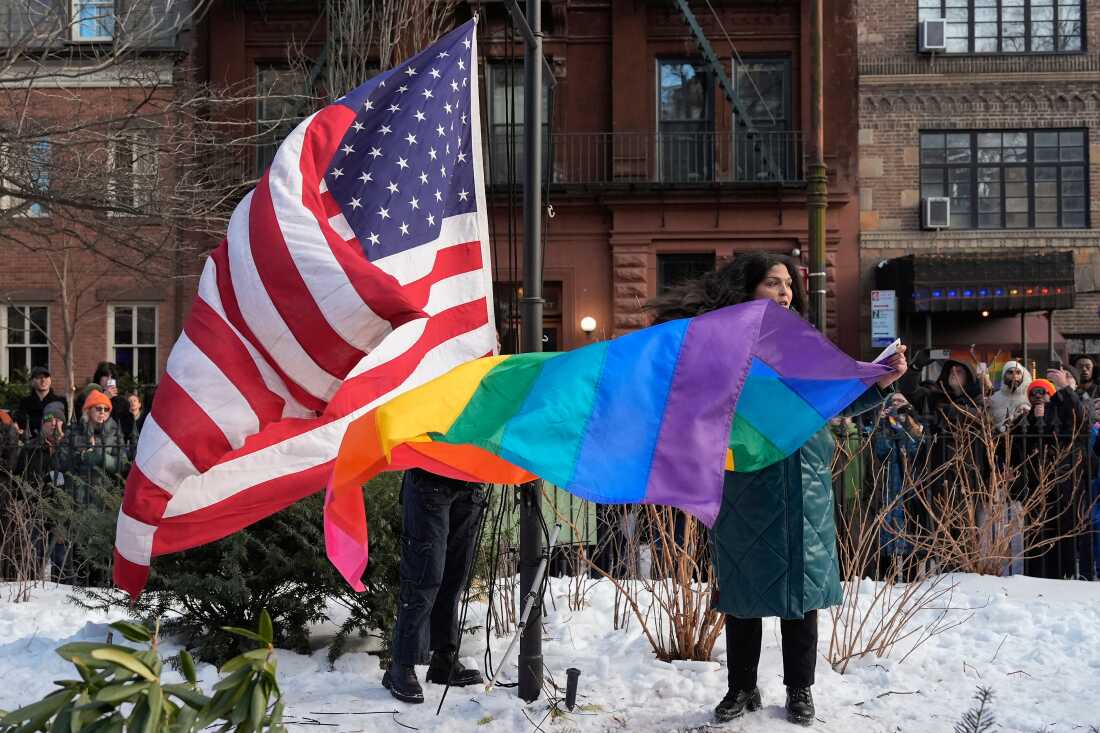
In New York, activists prepared to raise a rainbow flag in Christopher Park across from the Stonewall Inn on February 12, 2026, shortly after its removal by the National Park Service under guidance from the Trump administration.
Beyond Philadelphia, the park service has identified numerous interpretive materials related to key civil rights milestones for removal. For instance, approximately 80 items have been flagged at the Selma to Montgomery National Historic Trail in Alabama.
Additionally, an exhibit at Brown v. Board of Education National Historical Park in Kansas has been targeted due to its mention of "equity." Signage at Grand Canyon National Park that described how settlers displaced Native American tribes for park establishment has also been removed. At Glacier National Park in Montana, officials ordered the elimination of materials discussing climate change's impact on glaciers.
"Censoring science and erasing America's history at national parks are direct threats to everything these amazing places—and our country—stand for," stated Alan Spears, senior director of cultural resources at the parks conservation association.
"National parks serve as living classrooms for our country," Spears continued. "As Americans, we deserve national parks that tell stories of our country's triumphs and heartbreaks alike. We can handle the truth."
The Interior Department announced it has appealed the court's ruling regarding the Philadelphia exhibit. A spokesperson indicated that updated interpretive materials would have been installed soon if not for the court order.
White House spokeswoman Taylor Rogers characterized the new lawsuit as premature and based on "inaccurate and mischaracterized information." She emphasized that the Department of the Interior is conducting an ongoing review of American history exhibits in line with the president's executive order.
U.S. District Judge Cynthia Rufe ruled that all materials from the Philadelphia exhibit must be restored while legal challenges regarding their removal proceed. She prohibited Trump officials from replacing them with altered narratives.
Rufe's order began with a quote from George Orwell's "1984," likening the Trump administration's actions to those of a totalitarian regime that manipulated historical records.
The lawsuit concerning the Stonewall flag describes its removal as part of a broader pattern of discrimination against the LGBTQ+ community by the Trump administration.
The Pride flag was first installed in 2022 as a permanent fixture on federal land. Following its removal this month, park service officials cited a memo restricting displays to specific flags while allowing exceptions for historical context.
The lawsuit argues that the rainbow flag provided such context and highlights inconsistencies in how other banners are treated. Activists raised their own Pride flag at Stonewall shortly after its removal.
The Interior Department reiterated previous criticisms directed at New York City and its Democratic leaders, who are not involved in this lawsuit.
Jeff Mow, former superintendent at Glacier National Park, criticized Trump's order as detrimental to public understanding. He stated that it complicates efforts to convey truthful narratives about America's past.
"You cannot tell the story of America without recognizing both the beauty and the tragedy of our history," remarked Skye Perryman, president and CEO of Democracy Forward, which filed the lawsuit on behalf of advocacy groups.