




Artemis II Crew Rockets Back to Earth, Splashdown Imminent
HOUSTON, April 10 - Four astronauts aboard the Orion spacecraft are racing back to Earth after completing the first crewed moon mission in over fifty years. The gumdrop-shaped vessel is on a trajectory for a splashdown in the Pacific Ocean, just off Southern California.
The concluding phase of NASA’s 10-day mission kicked off with the separation of Orion’s crew capsule from its service module. This was followed by a fiery re-entry through Earth’s atmosphere, which included a six-minute radio blackout before the capsule is expected to parachute into the ocean.
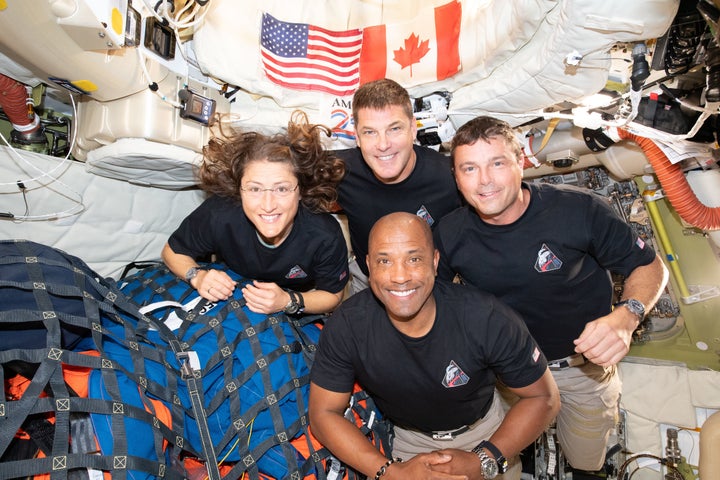
If everything unfolds as planned, U.S. astronauts Reid Wiseman, Victor Glover, and Christina Koch, alongside Canadian astronaut Jeremy Hansen, will find themselves safely afloat in the ocean aboard their capsule, named Integrity, shortly after 8 p.m. ET (0000 GMT) near San Diego.
Launched from Cape Canaveral, Florida, on April 1, the crew was propelled into an initial Earth orbit by NASA’s Space Launch System rocket before journeying around the far side of the moon, reaching depths of space previously untraveled by humans.
This mission marks a significant milestone as these astronauts are the first to approach the moon since the Apollo program of the 1960s and ’70s. Notably, Glover, Koch, and Hansen made history as the first Black astronaut, first woman, and first non-U.S. citizen to participate in a lunar mission.
Following the uncrewed Artemis I test flight in 2022, this voyage serves as a crucial rehearsal for future plans to land astronauts on the lunar surface for the first time since Apollo 17 in late 1972.
The Artemis program aims to establish a sustainable presence on the moon, paving the way for eventual human exploration of Mars.
In a historical echo of the Cold War era during Apollo, Artemis II unfolds amid political and social unrest, including an unpopular military conflict in the U.S. For many captivated by this lunar endeavor, it underscores the triumphs of science and technology at a time when trust in big tech is waning. Public opinion polls indicate widespread support for the mission's objectives.
The return journey will test Orion's heat shield, which faced unexpected challenges during re-entry in the 2022 test flight. Consequently, NASA engineers adjusted Artemis II's descent trajectory to mitigate heat buildup and reduce the risk of capsule incineration.
As Orion hurtles into the atmosphere at approximately 25,000 miles per hour (40,235 kph), external temperatures are anticipated to reach around 5,000 degrees Fahrenheit (2,760 degrees Celsius).
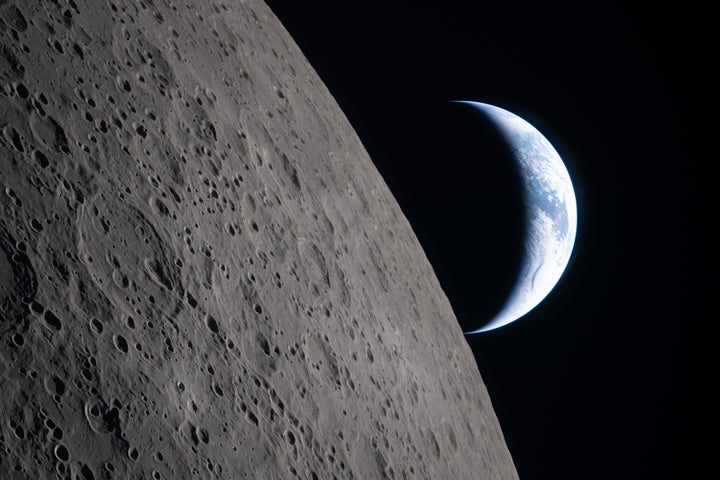
This recalibrated descent path has also narrowed the potential splashdown zone, limiting landing options should adverse weather arise at sea. However, NASA officials reported favorable forecasts for the preferred splashdown area.
Equally critical to the mission's success are factors such as maintaining a precise descent path and re-entry angle through a series of course-correction burns from its jet guidance thrusters.
The final of three propellant burns was scheduled for Friday afternoon, approximately five hours prior to splashdown.
Once Orion reaches the upper atmosphere, it will take less than 15 minutes—this includes a six-minute radio blackout—before two sets of parachutes deploy and the capsule descends into the ocean.
NASA estimates it will take about an hour for recovery teams to secure Orion, lift it onto a ship, and assist each astronaut in exiting the capsule one by one.
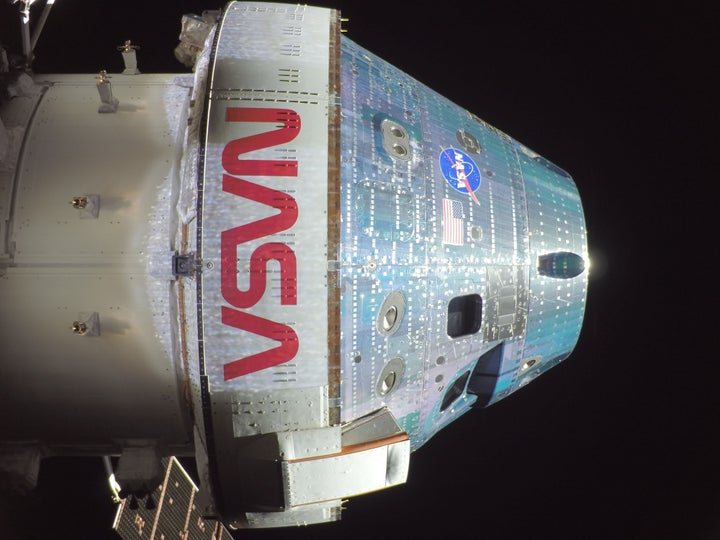
During its peak altitude, the crew reached an impressive distance of 252,756 miles from Earth, surpassing the previous record of roughly 248,000 miles set by Apollo 13 in 1970.