Ex-General Decries Military's Dismissal of Trans Troops as a Grave Error
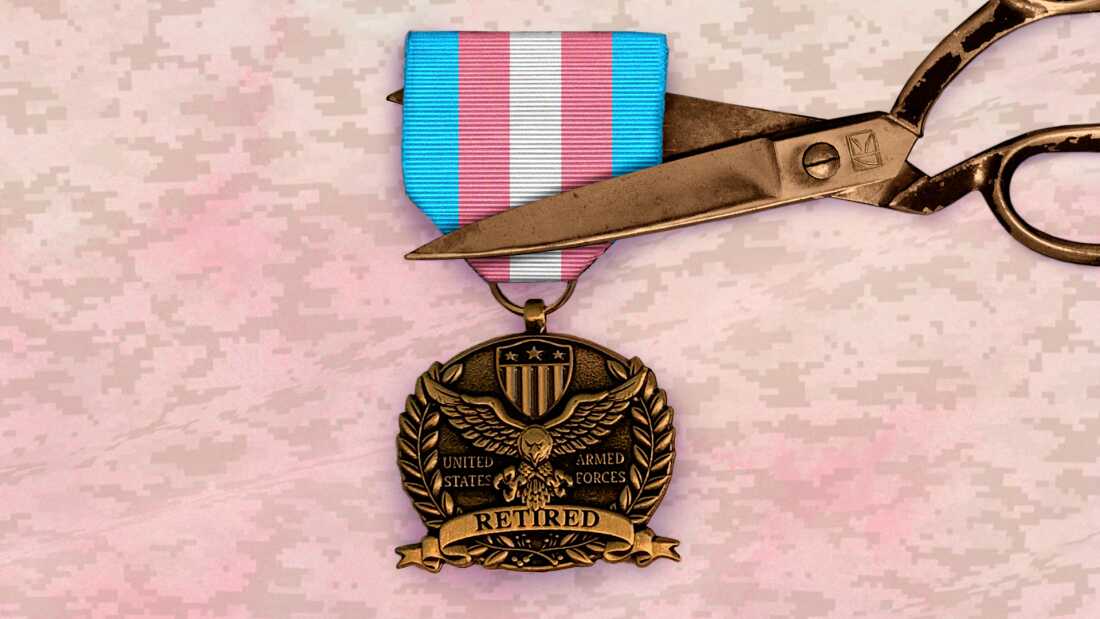
Transgender service members are being compelled to retire from the military due to the Trump administration's renewed ban.
As retired four-star General Stanley McChrystal, 71, steps up to the podium, applause fills the room.
"I can't believe he's here," a voice murmurs from the crowd.
McChrystal, seemingly attuned to the sentiment, addresses the audience directly: "First off, we shouldn't be here."
The occasion is a retirement ceremony for five transgender service members who have been forcibly separated from their posts. This event, typically organized by the Pentagon, is instead hosted by the Human Rights Campaign in Washington, D.C.
To the left of the stage, mannequins display the retirees' uniforms—garments they are barred from wearing during this significant moment.
"When these professionals finally decide to retire," McChrystal remarks, "it should happen on parade fields, in offices, on the deck of ships… wherever the Space Force goes, I don't know." The audience chuckles, appreciating his light-heartedness amid a somber atmosphere.
McChrystal gained prominence during the Iraq and Afghanistan wars, commanding Joint Special Operations from 2003 to 2008 and leading all U.S. forces in Afghanistan from 2009 to 2010. Known as "the soldier monk" for his disciplined lifestyle, he oversaw operations that led to significant captures and airstrikes.
Now dressed in a suit and tie, he presides over this poignant ceremony. In an interview prior to the event, he expressed his support for transgender service members: "I think it's unfortunate and I think it's unfair," he stated. "But I think it's heartening that a number of people would come together to recognize this publicly."
As the ceremony unfolds, the emcee announces the names of those being honored: Col. Bree Fram, Cmdr. Blake Dremann, Lt. Col. Erin Krizek, Chief Petty Officer Jaida McGuire, and Sgt. 1st Class Cathrine Schmid.
Each retiree is introduced by a loved one who shares heartfelt words. "Mom," Krizek's daughter Ozzie says tearfully, "thank you for serving our country, for leading with heart and spirit and showing me how long hours can still be fun. I love you so much and I'm grateful to be your daughter."
As each retiree speaks, their pride mingles with pain. "Best job ever," Krizek reflects. "And I love submarines, and I love sailors. And I miss it dearly."
Fram follows, having previously held the title of the highest-ranking transgender member of the U.S. armed forces. An astronautical engineer with deployments in Iraq and Qatar, she now serves as an officer in the United States Space Force.
At the microphone, she asserts: "Freedom is not self-sustaining. It is not inevitable. It requires people again and again who are willing to stand up and say: 'If not me, then who?'"

She then encourages trans service members and veterans present to stand. The crowd stirs as several rise at attention.
"Look around this room," Fram urges. "These are people who deployed, commanded, innovated, fixed what was broken and made the mission happen."
Among those standing is U.S. Army Maj. Kara Corcoran, whose 17 years of service include combat experience and leadership roles. Commissioned in 2008 as an infantry officer, she served two tours in Afghanistan and attended Ranger and Airborne schools.
Corcoran is currently navigating her separation from the military. She recalls how the first Trump administration provided a narrow window for transgender individuals already serving to remain in uniform by obtaining a medical diagnosis for gender dysphoria within a limited timeframe.
"It was at a very inopportune time because my ex-wife was eight months pregnant with our twin daughters," Corcoran recounts. "So I quickly rushed into the troop medical clinic."
She secured her diagnosis just in time to retain her position. However, after Trump's reelection, new guidance classified gender dysphoria as a disqualifying condition for service.
In a memo issued in February 2025, Defense Secretary Pete Hegseth justified this reversal: "The department must ensure it is building 'one force' without subgroups defined by anything other than ability or mission adherence." He argued that dividing troops along identity lines undermines military strength.
"It's systematic oppression," Corcoran asserts. "You're creating unnecessary paperwork for commanders and service members to navigate when it should be the same standard of care as anyone else with a shoulder surgery or knee surgery."
W, a trans woman serving in the Navy who prefers to remain anonymous due to her stealth status, echoes Corcoran's sentiments: "Say you were born with bad eyesight and you could get Lasik surgery to fix your eyes," she explains. "But there are people spinning rhetoric that you would be inferior or you would never truly have 20/20 vision because you got surgery and weren't born with it."
W describes her experience as largely supportive among colleagues who strive to respect her privacy while adhering to military regulations.
A fellow sailor known only as A shares a similar experience but notes differences based on their transition timeline. "It's two very different experiences," he says. "You've got people like me who transitioned prior to the military." He highlights how his colleagues have worked to maintain discretion regarding his identity.
A expresses gratitude for this protection but also frustration at being unable to fully contribute to his unit's mission due to administrative constraints surrounding his identity.
The scrutiny extends beyond transgender service members; recent directives from the Pentagon have initiated reviews of women in ground combat roles to assess their effectiveness within infantry units.
Before his appointment as Secretary of Defense, Hegseth openly opposed women serving in combat positions but later softened his stance during confirmation hearings.

During a September speech at Quantico, he announced plans to rename the Department of Defense as the Department of War while denouncing what he termed "woke" military practices.
Hundreds of military leaders were summoned to attend this address in person, followed by a memo mandating all troops review its content.
A reflects on his chain of command's skepticism regarding these initiatives: "My chain of command was pretty outspoken. Saying, like, why are we wasting our time with this?"
Military attorney Priya Rashid has been working with several transgender service members facing separation under these new policies. She has witnessed firsthand the Pentagon's efforts since Trump's second term began.
Rashid highlights that military separation boards are now required to find any transgender servicemember with documentation of gender dysphoria unfit for service—a process she describes as predetermined and lacking due process.
"The government has really set itself up to purge these people out of our ranks," she states.
Moreover, trans servicemembers cannot amend their medical records following treatment for gender dysphoria—a privilege afforded to others with different medical conditions.

"That is common," Rashid explains. "But the government is choosing not to allow those with gender dysphoria to engage in their medical access rights."
Rashid also criticizes claims that trans service members impose excessive medical costs on the Pentagon: "So when I go to these board members who are the jury, I said, we have spent $22,000 to assemble us all here to discuss somebody's genitals." She emphasizes that this expenditure reflects misplaced priorities within military funding.
The emotional toll on affected individuals is profound; Rashid notes an alarming rise in suicides linked to administrative separations: "There have been several suicides in the last year," she reveals. "And we believe that they are directly related to the administrative separation plan."
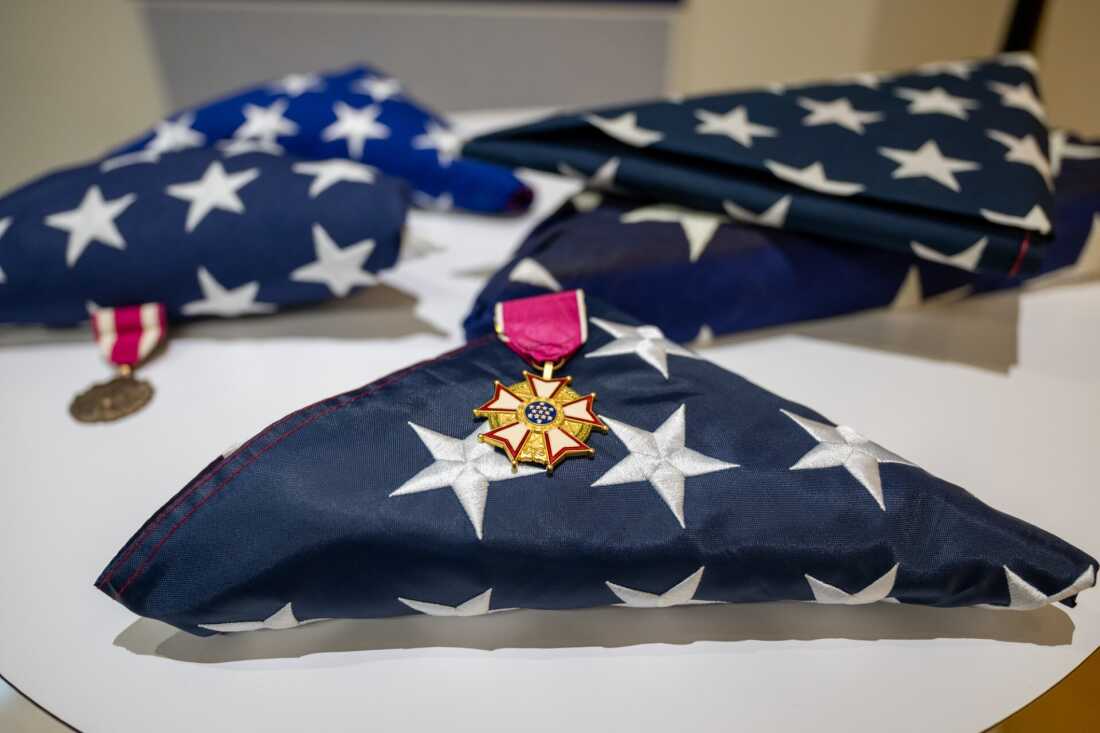
As retirees receive their folded flags and prepare for their final walk-outs, McChrystal reiterates that these separations are detrimental to mission readiness—a core value claimed by Hegseth amid ongoing global conflicts.
"God forbid if we had a major war and we need to start calling everybody up," McChrystal warns. "I would hope that we would not suddenly say we are only going to draft people of a certain type because we wouldn't have enough."
Fram expresses gratitude towards McChrystal for restoring some dignity: "I think he was a big part of giving people back some of that dignity," she reflects later. "When you hear from a four-star general that you matter? I am sure we saved lives that day."
<