Rex Heuermann Admits Guilt in Gilgo Beach Murders, Confesses to Killing Eight Women
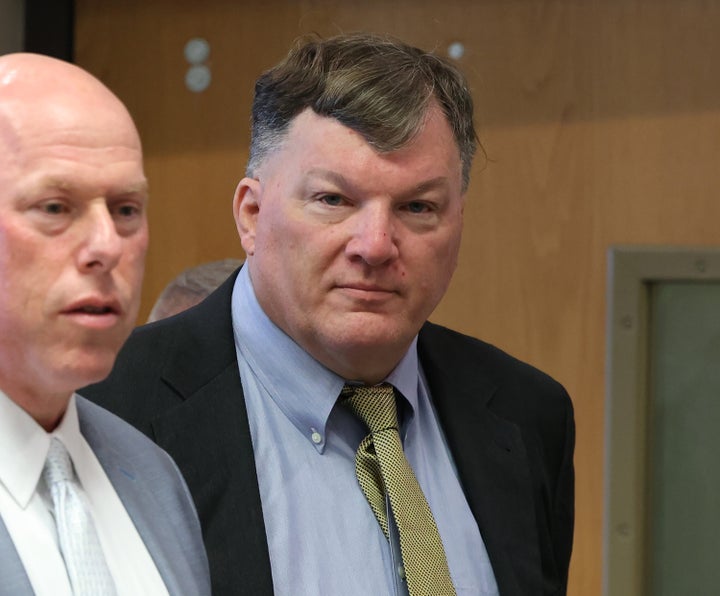
RIVERHEAD, N.Y. — In a courtroom filled with emotional onlookers, Rex Heuermann, a 62-year-old architect from Long Island, confessed to the chilling reality of his double life as a serial killer. On Wednesday, he pleaded guilty to the murders of seven women and acknowledged the killing of an eighth, marking a significant moment in the long-unsolved Gilgo Beach case.
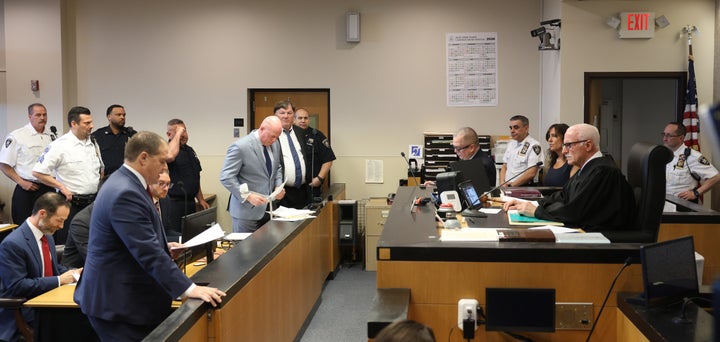
Heuermann's admission came as he faced a room of reporters, police officers, and grieving family members. As he recounted his heinous acts, some relatives wept openly. The court is set to impose a life sentence without the possibility of parole in June.
His guilty pleas encompass three counts of first-degree murder and four counts of intentional murder, bringing closure to a case that has haunted investigators and families for years. Notably, he also confessed to the murder of Karen Vergata, whose death was not part of the charges against him.
“This has been a long journey of hope,” said Melissa Cann, sister of victim Maureen Brainard-Barnes, fighting back tears at a news conference shortly after the hearing. “Today, that long, painful journey brings us to this moment.”
In stark contrast to the gravity of his admissions, Heuermann appeared detached in court, dressed in a black suit coat and white shirt. He answered questions from Suffolk County District Attorney Ray Tierney and the judge without emotion, never glancing at the packed gallery.
The victims, many of whom were sex workers, were murdered over a span of 17 years. “This defendant walked among us play-acting as a normal suburban dad when in reality, all along, he was obsessively targeting innocent women for death,” Tierney stated during a post-hearing press conference.
He expressed gratitude to the victims’ families for their resilience and acknowledged the efforts of the Gilgo Beach Homicide Investigation Task Force, which utilized DNA evidence from a discarded pizza crust to crack the case.
Gloria Allred, representing some victims' families, highlighted the tragic circumstances surrounding the women’s lives. “They were young mothers trying to support their children,” she remarked. “Little did they know that the defendant did not care about their hopes and dreams.”
Elizabeth Baczkiel, whose daughter Jessica Taylor was among Heuermann's victims, shared her relief: “I am glad that this is over as far as him pleading guilty. It took a big chunk of stress off of me and my family.”
Heuermann’s ex-wife, Asa Ellerup, and their daughter were present at the hearing but maintained their innocence regarding any involvement in his crimes. Their attorney emphasized that they had no knowledge of Heuermann's actions.
Heuermann’s attorney explained that the decision to plead guilty was made to spare victims’ families and his own from the trauma of a trial. When asked if Heuermann felt remorse, his attorney suggested that he might express something at sentencing.
As part of his plea agreement, Heuermann will cooperate with the FBI’s behavioral analysis unit in an academic capacity. The investigation into the Gilgo Beach murders began in late 2010 when multiple sets of human remains were discovered along Long Island’s South Shore.
The remains of six victims were found near Gilgo Beach, while another was located over 60 miles away in the Hamptons. Despite extensive media coverage and public interest, including documentaries and films, the investigation faced numerous challenges over more than a decade.
In 2022, following the formation of a new task force, detectives identified Heuermann as a suspect through vehicle registration records linked to a pickup truck seen near one of the victims' last known locations.
Heuermann lived in Massapequa Park, just a short drive from where many victims disappeared. Investigators uncovered evidence connecting him to burner phones used to contact victims and analyzed his internet history for disturbing content related to violence and the Gilgo Beach case.
To obtain DNA evidence, surveillance teams tracked Heuermann in Manhattan and collected remnants from his lunch—a box containing pizza crusts—leading to a match with DNA found on burlap used in one murder. He was arrested in July 2023.
On his computer, investigators discovered what they described as a “blueprint” for his crimes, including detailed checklists for committing murders while minimizing noise and destroying evidence.