South Texas Builders Brace for Impact as Trump's Immigration Policies Hit Home
PHARR, Texas — A year after President Trump reshaped the political landscape of the Rio Grande Valley, his immigration policies are colliding with the region's labor needs.
Homebuilders express deep concern over the future of their projects, citing a shortage of essential workers like framers and drywallers. Many of these workers have either been detained during immigration raids or are too fearful to show up for work.
“If this continues, we’re done,” said Ronnie Cavazos, president of the South Texas Builders Association, during a recent luncheon in McAllen. His words echo the sentiments of many in the industry who recognize the heavy reliance on immigrant labor, much of it undocumented.
Despite a high immigrant population, the region has largely avoided significant confrontations over Trump’s immigration policies. Interestingly, many residents support stringent border enforcement and deportation efforts.
However, the repercussions of Trump's mass deportation strategy are palpable. Business owners report that while construction is most directly affected, other sectors like restaurants and retail are also feeling the strain.
Jaime Lee Gonzalez, a realtor in McAllen, noted that an investor hesitated to purchase over 100 lots due to concerns about labor availability when construction begins.
Maria Vasquez, navigating a grocery store parking lot, shared her family's financial adjustments as her husband’s hours dwindle due to stalled construction. “You can’t negotiate bills like rent or utilities,” she explained. “So you cut back on food.”
While builders acknowledge inflation and interest rates as contributing factors, Mario Guerrero, executive director of the builders association, emphasized that immigration arrests represent a critical blow to their livelihoods.
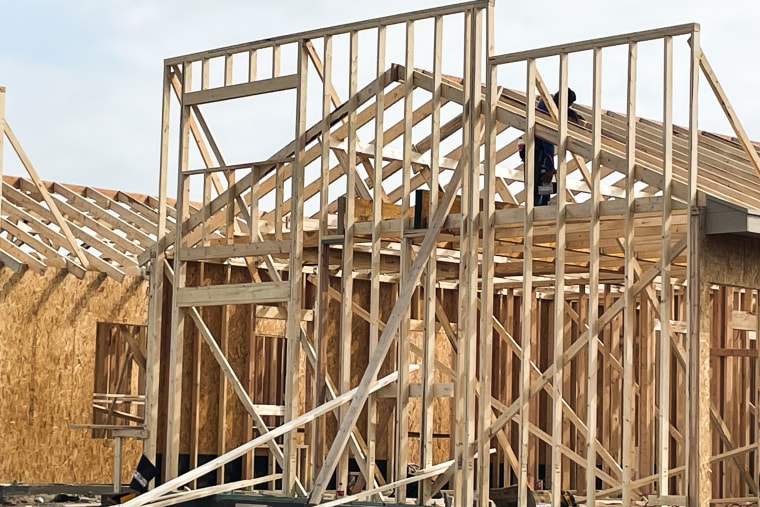
“We sell flooring and tile to contractors, but they can’t pick up orders because they lack installers,” said Luis Rodriguez from Materiales del Valle in McAllen.
Xavier Vazquez, who runs Summit Valley Homes, lamented that nearly all his stucco crew had been arrested. Finding replacements has proven difficult as many potential workers are also apprehensive.
Paul Rodriguez, CEO at Valley Land Title Co., observed a decline in construction loans since last summer, attributing it to ICE raids at job sites. “Many workers may be undocumented,” he noted.
Delays in construction lead to loan extensions, which incur additional costs. Members of the South Texas Builders Association recently visited Washington to urge the administration to reconsider detaining workers who haven’t committed serious crimes.
Guerrero likened their situation to agriculture, which has long depended on unauthorized labor—about 40% as of 2022 according to federal data.
The American Immigration Council estimates that around 23% of construction workers in Texas are undocumented, with many in the Rio Grande Valley believing the figure is significantly higher.
The White House responded by highlighting an executive order aimed at workforce preparedness, which includes creating apprenticeships and streamlining visa processes for temporary workers.
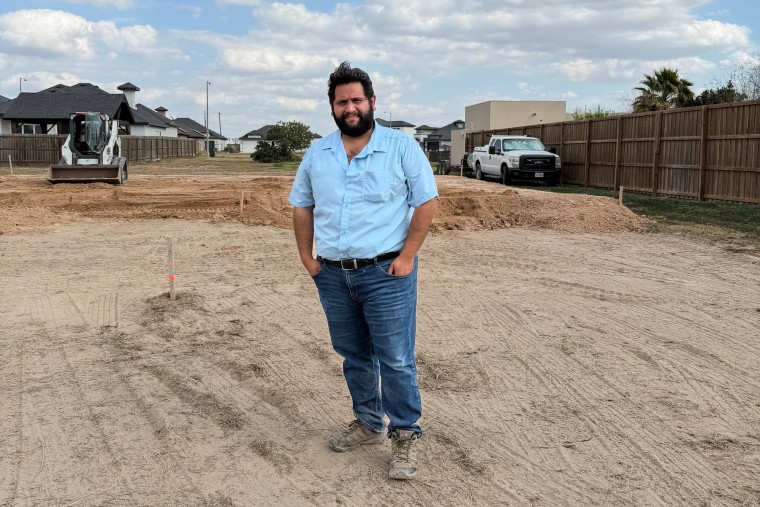
White House spokeswoman Abigail Jackson asserted that there is no shortage of American workers available for construction jobs, pointing out that 1 in 10 young adults are unemployed and not pursuing education.
Despite shifting political tides in the Valley during the 2024 election, Guerrero stands by his vote for Trump, blaming Biden for increased immigration. He criticized Obama’s approach to deportations as more strategic.
During Trump’s initial months in office, deportations surged due to increased street arrests targeting individuals without criminal records.
Isaac Smith, co-owner of Matt’s Building Materials in Pharr, reported an uptick in liens on customers due to recent slowdowns. Yet he remains skeptical about a Democratic resurgence in the Valley.
Smith views all undocumented crossings as criminal acts and believes some immigrants exploit tax-funded benefits. “The system has been built over decades; reversing it isn’t feasible,” he stated.
A recent poll indicated that 60% of adults disapprove of Trump’s handling of immigration and border security, with nearly three-quarters advocating for changes to ICE practices.
Armando Rodriguez, owner of Castle Bridge construction, disagrees with builders protesting worksite raids, suggesting it reflects a desire for cheaper labor. “All my workers have papers,” he asserted, noting positive interactions with ICE agents during inspections.
At his apartment complex site, Guerrero has installed a gated entrance with security measures to deter unauthorized access. Some workers prefer sites with such precautions due to fears of ICE arrests.
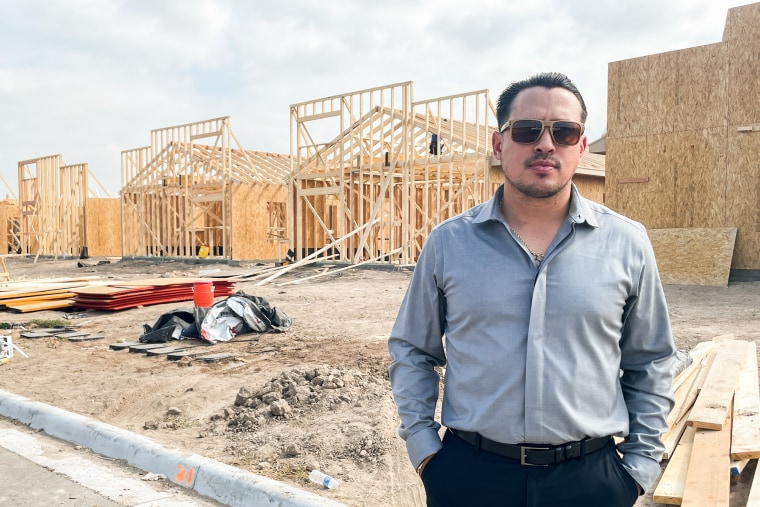
However, other builders argue that added security measures only increase costs without addressing the core issue: workers still need to reach job sites where ICE may be waiting.
Texas has enlisted state troopers to assist ICE in checking immigration status during traffic stops and requires local sheriff's offices to cooperate with federal enforcement. The region also features multiple Border Patrol checkpoints.
Builders have called on officials to increase H-2B visas for temporary non-agricultural workers. Historically, demand has outstripped supply for these visas.
The annual cap for H-2B visas stands at 66,000; however, the Trump administration added an additional 64,716 visas this year. By early February, applications had already exceeded available allocations.
Guerrero expressed disappointment with the administration's immigration enforcement policies and warned that this sentiment could jeopardize GOP prospects in upcoming elections.