



Telehealth Abortion Access Secured Temporarily Following Federal Ruling
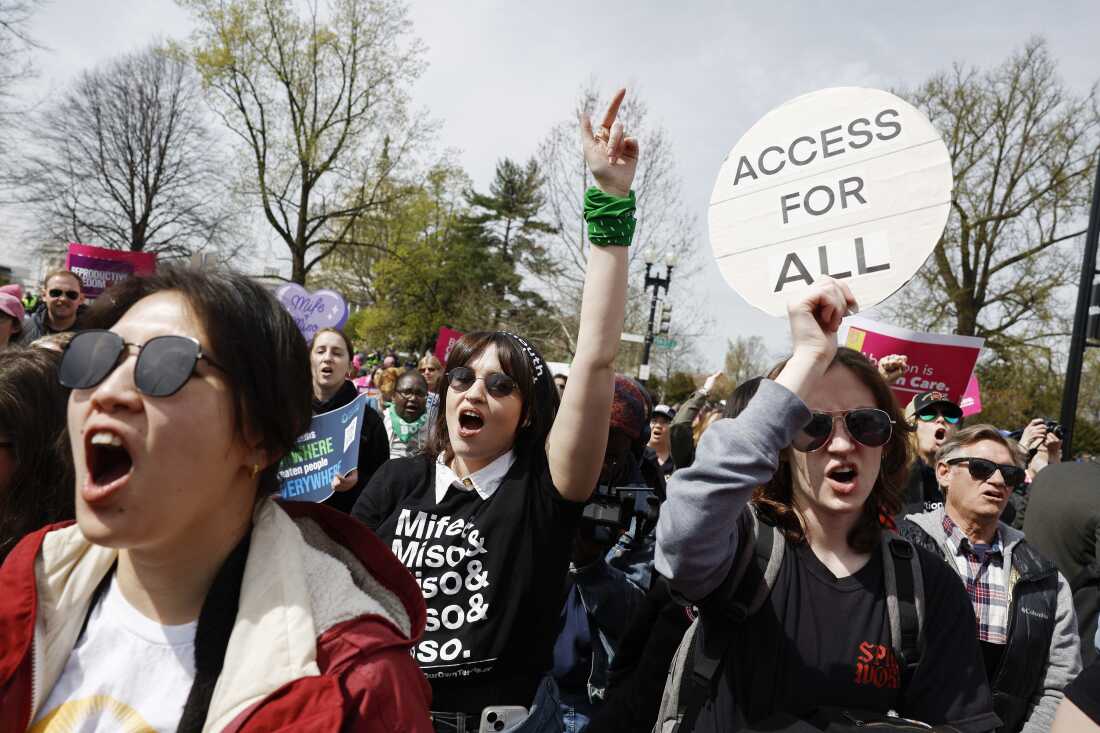
On March 26, 2024, an abortion-rights rally unfolded outside the Supreme Court as justices deliberated on mifepristone, a key medication in abortion procedures. The court ultimately upheld the FDA's approval of the drug, a significant moment in the ongoing national debate.
A federal judge in Louisiana issued a ruling on Tuesday that maintains current access to mifepristone across the country, albeit with caveats. Judge David C. Joseph's 37-page decision does not endorse telehealth abortion practices, which have surged in popularity, now representing over 25% of abortions in the U.S.
In his ruling, Joseph granted the FDA's request for a stay while the agency conducts a safety review of mifepristone, a medication that has been available for over 25 years and is frequently prescribed through telehealth consultations.
Despite acknowledging Louisiana's concerns regarding the availability of mifepristone via telemedicine, Joseph emphasized that it is the FDA's role to assess scientific evidence and make public health decisions. "Ultimately it is FDA, not this Court, that possesses the expertise," he stated.
The stay allows the FDA time to finalize its review, with an order for the agency to report back to the court in six months. This ruling reflects a broader conflict within Republican ranks regarding abortion policy, as noted by Mary Ziegler, a legal history professor at UC Davis. "We're seeing a kind of civil war between Republicans about how quickly and how far to go," she remarked.
For Trump, this case presents a complex challenge. His FDA is facing litigation over regulations established during the Biden administration. The request for a stay indicates a potential shift towards stricter oversight of mifepristone, possibly reversing previous efforts to enhance telehealth access.
Earlier this year, Trump encountered resistance from congressional Republicans when he suggested flexibility on abortion restrictions. Notably absent from his State of the Union address was any mention of abortion, despite its significance to his base and independent voters who support abortion rights.
In recent weeks, anti-abortion Republicans have intensified their efforts to impose restrictions on mifepristone. Senator Josh Hawley introduced legislation aimed at revoking the drug's full approval, while Senator Bill Cassidy announced an investigation into its manufacturers.
The state of Louisiana serves as the lead plaintiff in this case, challenging a 2023 FDA rule change that allowed virtual consultations for mifepristone prescriptions. Previously, patients were required to meet with a doctor in person.
Rosalie Markezich, another plaintiff, claims she felt coerced into taking FDA-approved abortion drugs ordered by her boyfriend from a California physician. The lawsuit argues that the Biden administration's changes undermine the Supreme Court's Dobbs decision, which overturned Roe v. Wade, by facilitating access to mifepristone in states with strict abortion laws.
The FDA is the defendant in this case, with two manufacturers of mifepristone—GenBioPro and Danco Laboratories—allowed to intervene in defense of their products.
Louisiana has taken a leading role in anti-abortion measures, being the first state to classify mifepristone as a controlled substance and criminally charge an out-of-state physician providing telemedicine abortions. Ziegler notes that Louisiana is attempting to recalibrate its strategy following legal setbacks, including a Supreme Court ruling against a previous mifepristone case.
Joseph's ruling confirmed Louisiana's standing but did not address Markezich's standing. The current lawsuit's focus on the in-person prescription requirement appears more politically palatable than previous attempts to ban mifepristone entirely.
However, Joseph recognized that altering long-standing prescribing rules could have significant implications across various states. E., a 31-year-old New Orleans resident who has utilized mail-order abortion medications since Louisiana's ban took effect in 2022, expressed her feelings about living under such restrictive laws: "It does feel just very depressing, like your government hates you." She remains thankful for her access to abortion through telemedicine.
Currently pregnant and due in September, E. reflected on her decision to become a parent: "I chose this Louisiana, not you, on my clock and my time." Research indicates that countries with abortion bans experience similar abortion rates as those without; thus, prohibitions do not eliminate abortions but complicate access for patients.
Following the Supreme Court's overturning of Roe v. Wade in 2022, abortion rates in the U.S. remained stable. The Guttmacher Institute estimates approximately 1.1 million abortions occurred in 2025, consistent with figures from the previous year. In Louisiana alone, around 2,500 abortions were recorded in 2023 compared to over 9,000 the year prior. Overall, approximately 91,000 patients in states with bans accessed telehealth abortions in 2025.