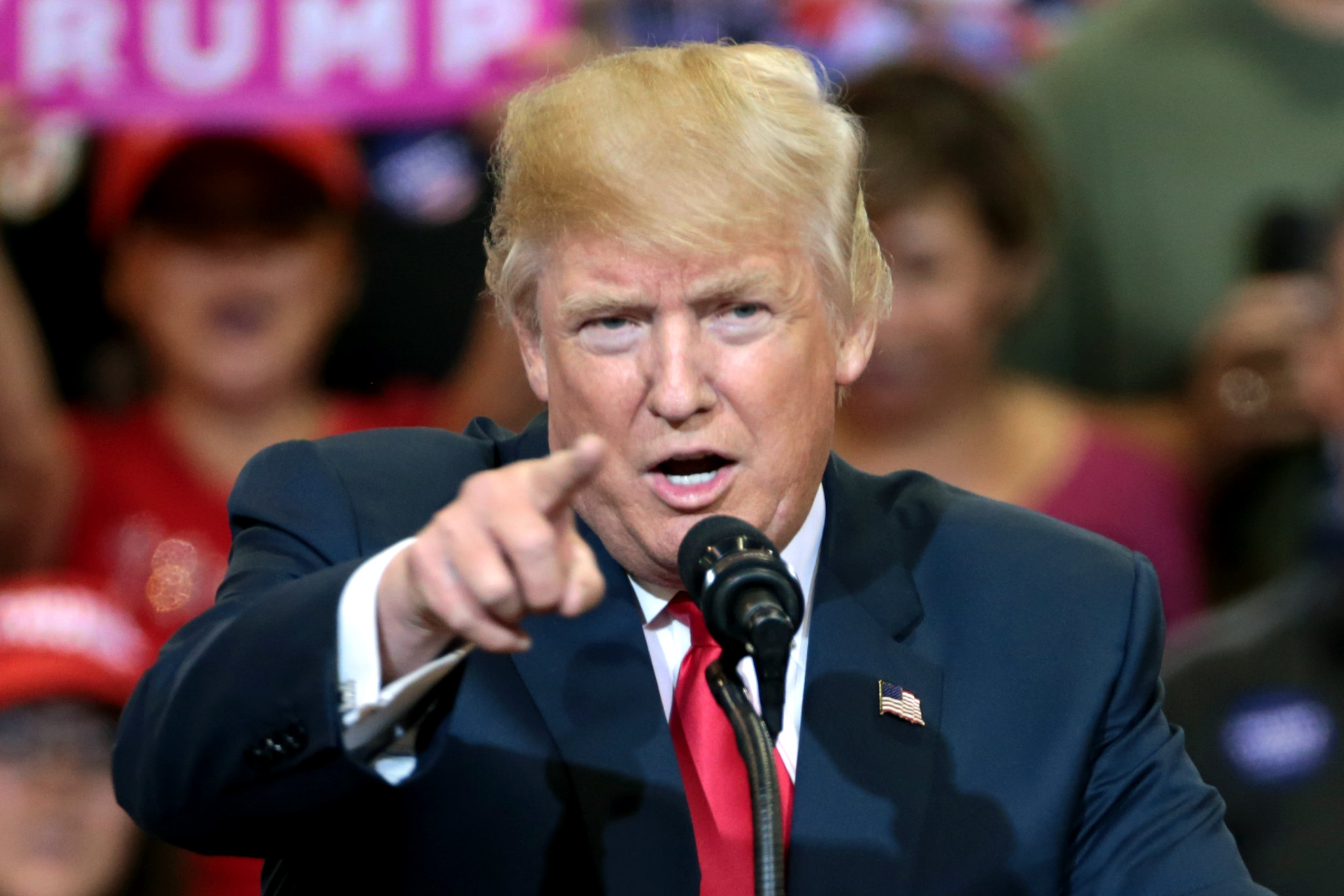




Trump Dismisses Need for Strategic Petroleum Reserve Amid Rising Oil Prices


Oil prices surged dramatically after the U.S. and Israel initiated military actions against Iran, yet President Trump, speaking to reporters aboard Air Force One, dismissed the notion of utilizing the Strategic Petroleum Reserve (SPR) to alleviate rising costs.
With escalating tensions in the Middle East impacting oil production and distribution, American consumers are already feeling the pinch at the pump. “We’ve got a lot of oil. Our country has a tremendous amount,” Trump asserted, suggesting that the situation would stabilize quickly without intervention.
As the midterm elections approach, Trump's Republican Party faces mounting pressure regarding economic affordability. The SPR represents one of the few unilateral actions a president can take to influence oil prices directly.
What exactly is the Strategic Petroleum Reserve?
The SPR consists of vast underground salt caverns located in Texas and Louisiana, capable of storing over 700 million barrels of oil, though it is not currently at full capacity. As of last month, the reserve contained approximately 415 million barrels, an increase from about 395 million barrels in 2025, according to data from the U.S. Energy Department.
Established in response to the 1970s Arab oil embargo, the SPR serves as an emergency supply for the United States. Historical data indicates that its capacity peaked over 15 years ago when it held more than 726.6 million barrels.
How has it been utilized?
While the U.S. now exports more petroleum than it imports, the SPR remains a critical resource. It has been tapped for various reasons over time, including natural disasters and geopolitical crises. For instance, President Biden significantly drew from the reserve in 2022 following Russia's invasion of Ukraine, reducing stock levels to their lowest since the 1980s. Similarly, during the Gulf War in 1991, President George H.W. Bush authorized a withdrawal of nearly 34 million barrels, with only 17 million actually utilized. In 2011, President Obama released 30 million barrels to counteract supply disruptions from Libya.
Why is Trump hesitant to tap into the reserve now?
As conflict in Iran escalates, oil prices have skyrocketed, reaching their highest levels since early 2023. On Friday, Brent crude prices jumped 8.5% to $92.69 per barrel, while benchmark U.S. crude rose by 12.2% to $90.90 per barrel.
In response to rising prices, the Trump administration recently allowed India to purchase crude oil and petroleum products from Russia until April 4, labeling this sanctions waiver a temporary measure to ease market pressures.
However, when pressed about further actions like tapping the SPR, Trump minimized its necessity, reiterating that the U.S. possesses “a tremendous amount” of oil and instead criticized Biden for depleting reserves.
Trump indicated he would consider replenishing the SPR at what he described as “the appropriate time,” relying on his instincts rather than immediate action.
Would tapping the reserve lead to lower gas prices?
Numerous factors influence gasoline prices at the pump.
The national average for gasoline has already risen to approximately $3.41 per gallon as of Saturday, an increase of about 43 cents from a week prior, according to AAA. However, since refineries purchase crude oil ahead of time, any relief from increased SPR withdrawals may be delayed if the conflict persists. Additionally, even with more oil released from the reserve, refineries might still be dealing with higher-cost supplies for some time.
Regional price variations also play a role; California reported an average of nearly $5.08 per gallon while Kansas had a low of about $2.90 per gallon on Saturday.
Gas prices disproportionately affect lower-income individuals who spend a larger percentage of their income on fuel compared to wealthier Americans, making price increases particularly burdensome for these consumers.
How is oil extracted from the reserve?
Oil is less dense than water; thus, when extracting it from reserves, water is pumped into salt caverns to make crude float to the surface for collection and transport through pipelines to refineries.