

Byron Donalds Dominates Florida GOP Governor Race, Yet 39% of Voters Remain Uncertain
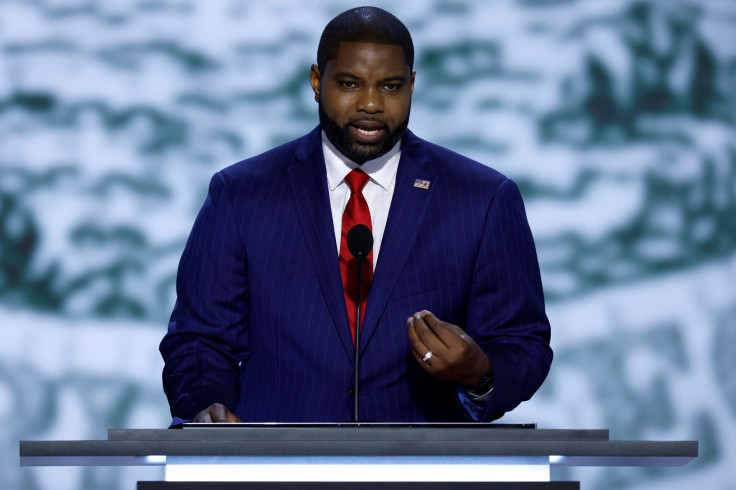
Rep. Byron Donalds commands the Republican primary for Florida governor with 46% support, yet a striking 39% of likely voters remain undecided, as revealed by a recent Emerson College Polling survey.
Despite Donalds' lead, the race appears fragmented. "Byron Donalds is the clear favorite among Republicans to succeed Governor DeSantis," noted Spencer Kimball, executive director of Emerson College Polling. Notably, Donalds enjoys majority support among voters over 60, reaching 54% across all age demographics.
In a hypothetical matchup featuring Florida First Lady Casey DeSantis, Donalds retains a substantial advantage, polling at 44% compared to DeSantis' 7%. Previous polling from the University of North Florida indicated that Donalds' lead may be significantly bolstered by endorsements from Donald Trump, with support rising to 47% when Trump’s name is mentioned, while DeSantis' backing plummeted.
On the Democratic front, the Emerson College survey indicates that 53% of voters are undecided, with David Jolly leading at 21%, followed by Jerry Demings at 10%. General election matchups show competitiveness; Donalds leads Jolly 44% to 39%, with 15% still undecided. In another scenario, Jolly narrowly edges out Casey DeSantis, 40% to 39%, within the margin of error.
Key voting groups reveal divisions: Latino voters are nearly evenly split between Donalds and Jolly, while men favor Donalds by a notable 14-point margin. Women, however, show a slight preference for Jolly. These divisions hint at potential volatility as the campaign progresses.
Beyond the governor's race, Republican Sen. Ashley Moody is ahead of potential Democratic challengers like Alex Vindman and Angie Nixon by margins of 8 to 11 points.
The poll also gauges broader political sentiment in Florida. Trump's job approval stands at 46%, with disapproval at 47%, while Gov. Ron DeSantis enjoys a 50% approval rating against a 40% disapproval rate. Independent voters lean against Trump but show slight favor towards DeSantis.
Economic perceptions could influence voter behavior; 45% of respondents feel worse off financially than a year ago, contrasting with only 27% who report being better off.
The implications of the 2026 Florida governor's race extend beyond state borders. With Ron DeSantis stepping down, this contest will determine leadership in one of the nation’s most politically significant states during a time when Florida has solidified its status as a Republican bastion. As the third most populous state, Florida significantly impacts national discussions on immigration, economic policy, and election laws, making the outcome resonate well beyond its borders.
This race is also viewed as a potential launchpad for national ambitions. Florida has a history of producing candidates with presidential aspirations, and the next governor could quickly emerge as a contender for the 2028 election cycle. Concurrently, this election will test the future direction of the Republican Party post-DeSantis, raising questions about whether voters will favor continuity in his policies or signal a shift in tone and priorities.
For Democrats, this contest presents both challenges and opportunities. Although the party has faced difficulties in recent statewide elections, a strong performance could indicate potential for rebuilding in this critical Sun Belt state and provide insights into evolving voter dynamics, particularly among Latino communities. Thus, the 2026 race transcends state-level implications and serves as a crucial indicator of the broader political landscape.
© 2025 Latin Times. All rights reserved. Do not reproduce without permission.