
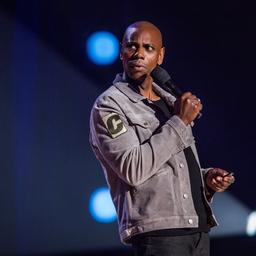
Years of punchlines aimed at the trans community have led Dave Chappelle to a curious conclusion: he feels wronged. In a recent NPR interview, the comedian defended his controversial material, lamenting how the Republican Party has weaponized his jokes for political gain. “I felt like they were doing a weaponized version of what I was doing. That’s not what I was doing,” he stated, reflecting on the unintended consequences of his humor.
During the conversation with NPR’s Michel Martin, Chappelle recounted an encounter with far-right Rep. Lauren Boebert (R-Colo.) on Capitol Hill. “I didn’t want to say ‘no’ in front of everybody, but I didn’t know the phrase ‘I respectfully decline,’” he explained, recalling how a photo with her was later used to promote her views on gender. “So I got to the arena, and I lit her ass up for doing that,” he added, emphasizing his discontent with being politicized.
Chappelle’s journey into trans-related humor began with his 2019 Netflix special “Sticks and Stones,” where he controversially likened trans identity to a racial caricature. This was during a time when anti-LGBTQ violence was escalating, particularly against Black trans women, yet he persisted in his approach. In a later special, he openly sided with J.K. Rowling’s anti-trans stance, declaring himself part of “team TERF.”
Reports indicate that Chappelle also mocked a nonbinary writer during a 2022 “Saturday Night Live” rehearsal, raising questions about his awareness of the impact of his words. His appearance at a city council meeting in Yellow Springs, Ohio, to oppose affordable housing development suggests he understands the influence of his celebrity. If he can wield that power in local politics, it’s perplexing that he didn’t foresee the backlash from his Netflix specials.
Comedians have publicly challenged him on the implications of his jokes while he continued to deliver them. Did he not leave “Chappelle’s Show” for a time because he recognized that audiences were laughing at him rather than with him? Why feign ignorance now?
While I have appreciated Chappelle's work over the years, his recent jokes often feel uninspired and repetitive. His defiance regarding his trans-targeted humor has morphed into something resembling a monologue from a disgruntled uncle rather than innovative comedy. Conservatives have eagerly embraced his jabs at trans individuals, as they often seek any opportunity to belittle marginalized groups.
Chappelle, raised by two college professors, is acutely aware of the political playbook that seeks to undermine targeted communities through humor. Yet, despite his grievances about GOP exploitation of his material, he refuses to accept any responsibility, claiming victimhood from media misrepresentation.
This echoes his previous complaints about being blacklisted by award shows—despite winning six Grammys and receiving two Emmy nominations for the very specials he criticized. The supposed punishment appears to be applause rather than condemnation.
If misrepresentation truly troubled him, he had ample opportunities to clarify his stance but chose not to. It seems that portraying himself as a victim serves as a more compelling narrative than confronting uncomfortable truths.
When addressing trans individuals who take issue with his jokes, Chappelle remarked, “I would say that, you know, not everything is for everybody.” He likened their absence from his shows to music fans not attending concerts outside their preferred genres. However, this analogy fails; it trivializes the reality of being reduced to a punchline.
Chappelle may dislike the Republican association with his humor, but the themes of victimhood and media bias are staples of contemporary conservative rhetoric. His refusal to apologize further aligns him with this narrative.
“I don’t feel like anything I do is malicious or even harmful,” Chappelle asserted. “And I think if I did hurt somebody with my work, boy, they would have been laid that at my feet.” Yet, critiques of his work have been laid bare repeatedly since he first joked about trans individuals. One wonders what has shifted in his perspective—perhaps it’s tied to changing public sentiment regarding conservatism and its impact on his career.
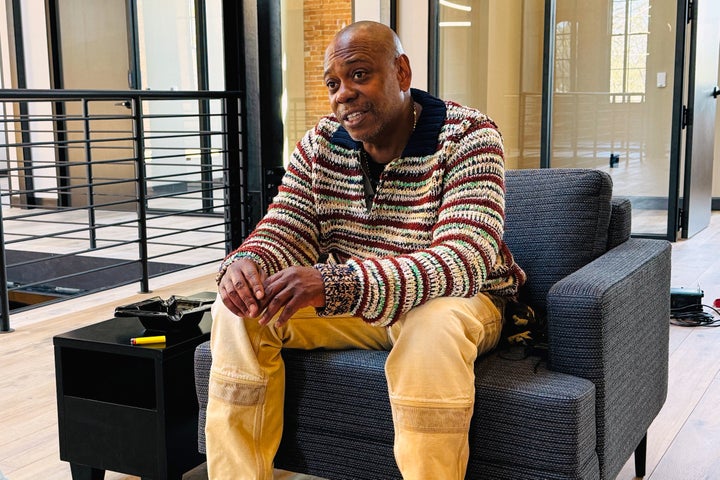
Chappelle can express frustration all he wants; however, targeting an easy audience has drawn ignorant bigots into the fold. If he truly resents this outcome, perhaps it’s time for him to reconsider his comedic approach.