House Set to Decide on Limiting Trump's Military Authority Against Iran
Washington — A critical vote is scheduled in the House on Thursday, targeting President Trump's ability to engage militarily with Iran without congressional approval. This decision follows a similar proposal that failed to pass in the Senate just a day prior.
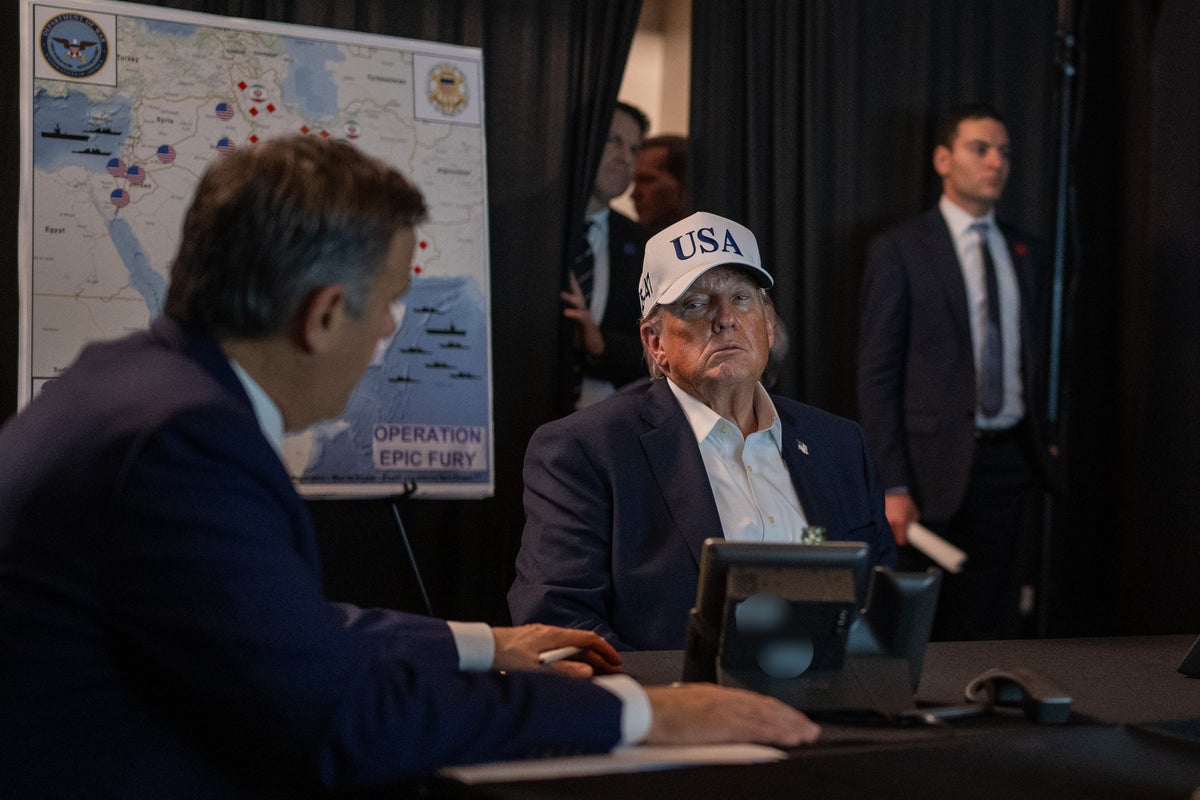
Concerns are mounting over the potential for another protracted conflict in the Middle East, especially as recent polling indicates that a significant majority of Americans oppose military action against Iran. Notably, two-thirds of respondents believe that any further military engagement should require congressional authorization. Despite these sentiments, the resolution is anticipated to face a similar fate in the House as it did in the Senate.
Introduced by GOP Rep. Thomas Massie from Kentucky, the war powers resolution emerged shortly before the U.S. targeted three Iranian nuclear facilities last June. Massie had previously opted against pushing for a vote after a ceasefire was established.
The resolution mandates that the president "remove United States Armed Forces from unauthorized hostilities in the Islamic Republic of Iran." House Speaker Mike Johnson, a Republican from Louisiana, expressed strong opposition to the measure, asserting that it would "play right into the hands of the enemy." He defended the current military operations as "necessary, lawful and effective," warning that reversing course could undermine national security.
"Congress has a constitutional right to exercise its oversight authority, and we will, but we also have a duty and obligation not to undercut our own national security," Johnson stated during a press conference.
Massie suggested that many of his colleagues are hesitant to take a recorded vote due to the U.S.'s "terrible track record of meddling in the Middle East." He criticized Congress for shirking its constitutional responsibilities, arguing that it is easier for some members to allow military actions without their explicit consent.
The Constitution reserves the power to declare war solely for Congress, yet recent administrations have often circumvented this requirement. While Republican lawmakers have shown little inclination to challenge the president's military authority thus far, some have hinted that their stance may shift if the conflict escalates or if ground troops are deployed.
This vote is likely to disrupt traditional party lines. At least one Republican has indicated he will diverge from Trump’s position, while several Democrats have signaled potential opposition to the resolution.
Rep. Warren Davidson of Ohio publicly supported the resolution on the House floor, emphasizing the dangers posed by an unrestrained government. "The moral hazard posed by a government no longer constrained by our Constitution is a grave threat," he remarked.
Conversely, GOP Rep. Don Bacon from Nebraska plans to align with Trump on this issue but acknowledged that opinions may evolve if military operations extend beyond initial expectations. Rep. Nancy Mace from South Carolina echoed this sentiment, stating her willingness to reconsider her stance if ground troops become involved.
Democrats have criticized the Trump administration for failing to provide adequate justification for military actions against Iran. House Minority Leader Hakeem Jeffries predicted robust Democratic support for the war powers resolution across various ideological lines.
However, some Democrats are poised to break ranks. Rep. Josh Gottheimer of New Jersey expressed his opposition to the resolution, arguing it would limit necessary flexibility in responding to evolving threats and could signal weakness at a critical juncture.
Gottheimer and others are backing an alternative resolution aimed at withdrawing U.S. forces from hostilities with Iran within 30 days of an attack without congressional approval. This legislative effort seeks to reinforce checks on presidential military authority established by the 1973 War Powers Resolution, which mandates consultation with Congress before deploying military forces and requires reporting within 48 hours of such actions.
Jeffries underscored Congress's constitutional authority, stating unequivocally that "there is nothing ambiguous" about its power to declare war. He characterized the president's military actions as "unwise, unpopular, unauthorized, unlawful and unconstitutional," emphasizing that adherence to the rule of law is paramount.
Johnson countered that the U.S. is "not at war," framing current operations as limited military actions. He cautioned against the potential risks posed by the resolution, claiming it could jeopardize troop safety and undermine efforts made in defense of national interests.
"I believe we have the votes to put this down, and I certainly pray that's true," Johnson concluded.
Ibrahim Aksoy and Jaala Brown contributed to this report.