


I Suffered in Silence for Years Over My Testicular Condition. Now, I'm Ready to Speak Out.
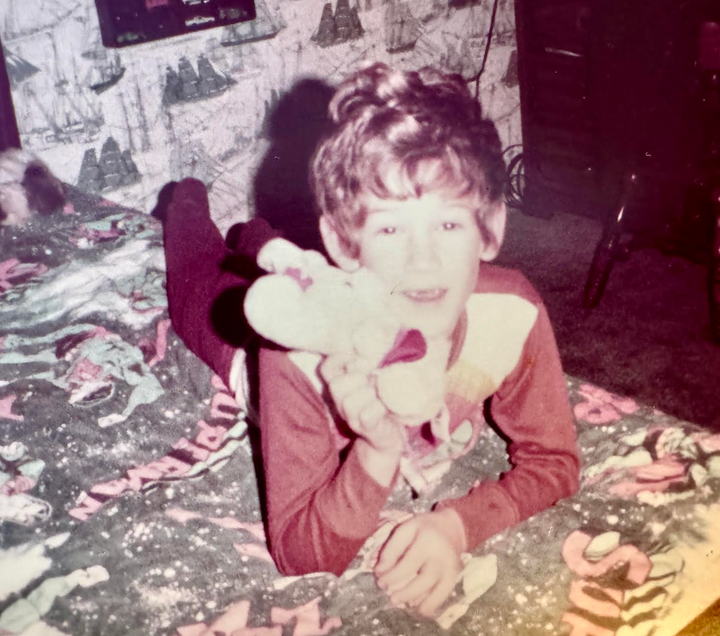
At just seven years old, I lay on the examination table, my pediatrician's voice echoing in the sterile room. “If you come closer, you can see that one of the testicles is not in the scrotum,” Dr. R said, holding my penis for my parents to see.
My right testicle had chosen an unusual residence within my groin. “In the womb, the testicles are not yet in the scrotum until the 32nd week,” he explained, “but occasionally a child is born with one or both testicles undescended.”
It was the early ’80s, and Dr. R spoke as if we were characters in an educational film about anatomy. I wanted to scream, to flee, to escape that moment.
Before puberty, he continued, a testicle can sometimes ascend back into the groin spontaneously or due to force. The word “force” triggered memories of a street hockey game where a slap shot from Paul landed squarely in my groin.
“If we cannot push the testicle down before it grows larger during puberty, surgery will be necessary,” he warned. His words crashed over me like waves, and tears streamed down my face.
***
This condition is known as cryptorchidism, derived from Greek words meaning “hidden” and “testicle.” Statistics indicate that 2% to 8% of newborns experience it, typically involving one undescended testicle in the inguinal canal.
When it occurs postnatally, it’s termed an “ascending testicle.” If it doesn’t resolve naturally, surgery called orchiopexy is performed. The procedure involves making incisions to guide the testicle into its proper place.
The success rate is high, and doctors note that it often boosts a child’s self-esteem by alleviating future embarrassment.
***
After Dr. R’s unsettling revelation, he kept me on the examination table. My body screamed to get up, but he held me down with his left hand while his right sought out my wayward testicle.
He pressed down, and nausea washed over me. “Please stop,” I pleaded.
“Just a little longer,” he replied, continuing to manipulate my testicle as if it were dough. My father helped hold me down; it felt so primal—men exerting their force. Finally, I felt my testicle pop into place. Relief flooded through me.
But as soon as Dr. R removed his hands, it popped back up like a yo-yo. I told him what happened while my parents stared at the wall, avoiding eye contact.
“We can try again another time,” he said. The thought of enduring this humiliation again or living with the shame of my half-empty scrotum tormented me.
***
The Mayo Clinic warns that having a testicle outside the scrotum raises risks for testicular cancer and infertility, along with a tenfold increase in testicular torsion risk. I learned about these dangers when I overheard Dr. R whispering to my parents. For many nights after that visit, I prayed fervently for health and privacy.
In middle school health class, we watched a video on self-examinations for testicular tumors. The teacher passed around a model of a scrotum with a lump for us to find. Holding it made me nauseous; I ran from the room to vomit.
I hid sore throats from my parents to avoid doctor visits—his cold hands and the accompanying shame. I developed a habit of pushing my left testicle downward to avoid being “The Boy With Two Missing Testicles.”
Sometimes I imagined that my errant testicle would grant me some superpower—perhaps a larger penis in adulthood. When that absurdity hit me, I tried to convince myself that it was natural for one testicle to take its time arriving.
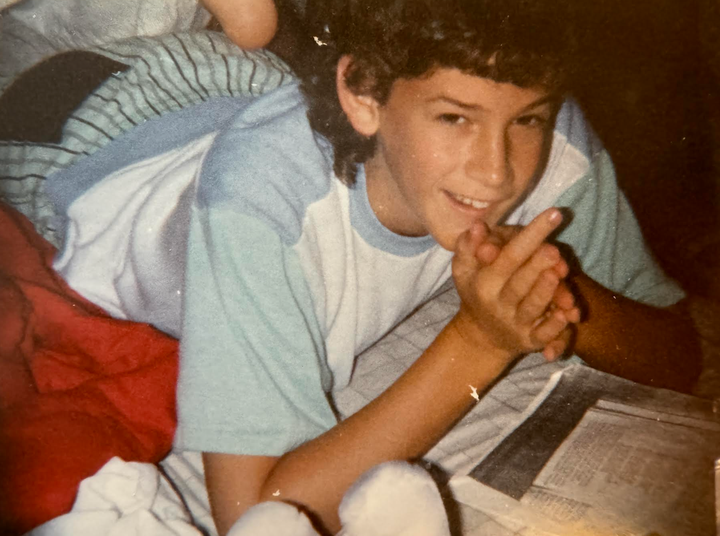
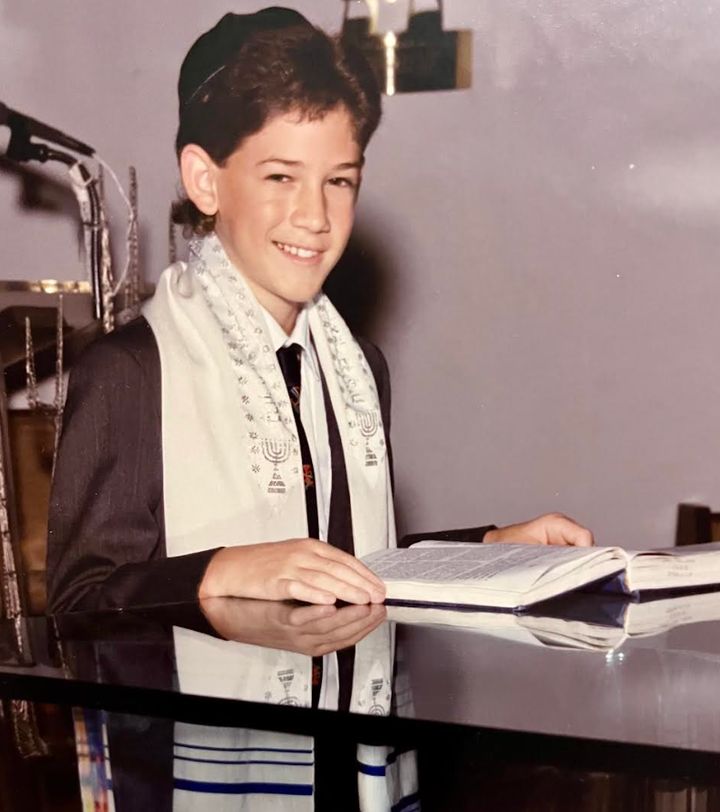
Dr. R attempted several more times during annual check-ups when I was 9 and 10, each time leaving me in tears. By age 13, he scheduled “one last try” before surgery became necessary—a week before my bar mitzvah. It felt like an ominous coincidence or perhaps a chance for a miracle.
I practiced my Torah reading while praying for resolution.
***
On the way to that final appointment, silence filled the car between my father and me—a continuation of years without dialogue about my condition. My parents were focused on fixing the physical aspects while ignoring my emotional wounds.
In the examination room, I stood with my pants down while Dr. R approached from behind like a villain in a cartoon. He applied pressure again; nausea returned, and tears flowed.
This time, however, with each movement of my testicle, Dr. R transformed into my hero. I stood still, desperate to avoid surgery. “There,” he said triumphantly—the testicle had landed where it belonged.
I could have floated with relief; one week before my bar mitzvah, I felt reborn. If anything could prove God’s existence, this was it.
Dr. R had practical advice: “Try to avoid getting hit there.”
***
Trauma lingers stubbornly; it doesn’t vanish but morphs over time. After Dr. R’s success, I lived in fear of recurrence. During college and beyond, I often overreacted during intimate moments due to past experiences—my jumpiness discomforted partners who lacked context.
I avoided swimming pools after realizing that cool water pushed my right testicle upward. Doctor visits still stirred dread; I fixated on any discomfort in my groin. An MRI in 2009 revealed a benign mass in my inguinal canal—a literal scar from years of struggle.
“Time heals all wounds,” they say—but that’s not entirely true. Healing requires honesty and vulnerability.
In my mid-20s, I finally confided in a boyfriend about my past injury during an intimate moment. “I had an injury down there,” I admitted.
“Oh,” he replied gently. “What kind?”
I shared my story—the long road to repair and fears of surgery lingering even now.
“I’m so sorry you went through that,” he said softly. “I promise to be gentle.” And he was.
***
Decades after Dr. R’s discovery, childhood shame still lingers within me. Instead of running from those memories, I draw strength from them.
I’ve learned that trauma derives much of its power from the shame we attach to it; sharing our experiences can diminish that power. Secrecy breeds corrosion; I once held another secret about my sexuality from family and friends but found affirmation when I finally shared it.
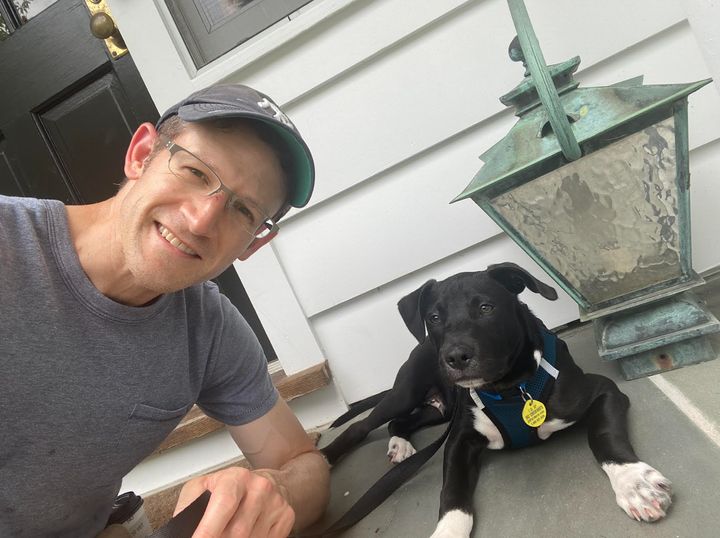
Now a husband and father of two—an 11-year-old girl and a 2-year-old boy—I strive to be attuned to their inner lives in ways I wish had been afforded to me. With my daughter, I’ve learned that asking “What’s on your mind?” often opens doors better than “How are you doing?” At doctor appointments, I encourage her to speak privately with physicians if she wishes—small gestures aimed at providing what I lacked.
I’m aware of how easily we link self-worth to our bodies’ experiences and how many impactful experiences remain invisible to others. Recognizing that everyone carries something transforms our interactions and fosters compassion.
I’ve also gleaned lighter lessons: if my son plays street hockey, he will wear protective gear—and despite skepticism about divine intervention, it certainly doesn’t hurt to pray.
Ultimately, I’ve learned that wounds can linger long after they stop hurting; sometimes scars serve as reminders of what truly matters.