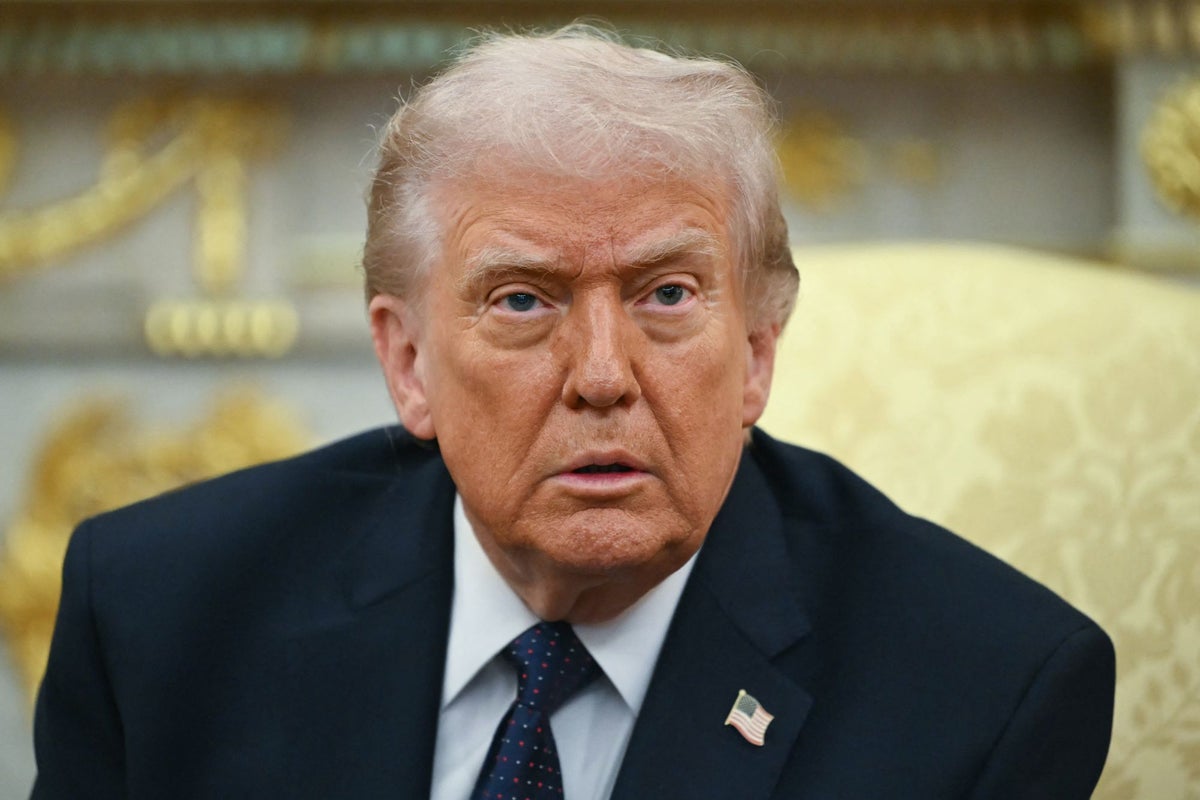
A recent poll indicates that a significant portion of registered voters disapprove of President Donald Trump's management of the Iran situation, with many believing military action was unwarranted. The survey, conducted by NBC News, highlights a growing divide among the electorate.
While partisan lines largely dictate support for the administration, a notable faction of Republicans expresses dissatisfaction with the decision to engage militarily in the Middle East. This discontent is particularly pronounced among younger voters compared to their older counterparts.
According to the poll, 54% of voters disapprove of Trump's handling of Iran, contrasted with 41% who approve. Additionally, 52% believe the U.S. should not have initiated military action, while 41% support it. A small percentage, 7%, remain uncertain.
This survey serves as an early gauge of public sentiment regarding a significant military initiative from a president who previously campaigned against prolonged conflicts. “Support levels are lower than what we typically see during major military actions,” noted Republican pollster Bill McInturff, who collaborated with Democratic pollster Jeff Horwitt on this study.
“Public attitudes can shift dramatically based on outcomes,” McInturff remarked, suggesting that negative results could further erode support, while positive developments might bolster it.
Historical context reveals that during the early 2000s, a majority of Americans favored military action against Iraq's Saddam Hussein. In stark contrast, current sentiments reflect a more cautious approach to military engagement.
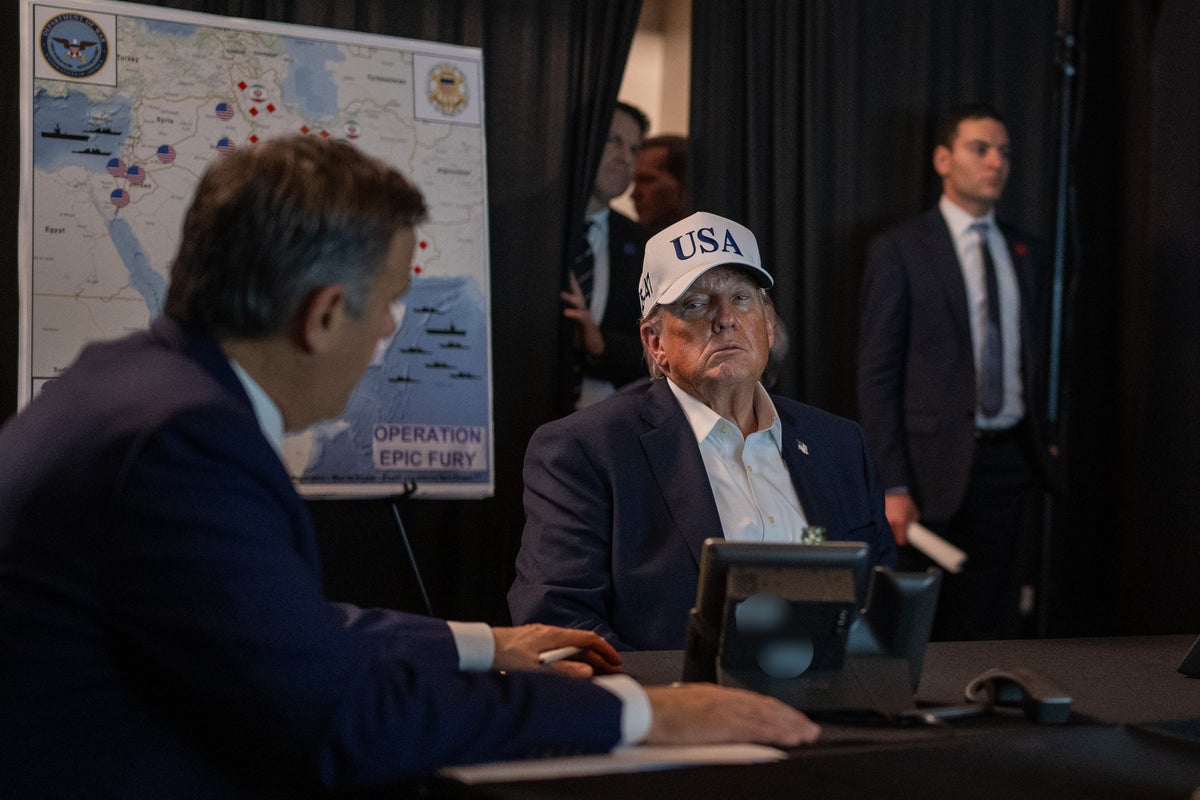
The poll began capturing opinions shortly after the U.S. announced its military campaign against Iran, coinciding with significant events such as the reported death of Iran’s supreme leader and casualties among U.S. service members. As tensions escalate, the Trump administration has indicated that military operations will intensify.
Trump and his supporters argue that these strikes are necessary to safeguard Americans from imminent threats posed by Iran's nuclear ambitions. Conversely, many Democrats criticize the actions as unnecessary aggression.
Partisan divisions are evident: 89% of Democrats oppose the strikes, while 58% of independents share this view. Among Republicans, support is stronger; 77% endorse the strikes, though a divide exists between those aligned with Trump’s MAGA movement and traditional Republicans.
A striking 90% of MAGA-aligned Republicans back the military action, while only 5% oppose it. In contrast, non-MAGA Republicans show more ambivalence, with 54% in favor and 36% against.
Age also plays a critical role in shaping opinions on the conflict. Two-thirds of voters under 35 oppose the strikes, while support increases among older demographics. Educational background further influences perspectives; those without college degrees are split on the issue, whereas college-educated voters predominantly oppose military action.
Gender differences are apparent as well: 60% of women disapprove of the strikes compared to 52% of men who support them. Despite negative sentiments towards military action, a majority of voters maintain unfavorable views of Iran itself.
Conversations with voters in St. Joseph, Michigan, reveal varied reactions to the conflict. William Miskiewicz, a retired police officer, expressed unwavering support for Trump’s decisions, emphasizing loyalty to allies like Israel.
In contrast, Vincent Nemethy, an artist and former Trump supporter, voiced his disapproval of the strikes, advocating for a focus on domestic issues rather than foreign conflicts.
Linda Coleman, a retiree critical of Trump’s actions, questioned the necessity of U.S. involvement in what she perceives as not America’s war. “We’ve already bombed them once,” she stated, expressing concern for potential loss of life.
The NBC News poll surveyed 1,000 registered voters from February 27 to March 3 through telephone interviews and online surveys. The overall margin of error is plus or minus 3.1 percentage points, with specific questions about the Iran conflict having a margin of error of plus or minus 3.6 percentage points.