



Mexico's Truckers Unleash Chaos, End Strike After 19 States Erupt Over Violence and Tax Changes
In a shocking display of unity, Mexico's freight sector erupted into chaos, paralyzing 19 states and generating 38 protest points across the nation. The truckers' strike, ignited by the battle cry "México no aguanta más," forced the government to concede what a year of formal complaints could not achieve.
This moment marks a critical confrontation with President Claudia Sheinbaum's administration amid the most severe highway security crisis in decades. The statistics are staggering: CANACAR reported approximately 1,105 stolen truck units and 15 operator deaths since January 2026. Road conditions have deteriorated, impacting up to 80% of federal corridors.
Veracruz led the protests with eight active points, while Estado de México followed with six. Nuevo León and Tlaxcala each recorded three protest sites. These regions are hotspots for highway robberies, with Estado de México, Puebla, and Guanajuato accounting for nearly half of all incidents nationwide. In Zacatecas, transporters face daytime kidnappings on routes toward Jalisco, while Aguascalientes reported at least five local operators killed in attacks during 2026.
Behind every statistic lies a driver who never returned home. A transport company owner from Ciudad Juárez recounted how one of his drivers was ambushed on the México-Querétaro highway in April, disappearing for 30 hours while authorities refused to investigate.
This climate of impunity fuels the trucking crisis. Armed groups now ram cargo vehicles at high speeds, kidnapping drivers and stripping trucks for resale on the black market. Security analysts estimate that about 85% of attacks turn violent. However, CANACAR's internal data indicates that violent cargo incidents dropped from 41% to 24% after the launch of Plan Cero Robos, suggesting organized crime primarily drives the most severe cases.
The labor shortage exacerbated by this insecurity is deepening. CANACAR's vice president Rómulo Mejía Durán warns that chronic insecurity has created a driver deficit exceeding 50,000 operators, threatening national freight mobility.
The Sheinbaum administration's Plan Cero Robos deployed over 1,180 security personnel across three priority corridors—México-Puebla, México-Querétaro, and Culiacán-Mazatlán—accounting for roughly one-third of all cargo thefts. The trucking sector deems this response insufficient. Between 30 and 40 attacks still occur daily across the federal network, with over 70% involving violence.
A second flashpoint emerged when Congress passed the Ley de Ingresos 2027 without consulting the industry. This law reduces the annual revenue threshold for highway toll fiscal stimulus from 300 million to 250 million pesos, effectively eliminating benefits for mid-size freight carriers exceeding the new cutoff. Senate committees reviewed this measure on October 21, coinciding with the strike resolution.
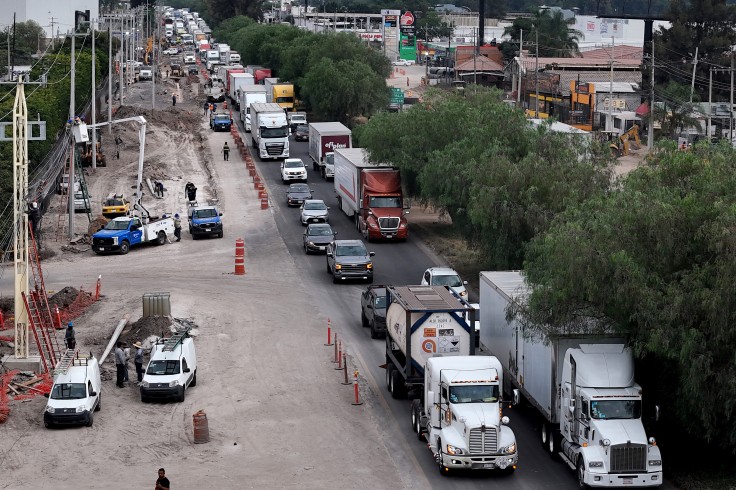
On Monday, truckers launched simultaneous caravans onto major highways including México-Querétaro and México-Puebla, causing severe congestion. Banners on trucks proclaimed: "El autotransporte de México no aguanta más."
The organizations leading the strike—CANACAR, INDECO, FEMATRAC, and HAMOTAC—demanded direct intervention from President Sheinbaum. When talks were convened by Gobernación with key officials, core protest groups refused to attend, insisting that decisions must come from the highest levels of government.
Internal divisions surfaced as several associations rejected blockades and pursued separate agendas with the government, fracturing public unity even as disruptions continued.
By Tuesday, Gobernación confirmed that participating organizations agreed to lift all blockades in exchange for permanent working tables addressing security, infrastructure, fiscal policy, social security, and labor conditions—all coordinated with the Guardia Nacional and relevant federal agencies. The Interior Ministry stated that "there is no need to resort to highway blockades" to present demands, signaling that the administration considers the protest resolved.
Truckers assert that the fundamental issues remain unaddressed. Industry leaders warned that the strike could cost up to 21,500 million pesos per day—approximately $1 billion—if operations halted. This figure underscores why Mexico's economy is deeply intertwined with trucking: about 80% of everything consumed in Mexico is transported by truck.
The strike concluded. The daily assaults on federal highways persist.