Minnesota Sues Trump Administration Over Alleged Medicaid Funding Manipulation
Minnesota's legal battle commenced this week as the state filed a federal lawsuit against the Trump administration, alleging that the federal government has "weaponized Medicaid against Minnesota as political punishment."
The crux of the dispute centers on roughly $250 million in Medicaid expenditures from last summer. The administration has withheld matching funds, citing ongoing fraud investigations.
Medicaid serves as a crucial public health insurance program for low-income individuals, operating through a partnership between state and federal governments. For every dollar a state allocates to Medicaid, the federal government typically matches that amount.
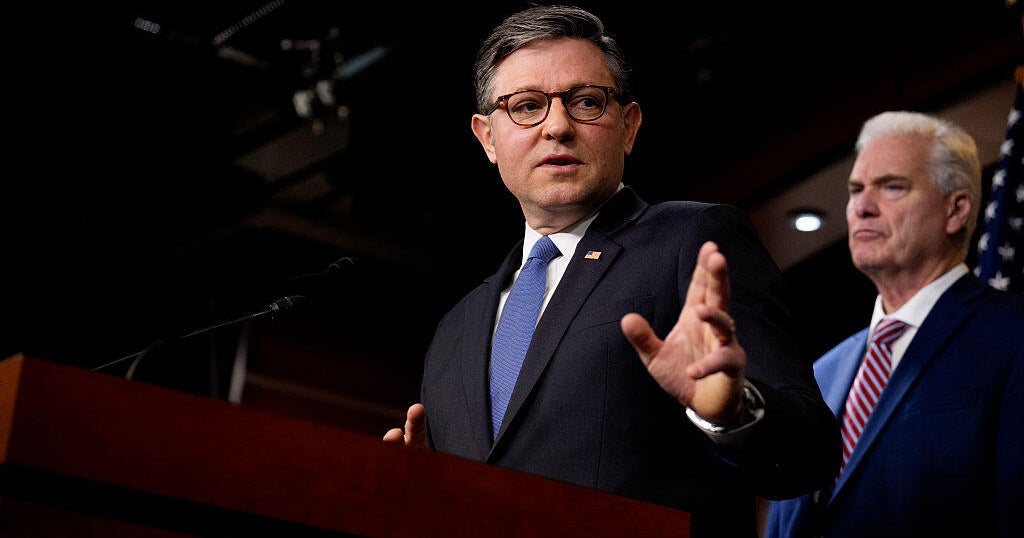
In a press conference last week, following President Trump's declaration of a "war on fraud" led by Vice President Vance, both he and Dr. Mehmet Oz, head of the Centers for Medicare & Medicaid Services, addressed the situation regarding Minnesota's Medicaid funding.
"We have decided to temporarily halt certain amounts of Medicaid funding that are going to the state of Minnesota in order to ensure that the state of Minnesota takes its obligations seriously to be good stewards of the American people's tax money," Vance stated.
John Connolly, Minnesota's Deputy Health Commissioner, expressed his astonishment at this announcement. "Minnesota has been acting aggressively to combat fraud," he asserted during a press briefing. "The narrative that additional punitive funding deferrals are necessary to ensure that we are serious about this work does not reflect what we have done."
Connolly emphasized that the state had submitted a corrective action plan to the federal government and was awaiting feedback. "We are adhering to the timelines, the milestones, the deliverables and we are on schedule with those," he added.
Last year, federal prosecutors charged multiple individuals in Minnesota with Medicaid fraud, suggesting that fraudulent activities could have cost billions since 2018—a claim Gov. Tim Walz dismissed as speculative. Connolly clarified that actual losses were likely in the tens of millions.
The lawsuit seeks to temporarily block the funding deferral, highlighting that Minnesota's Medicaid payment error rate was just 2% in 2025, significantly lower than the national average of 6%. The complaint argues that Minnesota is being politically targeted.
Connolly pointed out that attempts to reduce Medicaid funding for Minnesota began earlier this year when the federal government indicated it would withhold $2 billion due to alleged non-compliance with federal fraud prevention requirements. The state is currently appealing this decision.
"To be clear, this deferral is separate and in addition [to] the previously announced $2 billion withholding," he clarified. "But to Minnesotans, functionally, it means that federal funding cuts to Medicaid are now here."

Right-wing politicians and media outlets have criticized Minnesota for months, alleging rampant fraud within its social services. In response, the state has created its own fraud fact-check page.
Health policy experts argue that the federal government's actions to withhold and defer funding deviate from established practices for addressing fraud. "Of course there is fraud against the Medicaid program, not just in Minnesota, but in every state," noted Andy Schneider from the Georgetown Center for Children and Families. "If you're serious about dealing with it, you have to have a collaboration between the federal government and the state," he added, indicating that such collaboration is lacking in this instance.
Schneider characterized these actions as "totally unprecedented." At the same press event, Jocelyn Guyer from Manatt Health labeled the funding withholding as "punitive."
A spokesperson for the federal Centers for Medicare & Medicaid Services stated that the agency "does not comment on litigation." In announcing the funding deferral, Vice President Vance suggested that individuals relying on Medicaid would not be directly impacted by this decision.
"The providers on the ground in Minnesota have actually already been paid — the state has paid those providers the money," he explained. "What we're doing is we are stopping the federal payments that will go to the state government until the state government takes its obligations seriously to stop the fraud that's being perpetrated against the American taxpayer."
While Schneider mentioned that Minnesota might temporarily cover this budget gap with its own funds, long-term implications remain uncertain. Connolly warned of potentially "catastrophic" consequences.
"The state would face significant cash flow pressures that could disrupt payments to providers, strain hospitals and long-term care facilities, jeopardize services for vulnerable populations and destabilize care for more than a million Minnesotans, half of whom are children," he stated.
Ellie Wilson, executive director of Autism Society of Minnesota, conveyed concerns about families dependent on Medicaid amid discussions of sudden funding cuts. "I need people to understand — the impacts that are happening are extremely real and extremely dangerous," she remarked. "We have seen cases of deaths. We have seen cases of homelessness caused by services being dropped too quickly."