


Ohio Governor Slams Trump's Deportation Plans for Haitians as a "Hellish Mistake"
Republican Ohio Governor Mike DeWine blasted the Trump administration's scheme to ramp up arrests and deportations of Haitian migrants, labeling it a "mistake" that could devastate the state's economy and endanger lives in Haiti.
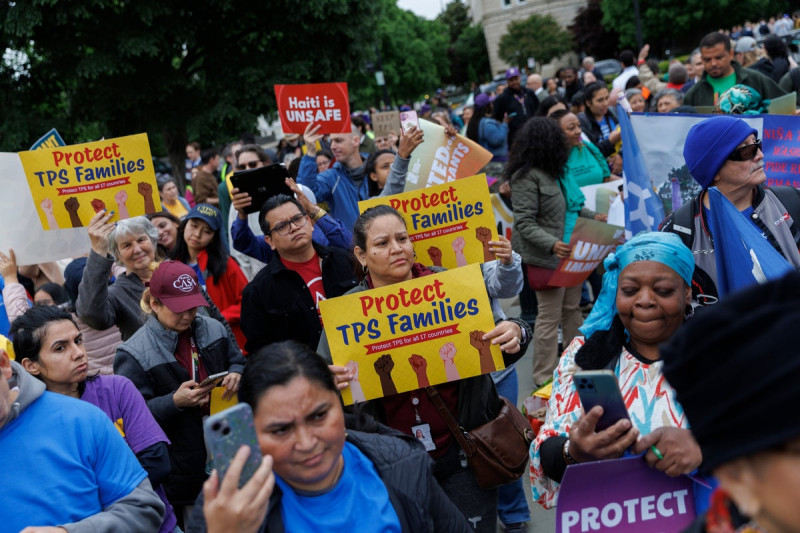
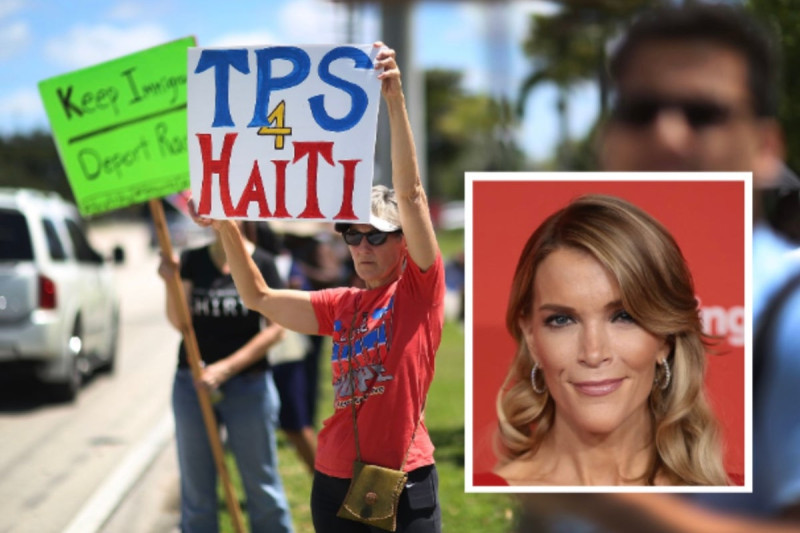
Over 300,000 Haitians are on the brink of losing Temporary Protected Status, a humanitarian immigration program that shields them from deportation and grants work rights. This follows a Supreme Court ruling that upheld the Trump administration's decision to terminate the policy for Haitians. Immigration and Customs Enforcement is poised to initiate a deportation blitz targeting Haitian migrants imminently.
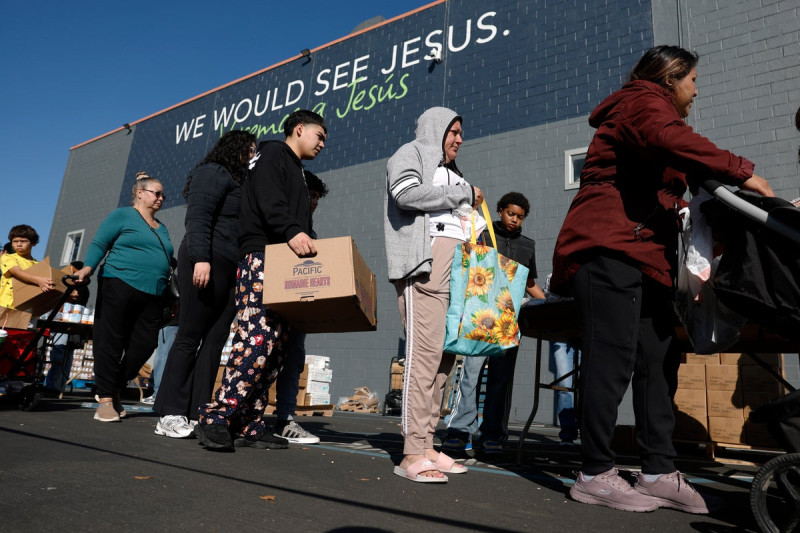
The operations will likely zero in on thousands of Haitians residing in Ohio, particularly in Springfield, where many have settled recently. During the 2024 campaign, President Trump made unfounded claims about Haitian immigrants in Springfield engaging in bizarre behaviors, such as eating cats and dogs.
In a Monday interview in Columbus, DeWine stated that the planned deportations would strike "a blow to Springfield" and "a blow to the state of Ohio."
"These are people who have helped Springfield really come back," DeWine asserted, highlighting how Haitians have filled essential jobs and launched businesses in an economically struggling city. "The Haitians who are living there and employed there came there to work because there were jobs that were not being filled by other people."
DeWine emphasized the dire security conditions in Haiti, a nation plagued by poverty and political turmoil, with gangs controlling vast areas. He described the situation as "virtual chaos," lacking any functional government, prompting the U.S. State Department to issue travel warnings against visiting Haiti.
The governor predicted that many Haitians would seek refuge in other countries rather than return home.
"Haiti is hell today. So you'd be sending people… back to hell," DeWine declared. "Very few of these Haitians will voluntarily go back to Haiti. If they have to leave, they'll go someplace else. They want to work. They want to support their family. They don't want to go back to Haiti."
Haiti has been under Temporary Protected Status since 2010, following a catastrophic earthquake that devastated the island nation. This status has been periodically renewed, allowing hundreds of thousands of Haitian migrants to remain in the U.S. The Biden administration extended this status in 2024, citing ongoing violence and instability in Haiti.
Last year, the Department of Homeland Security sought to terminate TPS for Haitians, claiming it was "not in the national interest" and asserting that migration from Haiti posed a "risk" to the U.S. DHS also contended that conditions in Haiti had improved sufficiently for citizens to return safely.
As of last year, approximately 334,000 Haitians held temporary protected status, excluding those with green cards, according to federal data.
This decision was part of a broader initiative by the Trump administration to phase out TPS for several nations, including Syria and Venezuela. DHS argued that TPS was intended as a temporary measure for individuals from countries facing violence or natural disasters but had morphed into a "de facto amnesty program."
"What we would say now is it's closing time which means you don't have to go home, but you can't stay here," DHS stated, urging those about to lose their protected status to self-deport for $2,600 and a "free flight home."
The move to revoke protections for Haitians sparked lawsuits, leading a judge to block the action in February, labeling it "arbitrary and capricious" and partly driven by racial animus. The Trump administration contested this ruling up to the Supreme Court, which ruled in late June that the government could proceed with plans to end Temporary Protected Status for Haiti and Syria. This decision was set to be formalized on Monday.
DeWine has previously challenged Trump's rhetoric regarding Haitian migrants. In a 2024 interview, he dismissed Trump's claims about Haitians eating pets as "something that came up on the internet," noting local officials found no evidence supporting such assertions.
While acknowledging that an influx of up to 15,000 immigrants in a city with fewer than 60,000 residents posed challenges—particularly for local healthcare—DeWine maintained that Haitian migrants have "filled a lot of jobs" and "work very, very hard."