


South Carolina is set to dominate the Democratic presidential nominating contest in 2028 after the Democratic National Committee’s rules committee voted to keep it at the forefront. This decision comes after a protracted struggle among several states vying for the coveted position.
Nevada and New Hampshire will follow as the second and third nominating contests, respectively, while New Mexico, Michigan, and Virginia complete the first six contests leading up to Super Tuesday.
This new arrangement officially eliminates Iowa from the early voting lineup, a state that had traditionally opened the contest for both parties until 2024, when Democrats pushed it back due to chaos surrounding the 2020 caucuses.
The calendar overhaul significantly alters the landscape for Democratic candidates, swapping out two predominantly white states for more diverse populations while retaining three of the four traditional early states. The addition of two more contests before Super Tuesday means more delegates are available for candidates to secure before March.
The competition to determine which state would launch the Democratic primaries was intense, with states lobbying DNC rules committee members since January in Puerto Rico and continuing their efforts in the months that followed.
The rivalry between Nevada and South Carolina escalated recently, with advocates framing it as a clash between two vital segments of the Democratic base. Latino voters constitute a significant portion of Nevada's electorate, while Black voters form the backbone of South Carolina's Democratic support.
Key figures from both states aggressively lobbied DNC members and sought to sway public opinion within the party.
“When South Carolina goes first … the Deep South goes first, Black voters go first,” stated South Carolina Democratic Party Chair Christale Spain during an interview. “Black voters are the backbone of this party, and so we should continue to elevate Black voters’ role in the process, not push it further back.”
Nevada's supporters also mounted a vigorous campaign, with lawmakers, Latino organizations, and influential labor leaders emphasizing the necessity of winning over voters in a critical battleground state as Democrats aim to recover from the 2024 election results.
“Democrats keep losing working-class voters because we keep skipping the states where they actually live. To win Nevada, you have to earn Latino voters, Black voters, AANHPI voters, AND white working-class voters — all at once,” remarked Nevada Attorney General Aaron Ford.
Support for South Carolina surged following a Supreme Court ruling that weakened parts of the Voting Rights Act, prompting Republican-controlled states to redraw majority-minority districts largely represented by Black Democrats.
Advocates for South Carolina frequently referenced this Supreme Court decision and highlighted the historical struggle for Black voting rights during the Civil Rights Movement.
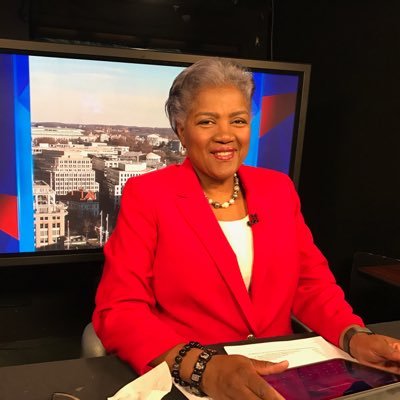
Donna Brazile, a rules committee member and former national party chair, passionately invoked Barbara Jordan, a prominent Black Democratic figure, criticizing the Supreme Court’s ruling.
“If we believe in the future, the future that Barbara Jordan called us to build,” Brazile asserted, “we must begin the 2028 presidential primary season in the South.”
Rep. Debbie Dingell of Michigan expressed her support for South Carolina, emphasizing the need to send a message that the party is not abandoning its core constituents who have been marginalized by recent Supreme Court decisions.
“There are going to be six states that are first in the country to make sure that every single segment of the Democratic Party, and those we need to bring back, are going to be part of this story,” she stated.
This decision represents a significant reshuffling of past competitive Democratic presidential contests, as Iowa and New Hampshire have long held the first two positions.
A disastrous 2020 Iowa caucus — marred by technological failures that delayed results — and a push among some Democrats to prioritize more racially diverse states prompted this change in 2024.
Then-President Joe Biden advocated for this reshuffle ahead of his re-election year, moving South Carolina to the front after it played a crucial role in his 2020 primary success. The DNC also granted Georgia and Michigan early contest status; Michigan complied while Georgia's Republican lawmakers rejected the plan.
New Hampshire attempted to defy DNC directives by scheduling its primary for January. The party initially punished New Hampshire but ultimately relented as it has done in previous instances of defiance.
New Hampshire Democratic Party Chair Ray Buckley criticized the DNC’s decision, asserting that state law mandates their primary be first.
“Today’s vote shows that many party insiders have learned nothing from 2024,” Buckley stated. “New Hampshire has a proven track record of testing our candidates with a rigorous, fair, and efficient process.”
The New Hampshire Democratic Party did not immediately respond regarding whether it would adhere to national party directives or hold another unsanctioned primary.
DNC Chairman Ken Martin praised Buckley as a “mentor” and acknowledged New Hampshire's tradition of civic engagement. He expressed hope that New Hampshire would still be represented in this process.
After South Carolina's primary on January 22, Nevada will follow on February 1 and New Hampshire on February 8. New Mexico will host its contest on February 15, followed by Michigan on February 22 and Virginia on February 29.
In addition to changes in the 2028 calendar, the DNC plans to implement stricter penalties for states that disregard the approved schedule.
These penalties may include stripping states of all delegates, imposing fines of $270,000 on state parties, barring candidates from official debates if they campaign in unsanctioned contests — and complicating any future attempts to reverse these penalties if a state like New Hampshire chooses to defy the rules.
Securing national party approval for an early nominating contest is crucial for state Democratic organizations, as these early contests significantly influence modern presidential nominations.
Biden’s campaign might not have gained momentum without his decisive victory in South Carolina, where he leveraged strong ties with Black voters after struggling in Iowa and New Hampshire. Four years earlier, Sen. Bernie Sanders’ impressive performances in those initial contests sent shockwaves through a Democratic establishment hoping for a smooth nomination process for former Secretary of State Hillary Clinton.
While numerous states pitched their cases to DNC rules committee members over recent months, many faced practical challenges. States like North Carolina, Tennessee, and Georgia sought early contest status but required Republican support in state legislatures to alter primary dates.
Republicans are not expected to make significant changes to their calendar ahead of their own open presidential contest in 2028.