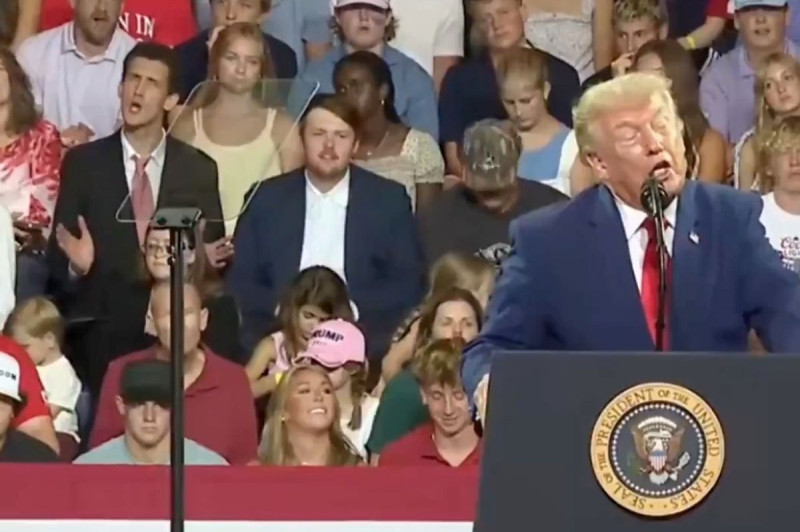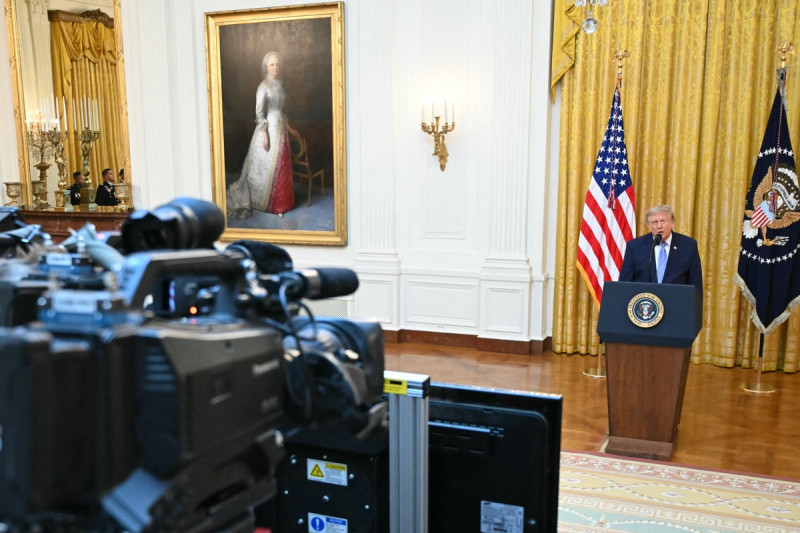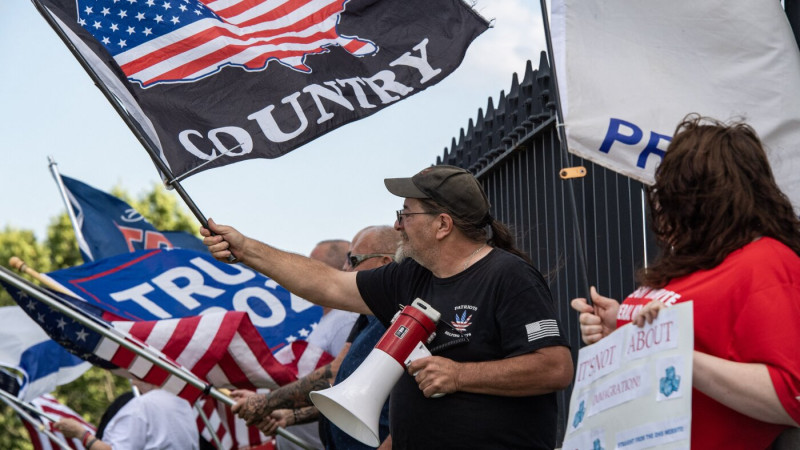


President Donald Trump unleashed a barrage of Islamophobic rhetoric, warning that a victory for Democratic Senate candidate Abdul El-Sayed would unleash chaos in Michigan, filled with terror and violence, and even threaten Christmas celebrations.
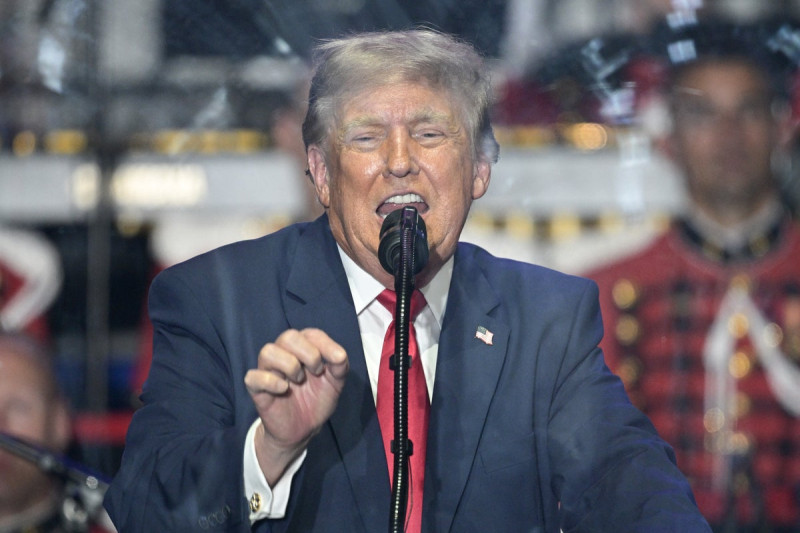
“If Abdul and the Democrats win, they will open the floodgates and invite hordes of jihadis to our shores, creating a nightmare of violence and terror until you cannot even have a Christmas,” Trump declared at a rally in Port Huron, falsely branding El-Sayed, a Rhodes scholar and former public health official, as a “jihadist Muslim Brotherhood member.”
Trump invoked the memory of Todd Beamer’s father, whose son famously fought back against al-Qaeda hijackers on September 11, 2001. He drew a direct connection between El-Sayed and the nation’s most notorious terrorist attacks, stating, “Twenty-five years later, Michigan needs to stand up and fight, just like Todd did, to stop a jihadist from walking into the Capitol.”
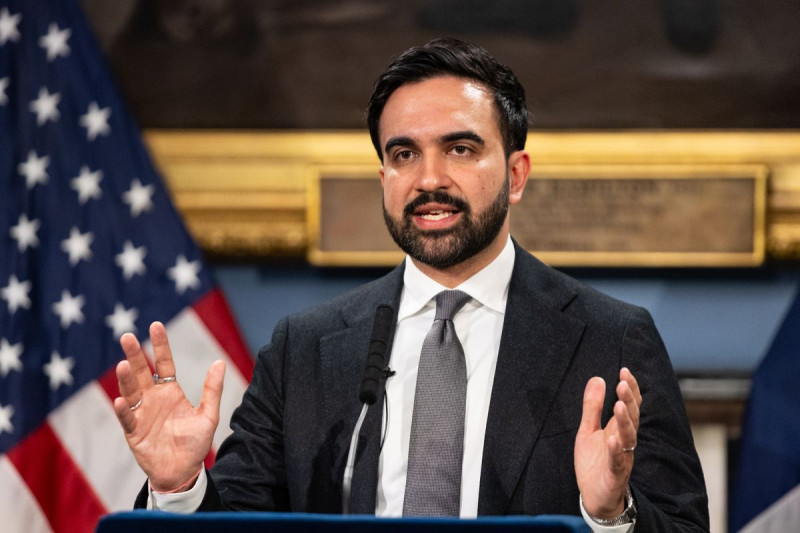
The GOP’s Islamophobic attacks set the stage for the final days leading up to the election. El-Sayed holds a narrow lead over Republican Mike Rogers in polling. A win for El-Sayed would mark him as the first Muslim senator in U.S. history and deliver a significant blow to the Republican Party.
The stakes are monumental: A Rogers victory would break a two-decade drought for the GOP in Michigan’s Senate seats and complicate Democrats’ path to regaining control of the Senate, forcing them to win three states Trump previously dominated by over 10 percentage points.
Democrats, including El-Sayed, anticipate that these incendiary remarks will backfire, likening them to ineffective attacks on former President Barack Obama. However, Rogers and the GOP seem determined to energize a lackluster Republican base while instilling fear in security-conscious swing voters.
Dawud Walid, executive director of the Michigan chapter of the Council on American-Islamic Relations, expressed alarm over the unprecedented political discourse surrounding El-Sayed. “In 21 years in my position as executive director of CAIR Michigan, I have not seen nor heard such vitriol,” Walid stated, noting that El-Sayed’s primary victory has escalated Islamophobia in the state.
A recent Michigan State University poll revealed that 31% of likely voters would be “much less likely” to support a Muslim candidate, while 58% indicated it would not affect their vote. The same poll showed El-Sayed leading Rogers by 48% to 44%.
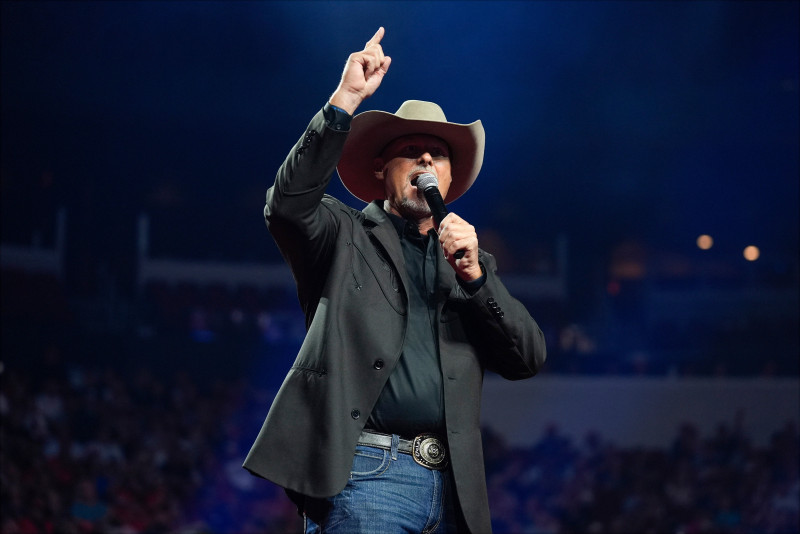
Rogers, a former congressman and law enforcement agent, has repeatedly highlighted El-Sayed’s Muslim faith. He has linked El-Sayed, the son of Egyptian immigrants, to the Muslim Brotherhood and accused him of failing to denounce Hamas. Despite this, El-Sayed has condemned both groups and identifies as a liberal supporting gay rights and abortion rights.
Rogers defended his comments on NBC’s “Meet the Press,” claiming they were not aimed at Islam as a whole but rather at what he perceives as El-Sayed’s connection to a “radical Islamic agenda.” He suggested that members of the Muslim community have contacted his office expressing concerns about El-Sayed.
“This is not about Islam. It’s not about how he prays. It is about his adherence to this radical Islamic agenda,” Rogers asserted. He acknowledged that many Muslims are integral to Michigan’s community but insisted they do not want to bring “hate, division, and anger” into the state.
The Islamophobic rhetoric has been more pronounced from GOP surrogates than from Rogers himself. At a rally in Port Huron, Health and Human Services Secretary Robert F. Kennedy Jr. made sweeping derogatory statements about Arab culture.
“There’s 500 million Arabs in the world,” Kennedy claimed. “And yet they don’t produce science. They don’t win the Nobel Prize. They don’t win the Fields Prize. They don’t win the Wolf Prize. They don’t produce literature.” This statement is factually incorrect; Arabs have indeed won prestigious awards including the Nobel Prize for Literature.
While campaigning alongside Rogers, Senator John Kennedy (R-La.) previously remarked that El-Sayed “sleeps in a Bin Laden jersey.” Vice President JD Vance responded to inquiries about whether he considered El-Sayed a jihadist by stating that the Democrat “has a lot of weird friends.”
El-Sayed has consistently dismissed attacks on his faith and ethnicity. He has taken jabs at Trump for misidentifying him as “Mohammed,” quipping that soon Trump will need to refer to him as “Senator Mohammed.”
During a campaign event last month, El-Sayed went viral for his response to a question from a Republican operative demanding he disavow the Muslim Brotherhood. He challenged the notion that his faith and Egyptian heritage should raise questions about “dual loyalty.”
El-Sayed embraces his devout Muslim faith—praying five times daily and abstaining from alcohol—while campaigning. He released an ad where he identifies as “a man of faith,” arguing that Washington lacks such virtue.
In response to the GOP's rhetoric, campaign spokesperson Cole Wozniak criticized what he termed lies and “desperate, bad faith attacks” from the right. He emphasized that “Abdul remains laser-focused on his plans to bring down costs and stand up to the chaos and corruption in Washington.”
Senator Elissa Slotkin (D-Mich.), who has campaigned with El-Sayed ahead of the midterms, noted that Republicans have adopted a “decidedly Islamophobic bent” in their messaging against him.
“I have no problem if people want to debate policy issues,” Slotkin stated. “But for [much] of the stuff coming out of their campaign, that’s not what we’re talking about — and I have a real problem with that.”
Obama campaigned with El-Sayed in Detroit on Saturday, asserting that GOP tactics against him are nothing new. He remarked, “Whenever a movement builds to challenge that broken system, the people who benefit from the status quo will say and do anything to stop that train from coming.”
Obama emphasized that such tactics didn’t work against him in Michigan during his campaigns in 2008 and 2012.