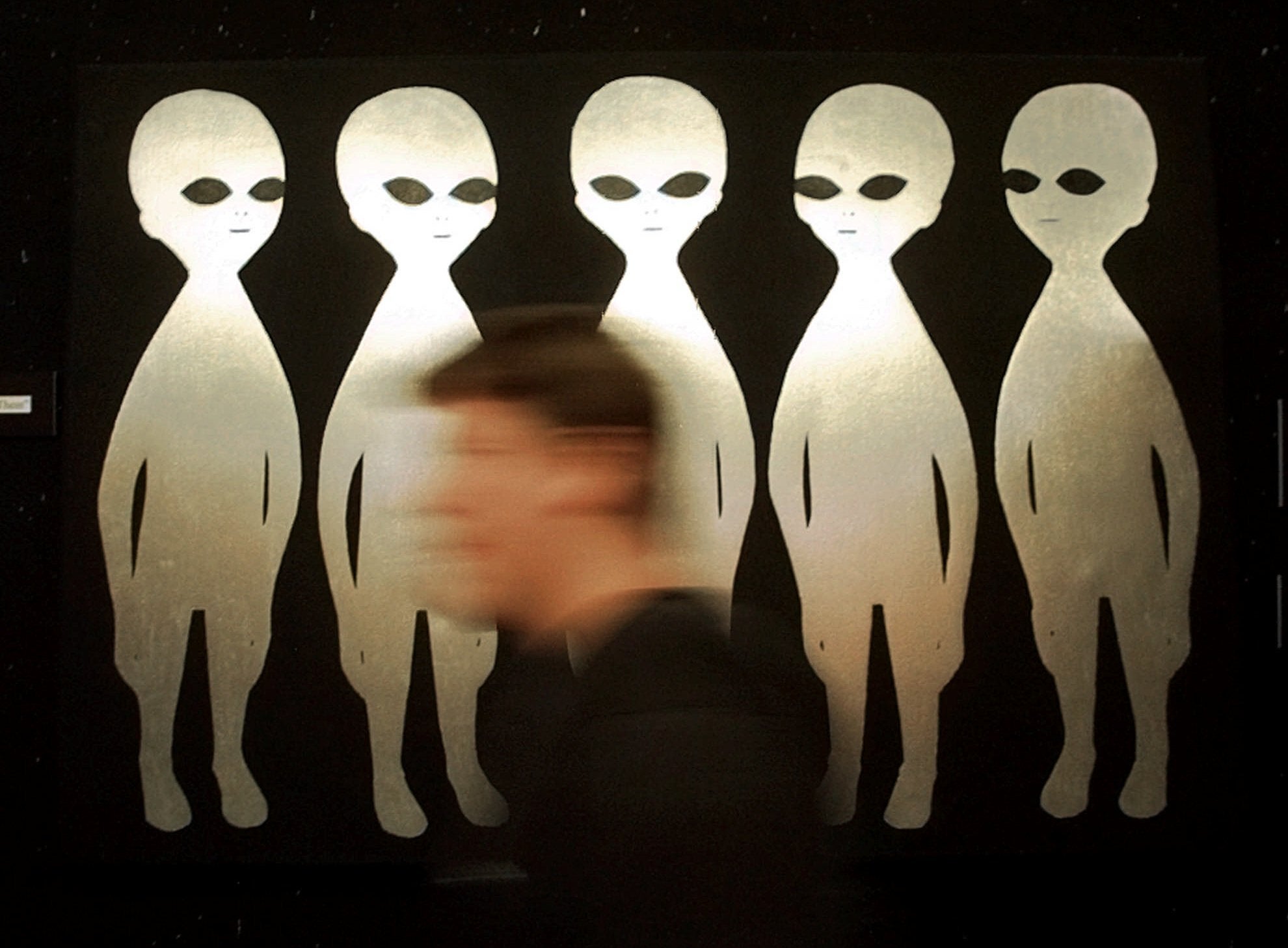




Humanity's curiosity about alien life often overshadows a crucial question: how would extraterrestrials view us?
Theoretical physicist Avi Loeb offers a sobering perspective. "From a distance, I would be pretty disappointed," he remarked, pointing to global conflicts as indicators of our limited intelligence. "Our investments largely focus on preventing violence among ourselves. Take the Ukraine war over a sliver of land—hardly a hallmark of intelligence."
Interest in unidentified aerial phenomena (UAPs) surged after a former president acknowledged their existence, albeit with a caveat that he had not personally encountered them and dismissed the idea of them being housed at Area 51.
In a follow-up, another former president took to social media, announcing his order to release government documents due to "tremendous interest" in the subject.
This renewed intrigue aligns with NASA’s Artemis II mission, which aims to send four astronauts on a lunar flyby before returning to Earth.
Amidst wars, civil unrest, and climate crises, one can't help but speculate what visitors from beyond might think of our struggles. A significant portion of Americans resonate with the sentiment from “The X-Files”: “The truth is out there.”
A 2021 Pew Research Center survey revealed that approximately two-thirds of Americans believe intelligent life exists elsewhere in the universe. Furthermore, around half of U.S. adults consider military-reported UFOs as “definitely” or “probably” evidence of extraterrestrial intelligence.
“We don’t want to accept that this is the only place in this vast universe where life and intelligence have emerged,” stated Bill Diamond, president of the SETI Institute. “It reflects our desire not to be alone.”
The fascination with extraterrestrial life traces back to 1947 when debris was recovered near Roswell, New Mexico. Initially labeled as a flying disc by the military, it was later reclassified as a weather balloon.
Hollywood capitalized on this intrigue, introducing flying saucers and little green men into popular culture. April 5 is even celebrated as “First Contact Day” in the “Star Trek” universe, marking the fictional date when humans first encountered Vulcans.
However, popular culture often depicts aliens as hostile. Priscilla Wald, a science fiction scholar at Duke University, theorizes this reflects our own nature. “We project onto aliens our tendencies for violence and conquest,” she explained. “It sounds like us.”
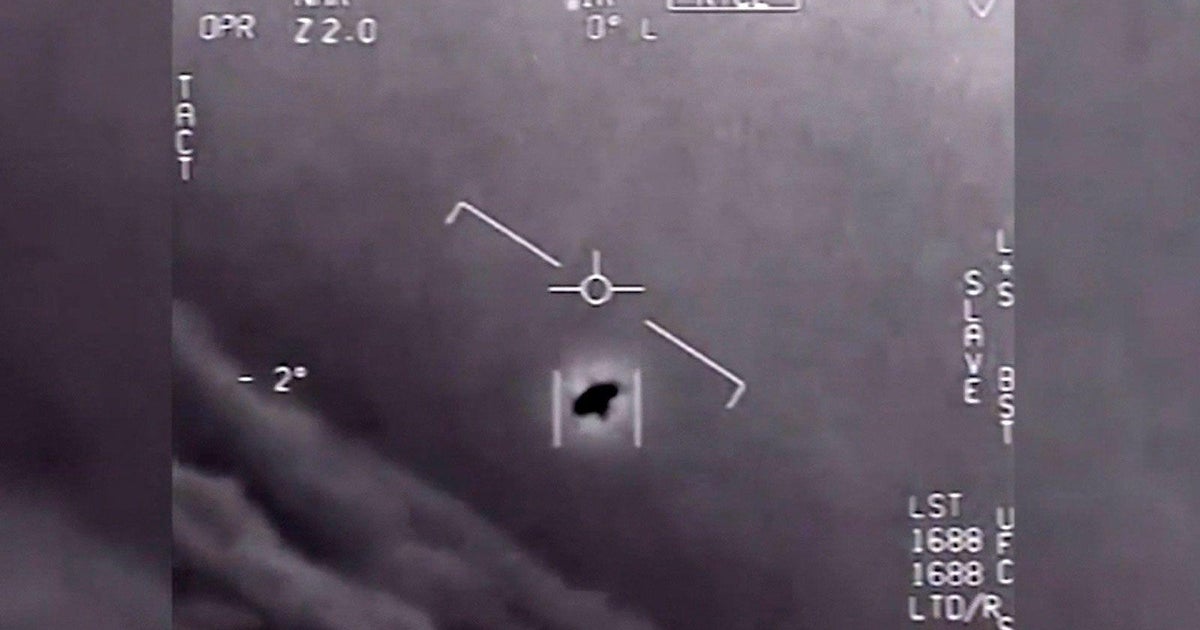
In 2024, the Pentagon released numerous reports on unidentified aerial phenomena but found no evidence linking them to extraterrestrial origins.
Debbie Dmytro witnessed two unusual aerial events in Michigan. The first sighting involved a greenish object that defied identification as either a plane or helicopter. The second sighting was more perplexing: “Four yellowish lights flying very low,” she recalled, noting their silence and uniform movement.
“I’ve never seen anything so low without noise,” she said. “Is it man-made? Is it not? Who knows?”
Indeed, who knows? The term UFO has evolved into UAP—unidentified aerial phenomena—reflecting a broader understanding of these sightings.
“Absolutely, UAPs exist,” affirmed Diamond, whose organization seeks to explore extraterrestrial intelligence. “People see things in the sky they can’t identify as human-made or natural.”
Dmytro expressed her desire for more transparency from the government: “I think there’s more information out there. I’m open to learning more.”
Retired Rear Adm. Timothy Gallaudet emphasized that evidence supports the existence of UAPs in our airspace and oceans. “The nonhuman intelligence controlling them is real,” he stated. “We’ve recovered crashed craft; we just don’t know if they’re extraterrestrial.”
Gallaudet participated in a congressional hearing on UAP disclosure and noted that Trump’s promise to release files has piqued public interest. He hopes the former president follows through.
With billions of galaxies and stars in the universe, the probability of life elsewhere is high, according to University of Michigan Astronomy Professor Edwin Bergin. He believes that if intelligent beings traveled vast distances to reach Earth, they would reveal themselves despite humanity's chaotic tendencies.
Loeb, director of Harvard's Institute for Theory & Computation, posits that extraterrestrials might be watching us closely. “They could be laughing at us,” he said. "They might be monitoring us to ensure we don’t become a threat.”
The government’s secrecy surrounding UFOs often ties back to national security concerns, according to Diamond. “We have advanced technologies aimed at national security that sometimes detect unidentified objects,” he explained.
Gallaudet advocates for sharing government data with scientists for better understanding: “When these objects nearly collide with our aircraft, it raises valid concerns about their intentions.”
“When has ignorance ever been a good national strategy?” Gallaudet questioned. “Seeking the truth is in our best interest.”
Diamond believes any genuine alien encounter would be impossible to conceal: “If any civilization has mastered interstellar travel, their technology would surpass our comprehension.”
The history of UFOs spans decades, marked by investigations and cultural phenomena:
1947: Kenneth A. Arnold reports nine flying objects near Mount Rainier, triggering widespread UFO sightings.
1948: The U.S. Air Force launches Project Sign to investigate UFOs.
1950: Hollywood releases "The Flying Saucer," igniting public interest.
1952: Unexplained objects appear over Washington D.C., witnessed by radar operators and pilots.
1955: Construction begins on Area 51, becoming a hub for conspiracy theories.
1966: "Star Trek" premieres on NBC, shaping space drama for generations.
1969: The Air Force terminates Project Blue Book after finding no evidence of extraterrestrial threats.
1977: Spielberg's "Close Encounters of the Third Kind" captivates audiences.
1980: U.S. Air Force personnel report strange lights above Rendlesham Forest in England.
1996: "Independence Day" portrays an epic alien invasion.
2015: U.S. aviators track an unidentified object dubbed "Gofast."
2019: Navy acknowledges declassified footage as unidentified aerial phenomena.
2020: The Pentagon establishes a UAP Task Force for further investigation.
2021: A government report finds no definitive links to extraterrestrial life among 144 sightings reviewed.
2022: Congress holds its first hearing on UFOs in 50 years amid rising national security concerns.
2023: Former Air Force officer alleges government concealment of UFO retrieval programs; Pentagon denies such claims.
2024: A new Pentagon study finds no evidence supporting claims of extraterrestrial technology or life.
}