
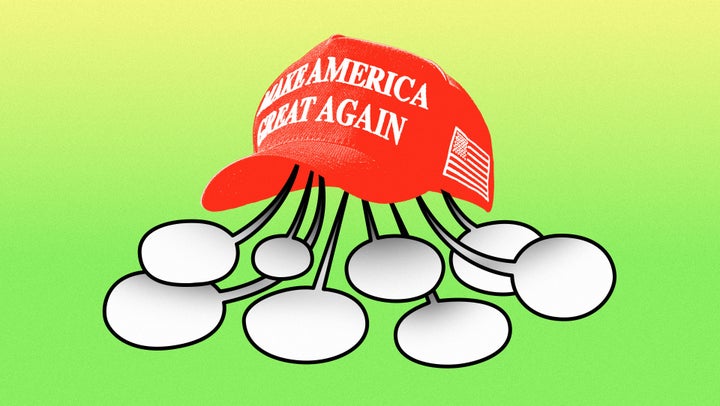
Are You Conversing with Someone Using MAGA-Coded Language? These 5 Phrases Are a HUGE Indicator
Bright red MAGA hats and oversized Trump 2028 yard signs are often the most visible symbols of support for Donald Trump and his Make America Great Again movement. However, as gas prices soar and public sentiment shifts regarding international conflicts, some supporters choose to express their allegiance more discreetly.
While the iconic MAGA hat is an unmistakable sign of support, experts point out that certain phrases serve as quieter indicators of MAGA alignment. These coded expressions allow individuals to convey their beliefs without overtly displaying their political affiliations.
Political content creators, particularly those with a progressive viewpoint, have identified these phrases as common among MAGA supporters. “I don’t know about all that” is one such phrase, according to Anna Connelly, a Minnesota-based political content creator.
When discussing divisive topics, this phrase often emerges as a way to dismiss facts presented by others. “It’s a tactic to undermine the information being shared,” Connelly explained. This response frequently leads to abrupt topic changes or the cessation of uncomfortable discussions.
Connelly further elaborated, “It reflects a lack of critical thinking. When conversations halt with ‘Well, I don’t know about all that,’ it’s often because they can’t engage further.”
Jess Britvich, a political content creator from Pittsburgh, highlighted another phrase: “traditional family values.” While seemingly innocuous, it often carries anti-LGBTQ undertones and reinforces outdated gender roles. “It’s about maintaining strict hierarchies within families,” Britvich noted.
This phrase's implications extend beyond personal beliefs into policy-making, influencing legislation on reproductive rights and anti-trans measures. “Many MAGA-coded phrases are now intertwined with religious language,” Britvich added, emphasizing the connection between white Christian nationalism and MAGA ideology.
Britvich also pointed out the term “DEI hire,” which serves as a derogatory label for individuals hired under diversity, equity, and inclusion initiatives. This phrase undermines qualifications based on identity while promoting a merit-based narrative that often excludes marginalized groups.
“It’s an attempt to reverse progress in civil rights,” she stated. Research indicates that DEI programs enhance representation for Black and brown communities in predominantly white spaces.
Another phrase gaining traction is “marry a provider,” often seen in social media discussions about women’s desires for work-life balance. Britvich remarked on trends that suggest women should prioritize financial security over personal fulfillment, perpetuating a narrow view of gender roles.
“Statements like these ignore systemic issues like capitalism and the real reasons behind women’s burnout,” she said. Instead of advocating for policies like paid family leave or better maternal health, they promote dependency on traditional male providers.
Connelly noted that the phrase “protect women” often signals anti-trans sentiments. In contrast, “believe women” aligns with progressive movements advocating for accountability in cases of sexual harassment and assault. “It’s a stark contrast,” she observed.
Britvich highlighted a concerning statistic: over 70% of people believe they have never met a trans individual. This lack of personal interaction fosters an environment where misinformation thrives, often perpetuated by media narratives.
These MAGA-coded phrases thrive online due to their fear-based nature. “They lack nuance and exploit emotions,” Britvich explained. “They often evoke fear of the ‘other,’ which is one of humanity’s most detrimental emotions.”
Trump’s history of racially charged comments and anti-trans legislation exemplifies this tactic of othering marginalized groups. The subtlety of these phrases allows them to influence public perception and policy without overtly revealing their intent.
“These grifters know how to craft their language to appear knowledgeable while lacking real expertise,” Britvich concluded.
View this post on Instagram