Congressional Leaders Push for Vote to Curb Trump's Military Actions in Iran
WASHINGTON — Congressional Republicans largely endorsed the recent U.S. and Israeli military actions against Iran, framing the strikes as a necessary measure to counter the nation’s nuclear ambitions after failed diplomatic attempts.
In contrast, Democrats, alongside Kentucky Republicans Rep. Thomas Massie and Sen. Rand Paul, voiced their discontent over Trump’s decision to launch strikes without congressional approval. They are determined to initiate a war powers vote in the House next week aimed at restricting Trump’s capacity for further military action in Iran.
Massie, who collaborated with Rep. Ro Khanna, D-Calif., on the war powers resolution prior to the strikes, labeled the actions as “Acts of war unauthorized by Congress.”
“I am opposed to this War. This is not ‘America First.' When Congress reconvenes, I will work with @RepRoKhanna to force a Congressional vote on war with Iran,” Massie stated on X. “The Constitution requires a vote, and your Representative needs to be on record as opposing or supporting this war.”
Sen. Andy Kim, D-N.J., expressed that Congress should convene immediately to address what he termed “an appalling action by this president.” He emphasized the urgency for Congress to vote on the war powers resolution, asserting that it reflects the will of the American people.
House Minority Leader Hakeem Jeffries, D-N.Y., raised questions about Trump’s rationale for launching new military strikes against Iran, especially after the president previously claimed that his June 2025 actions had “completely and totally obliterated” Iran’s nuclear program.
Jeffries confirmed that Democrats would push for a vote on the Massie-Khanna resolution upon their return to Washington.
“Iran is a bad actor and must be aggressively confronted for its human rights violations, nuclear ambitions, support of terrorism and the threat it poses to our allies like Israel and Jordan in the region,” Jeffries remarked. “However, absent exigent circumstances, the Trump administration must seek authorization for the preemptive use of military force that constitutes an act of war.”
The upcoming vote could be contentious due to narrow Republican majorities in both chambers. Unlike standard legislation, a war powers resolution limiting Trump’s actions would require only 51 votes in the Senate, where Republicans hold 53 seats.
However, opinions on Trump’s military intervention are not uniform among lawmakers. Some Republicans who previously criticized U.S. involvement in Middle Eastern conflicts are now questioning Trump’s military strategy.
When asked if he supports Trump’s military actions against Iran, Rep. Warren Davidson, R-Ohio, responded: “No. War requires Congressional authorization.” He indicated that he would seek a briefing on the U.S. mission in Iran and would support the Massie-Khanna resolution if his concerns are not addressed.
Paul, known for his noninterventionist stance, also opposed the strikes. He stated on X, “The Constitution conferred the power to declare or initiate war to Congress for a reason, to make war less likely... But my oath of office is to the Constitution, so with studied care, I must oppose another Presidential war.”
On the other hand, moderate Rep. Tom Suozzi, D-N.Y., co-chair of the bipartisan Problem Solvers Caucus, commended Trump’s objectives but insisted that military authorization must come from Congress under the War Powers Resolution of 1973.
“I agree with the President’s objectives that Iran can never be allowed to obtain nuclear capabilities. The President must now clearly define the national security objective and articulate his plan to avoid another costly, prolonged war in the Middle East,” Suozzi noted on X.
Sen. John Fetterman, D-Pa., a strong supporter of Israel, is anticipated to align with Republicans against a war powers resolution.
“President Trump has been willing to do what’s right and necessary to produce real peace in the region,” Fetterman stated on X. “God bless the United States, our great military, and Israel.”
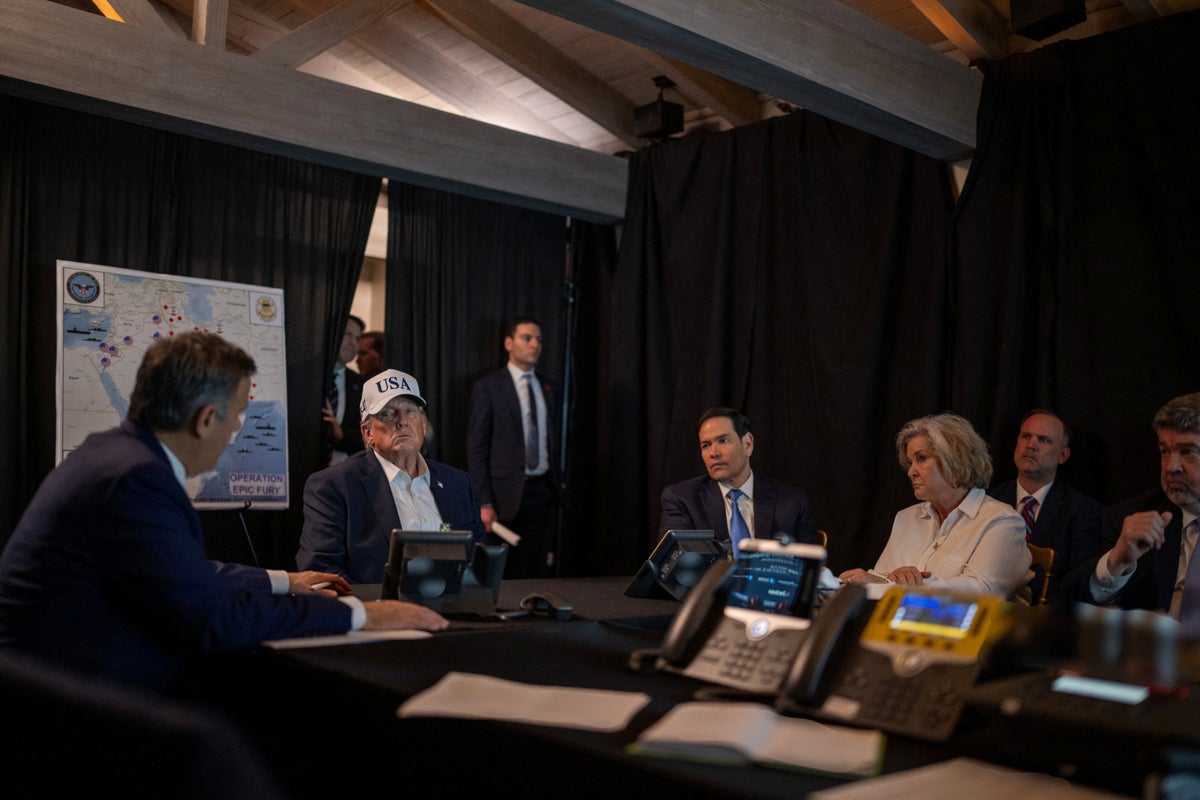
Prior to what the administration termed "Operation Epic Fury," Secretary of State Marco Rubio reached out to members of the “Gang of Eight,” which includes key congressional leaders from both parties. One member was reportedly unreachable during this time.
Rubio had previously briefed these leaders about the administration’s strategy regarding Iran before Trump’s State of the Union address.
After the strikes commenced overnight, the Defense Department promptly informed both House and Senate Armed Services committees early Saturday morning.
Senate Majority Leader John Thune expressed his support for Trump’s actions and anticipated further briefings for all senators regarding the strikes. “Despite the dogged efforts of the president and his administration, the Iranian regime has refused the diplomatic off-ramps that would peacefully resolve these national security concerns,” Thune stated Saturday. “I commend President Trump for taking action to thwart these threats.”
Similarly, House Speaker Mike Johnson defended Trump’s decisions and confirmed he had been kept informed about impending strikes throughout the week. He emphasized that Iran is now facing severe repercussions for its actions.
“Today, Iran is facing the severe consequences of its evil actions. President Trump and the Administration have made every effort to pursue peaceful and diplomatic solutions in response to the Iranian regime’s sustained nuclear ambitions and development, terrorism, and the murder of Americans—and even their own people,” Johnson concluded.