

Election Chaos: Netanyahu's Grip Slips as Arab Parties Rise to Power
For the first time since the October 7, 2023, Hamas massacre, Israelis faced a stark reality at the polls: no clear winner emerged. Prime Minister Benjamin Netanyahu's coalition, once a dominant force, now teeters on the brink of collapse.
Initial projections from Channel 12 News showed Eisenkot's opposition bloc leading with 52 seats against Netanyahu's coalition at 50. However, as the night progressed, that narrative flipped, revealing Netanyahu's coalition with 52 seats and Eisenkot's side at 49. Channel 13's figures fluctuated wildly, initially placing Likud at 25 seats and Eisenkot's Yashar party at 23, only to later show a deadlock at 51-51. Channel 12's opening numbers had Likud at 24 and Yashar at 22.
The data from all networks indicates a race too close to call. Neither side secured enough seats for a governing majority. Likud emerged as the largest party, but Netanyahu's coalition fell significantly short of a working majority.
Entering the election with 68 seats in the outgoing Knesset, Netanyahu's right-wing and ultra-Orthodox bloc faced a staggering drop of approximately 18 mandates, projected to fall between 50 and 52 seats. Eisenkot highlighted this erosion during remarks at his party's headquarters, reflecting a palpable desire among voters to unseat Netanyahu, who has dominated Israeli politics for nearly 19 years across three tenures.
Voter turnout reached an impressive 77.7% of approximately 7.3 million eligible voters, marking the highest participation rate since 1999. This surge stemmed from widespread dissatisfaction with the government's handling of the post-October 7 conflict, compelling voters to deliver a verdict on their leaders.
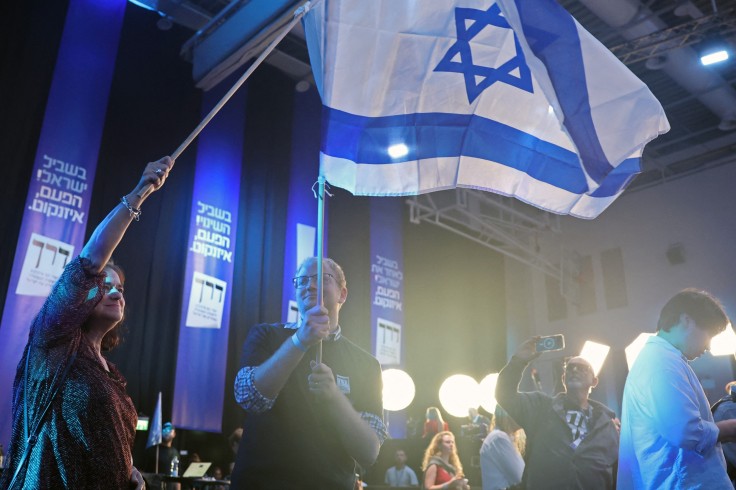
The real winners of the night may not be either of the main contenders. Arab citizens, constituting about 20% of Israel's population, are projected to secure between 16 and 18 Knesset seats—almost double their previous count of 10. With neither Netanyahu's bloc nor Eisenkot's alliance nearing the critical 61-seat threshold, the two Arab-majority parties—the Joint List and Ra'am—hold significant sway over the formation of the next government.
Netanyahu's far-right allies swiftly moved to shut down any potential collaboration with Arab parties. Bezalel Smotrich, leader of the Religious Zionism party within Netanyahu's bloc, asserted that Arab parties would not influence the next government’s composition, complicating matters for Eisenkot as well.
Eisenkot, a former army chief of staff who resigned from the national unity government to lead the opposition, interpreted early projections as a public indictment of Netanyahu’s tenure. He firmly rejected any notion of a second election and warned Netanyahu against leveraging ongoing security issues for political gain.
Israeli Foreign Minister Gideon Saar, a Netanyahu ally whose New Hope faction merged into Likud earlier this year, called for caution in interpreting early exit polls, emphasizing that projections were still evolving. Eisenkot’s path to a majority hinges on potential support from Arab-led parties—an option that other opposition leaders have publicly dismissed—placing him in a precarious position even if final counts favor his bloc.
If no coalition achieves an outright majority of 61 seats once all votes are tallied, forming a government could take days or weeks. Israeli President Isaac Herzog possesses the authority to assign a mandate to any lawmaker he deems capable of commanding a Knesset majority. Should this effort fail, Israel risks plunging into yet another election—its seventh in less than a decade.
The Knesset officially dissolved on July 17, 2026, after completing its full four-year term—a historic milestone as it marked the first Israeli parliament to finish its term without early elections since 1988. The turnout on Tuesday underscored one undeniable truth: millions of Israelis arrived at the polls ready to make their voices heard. Whether this fragmented parliamentary landscape can coalesce into a functioning government remains an open question.