

Israelis Brace for Political Turmoil as Netanyahu Faces Coalition Dilemma
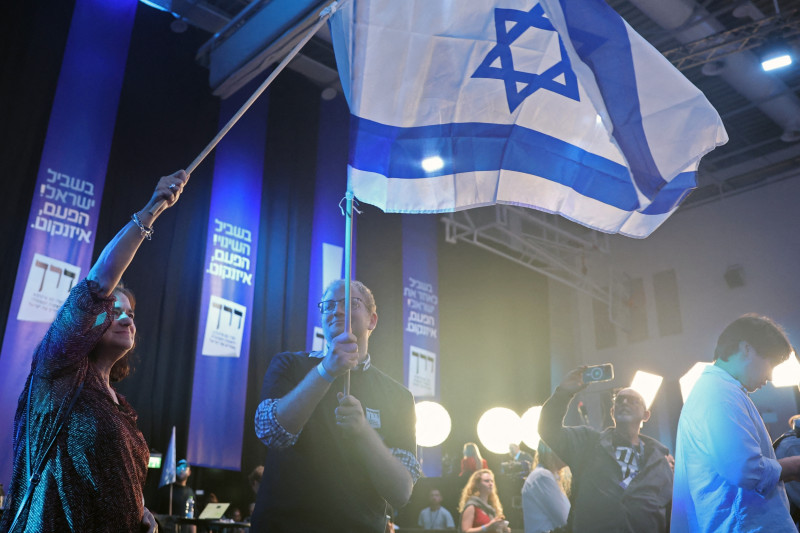
JERUSALEM — Anxious Israelis are glued to election results as the highest voter turnout in over 25 years unfolds, yet no clear victor has emerged, setting the stage for intense negotiations among Prime Minister Benjamin Netanyahu and various opposition factions.
Arab-led parties have made a historic impact, but uncertainty looms over whether other opponents of Netanyahu’s far-right government will ally with them to secure a parliamentary majority. The sensitive issues surrounding Palestinians and their descendants complicate potential coalitions.
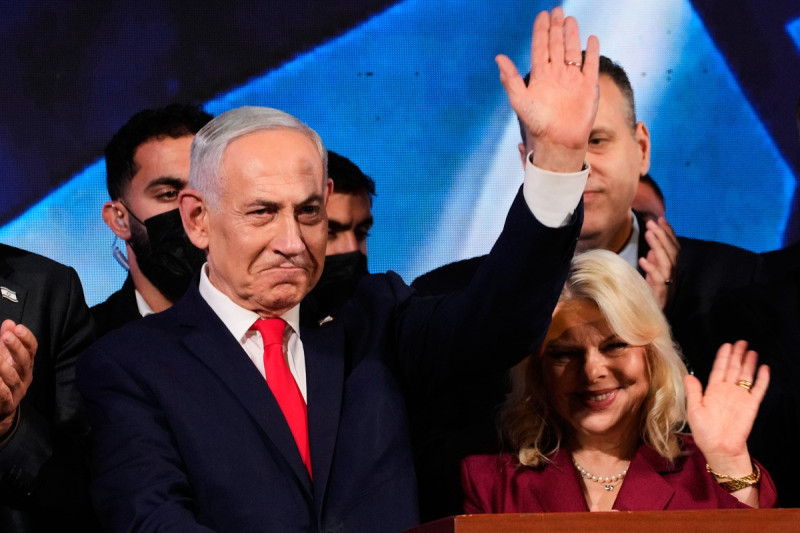
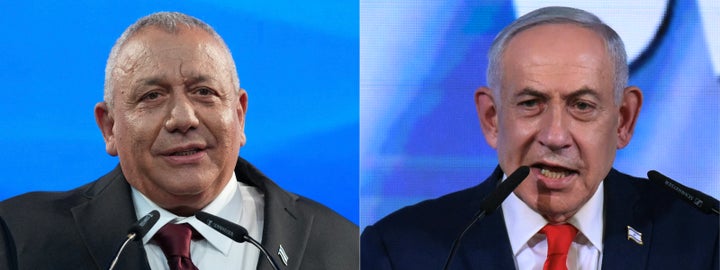
Netanyahu aims to extend his tenure as the longest-serving prime minister. In a defiant stance post-election, he labeled any partnership with Arab parties — representing 20% of Israel’s population — as treasonous.
On Wednesday, he cautioned against a “dangerous government” that might include Arab parties, firmly rejecting any collaboration, while those parties have also ruled out working with him.
His main rival, centrist former military chief Gadi Eisenkot, has left the door ajar for cooperation with Arab parties under specific conditions, including their acknowledgment of Israel as a Jewish state and Hamas as an extremist organization.
However, it remains uncertain if Eisenkot’s potential allies, who have dismissed such an alliance, will reconsider their positions to oust Netanyahu.
Israeli voters select parties rather than individuals. With 85% of votes counted, Netanyahu’s Likud party stands at 20.8%, while Eisenkot’s Yashar party holds 16.1%. The official count does not clarify how many seats each party will occupy in the 120-seat Knesset.
Emerging results indicate that neither Netanyahu’s nor Eisenkot’s coalition blocs will achieve the 61 seats necessary for a majority. Likud’s vote share has dropped from 23.4% in the previous election held in 2022.
Nearly 78% of eligible voters participated, marking the highest turnout since 1999. Final results are anticipated in the coming days, including hundreds of thousands of absentee ballots from military personnel and diplomats yet to be counted.
The voting reflects widespread unease regarding Netanyahu’s alliance with far-right factions and frustration over military draft exemptions for the significant ultra-Orthodox Jewish demographic. Yet, results suggest that opponents failed to leverage the grief stemming from the Hamas-led attack on October 7, 2023, to decisively unseat him.
A notable partner losing traction is far-right national security minister Itamar Ben-Gvir, who has become emblematic of Netanyahu’s government’s most extreme elements, openly mocking Palestinian detainees and asserting that many in Gaza are “not even people.”
Vote-counting indicates Likud will likely remain the largest party and is best positioned to be tasked with forming a government by Israel’s president, Isaac Herzog. However, the president is not obligated to appoint the leader of the party with the most seats.
“We must do everything we can, certainly after yesterday, to avoid another round of elections,” Herzog stated on Wednesday.
The most viable route to a parliamentary majority could involve Eisenkot collaborating with Arab-led parties, which have garnered 14.9% of the votes counted. However, this presents significant political challenges. In an early Wednesday address emphasizing national unity, Eisenkot vowed to form a government and heralded “a new era — an era of hope.”
If no coalition can be formed, new elections may occur early next year. Israel experienced five elections between April 2019 and November 2022 due to similar deadlocks. It remains uncertain whether thousands of Israelis abroad would return to vote or if Arab voter turnout would surge again.
Minority governments are also a possibility but would require cooperation from external parties to pass legislation.
The strong performance of Arab parties has reignited discussions about national identity among Israelis.
“We have no future here if we do not stop being afraid,” asserted Yair Golan from the Democrats party, advocating for Arab-led parties’ inclusion in a coalition. “We must no longer accept Netanyahu’s racist division between Jewish votes and Arab votes.”
Israel’s Arab citizens descend from Palestinians who remained after the state’s establishment in 1948. They frequently encounter discrimination and are viewed with suspicion due to their solidarity with the Palestinian cause. This wariness intensified following October 7, despite Arab citizens also being victims of violence.
The atmosphere was jubilant overnight at the United Arab List headquarters, the only Arab party to have briefly joined a governing coalition in 2021.
“We are here, we are not on the sidelines,” declared party leader Mansour Abbas.
Some Israelis found this prospect unusual and uncomfortable.
“We are gradually reaching a point where we must confront reality,” remarked Hanna Doukhan, a Tel Aviv voter. “I don’t see a possibility to form a government without the Arabs.”
Others expressed optimism. “This could pave the way for healing our society” while maintaining Israel as the national home for Jewish people, said Eti Wissotzky-Cohen in Tel Aviv.
In Nazareth, one of Israel’s largest Arab cities, Awni Zoabi expressed gratitude for a potential return to rational discourse in a nation where extreme rhetoric has escalated. “The Arabic language has become as if it were a crime,” Zoabi lamented.
Netanyahu has maintained nearly uninterrupted rule for 17 years. Israelis were divided over him even before the deadliest attack in the nation’s history. The resulting conflicts and settler violence in the occupied West Bank have sparked global outrage, straining relationships with Israel’s closest allies and fueling antisemitism.
Supporters of Netanyahu argue he safeguards Israel’s security and Jewish identity against international pressures and domestic liberal elites.
“I prefer that (Netanyahu) assembles the coalition,” stated Ran Cohen from Jerusalem. “He’s the only one who knows how to do the job properly and communicate with the world.”
Critics contend that Netanyahu, amid an ongoing corruption trial, has prolonged the war in Gaza and its hostage crisis for political gain. They accuse him of undermining Israel’s independent judiciary and enabling ultra-Orthodox Jews to evade military service.
Eisenkot is perceived by supporters as a capable leader with impressive security credentials. His son and two nephews were killed in Gaza, leading his backers to believe he deeply understands the nation’s suffering. Parties likely to ally with him have pledged to enhance Israel’s international standing and work towards conscripting ultra-Orthodox men while reinforcing judicial independence.