Judge Dismisses Efforts to Halt Trump’s Grand White House Ballroom Project
A federal judge in Washington has dismissed a lawsuit aimed at halting President Donald Trump’s ambitious White House ballroom project, while allowing the possibility for the preservation group to refile under a different legal framework.
On Thursday, U.S. District Judge Richard Leon issued a ruling against the National Trust for Historic Preservation, which sought an injunction to prevent the ongoing construction of the ballroom. This project is being funded privately and lacks congressional approval, taking place on the site where the East Wing was demolished last October at Trump’s directive.
Leon criticized the preservation group for relying on what he termed “a ragtag group of theories under the Administrative Procedure Act” and the U.S. Constitution. He stated that the request for an injunction was denied because the White House Office of the Executive Residence does not qualify as an “agency” under the APA.
Furthermore, he pointed out that the National Trust failed to assert in its complaint that the entire ballroom initiative—its funding through private donations and avoidance of Congressional oversight—was ultra vires, a legal term indicating actions taken beyond one’s authority.
“Unless and until Plaintiff amends its existing complaint to include the necessary ultra vires claim, the Court cannot address the merits of the novel and weighty issues raised by this statutory challenge,” Leon remarked, emphasizing that the motion for a preliminary injunction must be denied.
The judge also noted that the National Trust misrepresented the nature of the dispute, framing it as a constitutional issue rather than questioning whether the statutes cited by the White House granted Trump the authority to demolish the East Wing and construct a new facility without Congressional input.
However, he indicated that if the Trust were to amend its complaint with appropriate legal claims, it could potentially revive its lawsuit.
“If Plaintiff is inclined to amend its complaint with the necessary ultra vires cause of action to test the President's statutory authority, the Court will expeditiously consider it and, if viable, address the merits of the novel and weighty issues presented,” he stated.
In response to the ruling, Trump took to Truth Social, declaring it “great news for America and our wonderful White House.” He highlighted that funding for the project comes solely from “patriot donors and contributors.”
“The Ballroom construction, which is anticipated to also handle future Inaugurations and large State Visits, is ahead of schedule and under budget. It will stand long into the future as a symbol to the Greatness of America,” he added.
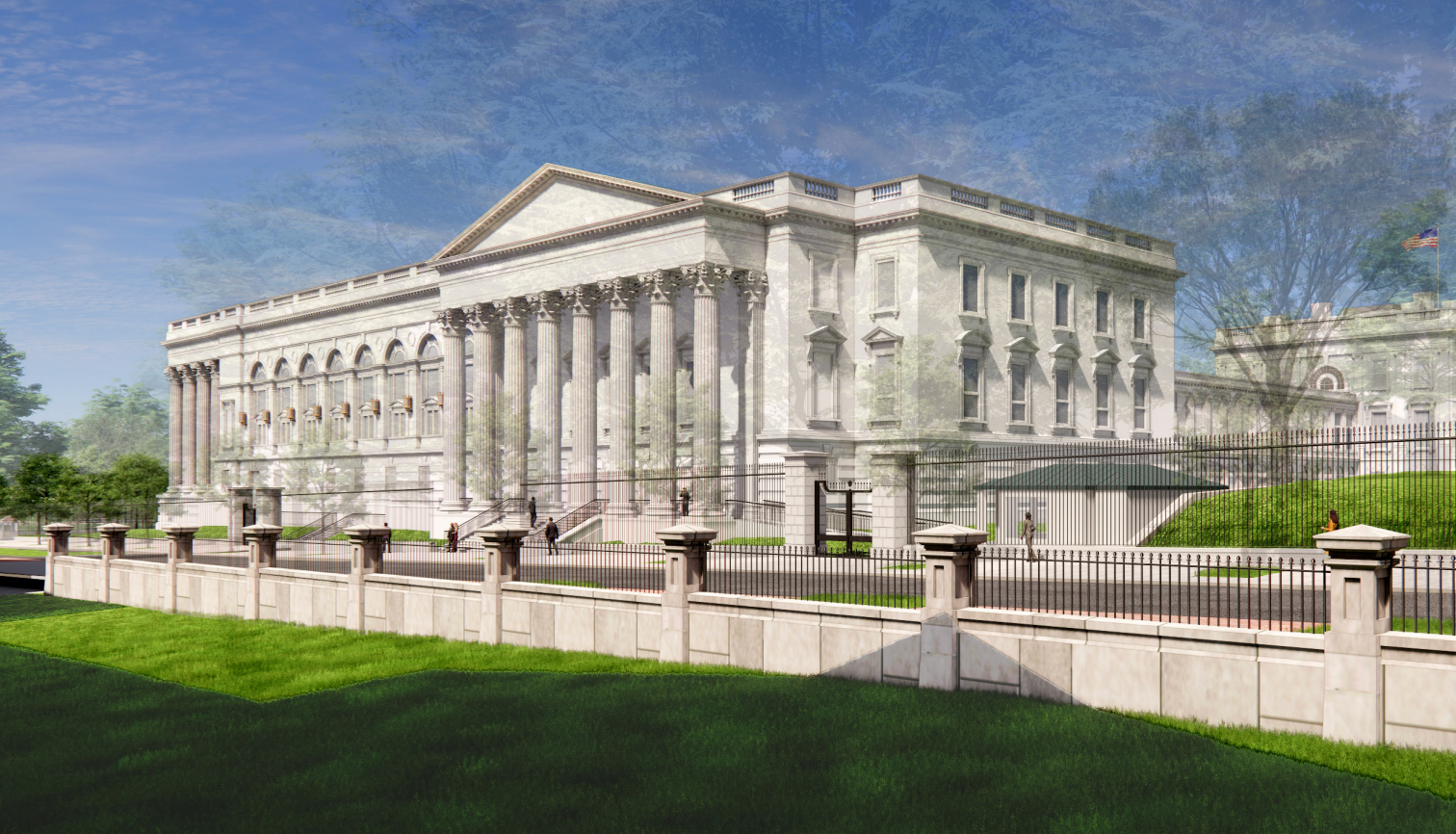
The new ballroom is projected to be a significant enhancement to the White House, accommodating up to 1,000 guests for state dinners and other major events. Trump has asserted that this space is essential for hosting large gatherings.
Despite its ambitious scope, the project has faced intense scrutiny due to its rapid rollout and escalating costs—initial estimates soared from $200 million to $400 million. The administration has remained tight-lipped regarding the identities of individual and corporate donors contributing to this new venue.