

Keiko Fujimori's Desperate Bid: Emulating Bukele's Brutal Security Tactics in El Salvador
Peru's President Keiko Fujimori is on a mission, landing in El Salvador to scrutinize the CECOT maximum-security prison, a symbol of President Nayib Bukele's iron-fisted approach to crime. With Lima grappling with rampant extortion and organized crime, Fujimori is desperate for a solution, aiming to replicate Bukele's hardline tactics before the year ends.
This visit marks a pivotal moment for Fujimori, signaling her intent to overhaul Peru's security framework based on the Salvadoran model. The urgency is palpable as crime spirals out of control in Peru.
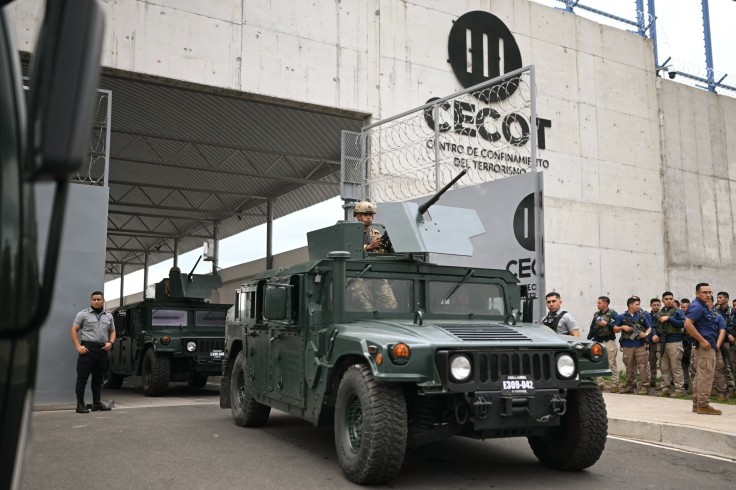
On Thursday, October 29, meetings kick off at 11 a.m. at El Salvador's Ministry of Justice and Public Security, led by Minister Gustavo Villatoro, a key architect of Bukele's mass-detention strategy. The delegation will then head to Tecoluca for an extensive tour of the Centro de Confinamiento del Terrorismo, a megaprison housing 40,000 inmates, emblematic of El Salvador's war on gangs. At 5 p.m., Fujimori will engage in a closed-door session with Bukele at Casa Presidencial, followed by an expanded meeting with cabinet ministers from both nations.
Friday shifts focus to social infrastructure. Fujimori plans to meet Health Minister Francisco Alabi and tour Hospital Rosales, which underwent a $61.2 million renovation. Before her departure from Lima, she highlighted El Salvador's telemedicine initiative as a model for Peru's struggling public health system. Discussions with the education ministry and a visit to a showcase school will round out the day.
Fujimori's entourage includes Foreign Minister Carlos Espá and Justice and Human Rights Minister Ernesto Álvarez. They are set to return to Lima on October 31. During the summit, Fujimori will extend a formal invitation for Bukele to visit Peru, transforming this fact-finding mission into the groundwork for a deeper bilateral relationship.
The trip received approval from Peru's upper chamber with a vote of 37–11 and one abstention, revealing underlying institutional tensions. Opposition lawmakers voiced concerns over Bukele's civil liberties record and the mass detention of thousands without trial. Critics caution against adopting a model flagged by international human rights organizations for severe violations.
Political analysts have criticized the framing of this visit as mere "Bukelized stagecraft," suggesting it serves more as a political communication strategy than a genuine governance transfer.
Senator Alejandro Aguinaga from Fuerza Popular dismissed these claims, arguing that El Salvador's significant drop in homicide rates justifies the visit as a strategic necessity for Peru, where extortion has reached crisis levels.
Fujimori's shift toward San Salvador is driven by urgent domestic needs. Before leaving Lima, she announced plans for new prison construction to address chronic overcrowding—an issue Bukele tackled on a massive scale with the CECOT. She also introduced a centralized anti-crime command structure modeled after Bukele's coordinated crackdown on the Mara Salvatrucha and Barrio 18 gangs.
Foreign Minister Carlos Espá emphasized that the delegation aims to extract lessons from El Salvador's transformation that could be tailored to Peru's context. He noted Peru's long history of combating insurgent groups like Sendero Luminoso and the MRTA as potential contributions to the bilateral dialogue.
Peru is not alone in seeking inspiration from El Salvador. Chile’s José Antonio Kast toured the CECOT in January, while Argentina’s Security Minister Patricia Bullrich visited in June 2024. Ecuador’s Defense and Interior ministers made their rounds in late April 2025, and Costa Rica’s President Laura Fernández visited just weeks before Fujimori’s arrival. The pattern is clear: Latin American leaders under domestic crime pressure flock to San Salvador, tour the CECOT, meet Bukele, and return home with a security narrative—regardless of whether actionable policies emerge.
What distinguishes Fujimori’s trip is its explicit bilateral ambition. By planning to formally invite Bukele to Lima during the summit, she is transforming this study mission into the foundation of an ongoing diplomatic relationship between their governments.
Fujimori’s delegation will be active in San Salvador and Tecoluca on October 29 and 30, with their flight back to Lima scheduled for Saturday, October 31. Following this, Fujimori heads to Madrid for the XXX Iberoamerican Summit on November 4 and 5, where her security messaging centered around the Bukele model will face an international audience.
The outcomes of Thursday’s bilateral discussions and any joint statements from Lima and San Salvador will serve as initial indicators of how far this alignment truly extends—or if it remains merely a carefully orchestrated political spectacle.