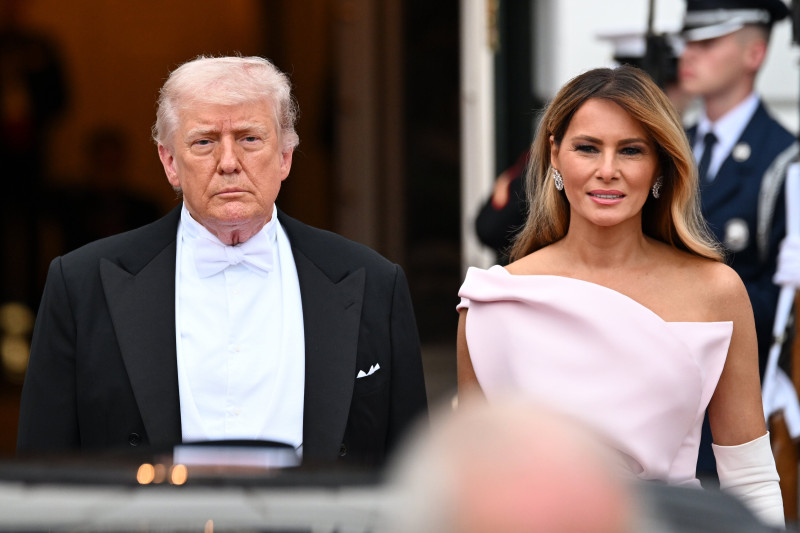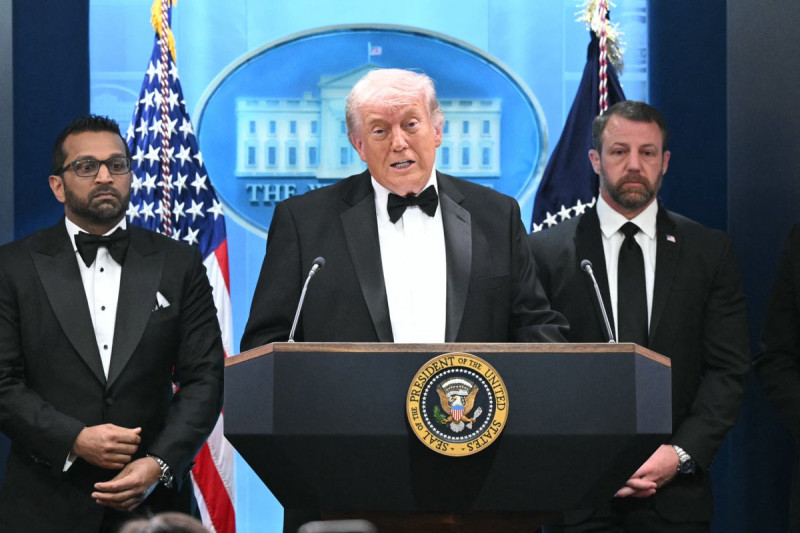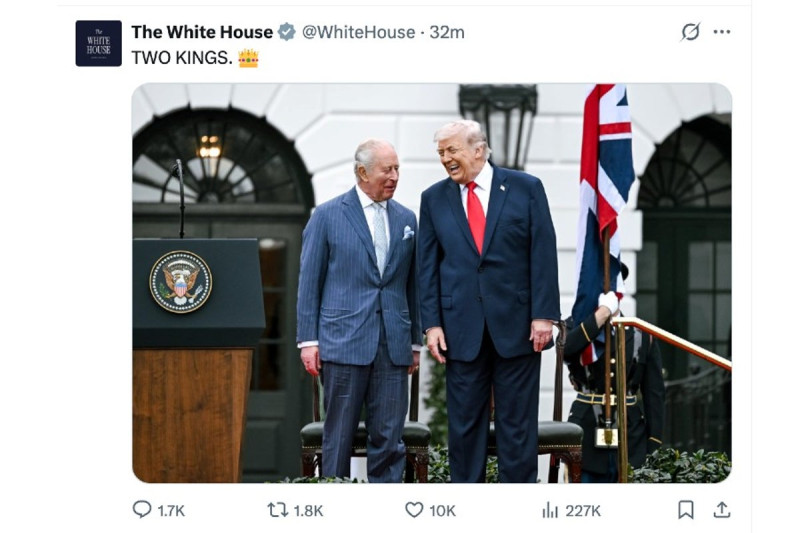



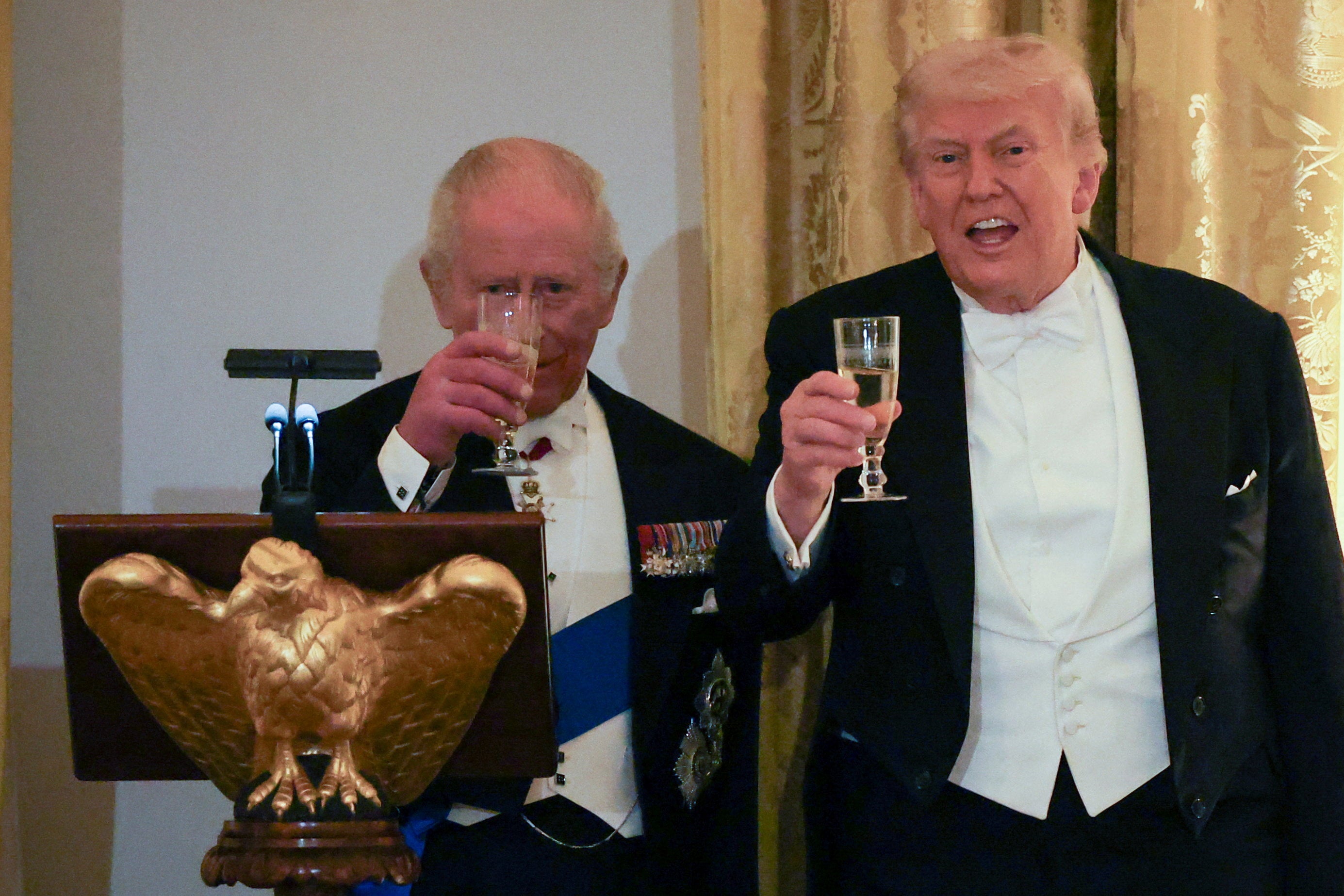
At a lively state dinner in the East Room of the White House, King Charles shared a light-hearted moment with President Donald Trump, First Lady Melania Trump, and Queen Camilla. The atmosphere was filled with laughter as the king remarked on the significance of Trump's second term, calling it “historic” and expressing his delight at being “back in this wonderful building, the heart of your democracy.”
With a playful tone, he turned to Trump’s controversial ballroom renovations, noting the president’s “readjustments to the East Wing.” The king then made a historical reference that caught the audience's attention: he recalled the British attempt at a “real estate redevelopment of the White House in 1814,” alluding to the burning of much of Washington by British forces.
In August 1814, British troops captured Washington with minimal resistance, leading to the Capitol being set ablaze. Furniture and books from the Library of Congress were reportedly used as fuel, resulting in significant damage to the building, as noted by the Architect of the Capitol.
The Executive Mansion, known today as the White House, was also severely affected by flames, alongside the city’s naval yard. This act of arson was framed by Britain as retaliation for the Americans burning York (now Toronto) the previous year.
These events unfolded during the War of 1812, which ignited when American forces invaded Canada, then under British control. The U.S. declared war while Napoleon was advancing on Moscow, mistakenly believing that France would defeat Britain in the ongoing Napoleonic Wars.
After Napoleon's defeat and abdication in 1814, Britain redirected its military resources toward America, dispatching 4,000 soldiers across the Atlantic to challenge U.S. forces. Andrew Lambert, a naval history professor at King’s College London, highlighted that this incident revealed deep divisions within American society.
Despite support for the war from Congress in 1812, opposition arose from northern and eastern states. “The war exposes – and this I think is very relevant – fundamental divergences between different sections of American society,” Lambert explained, suggesting it foreshadowed the Civil War.
After suffering a significant defeat in the War of 1812, American leaders launched a propaganda campaign filled with “nationalist nonsense,” framing the conflict as a second War of Independence. “Does that sound familiar?” Lambert remarked, drawing parallels to Trump’s refusal to concede in the 2020 presidential election.
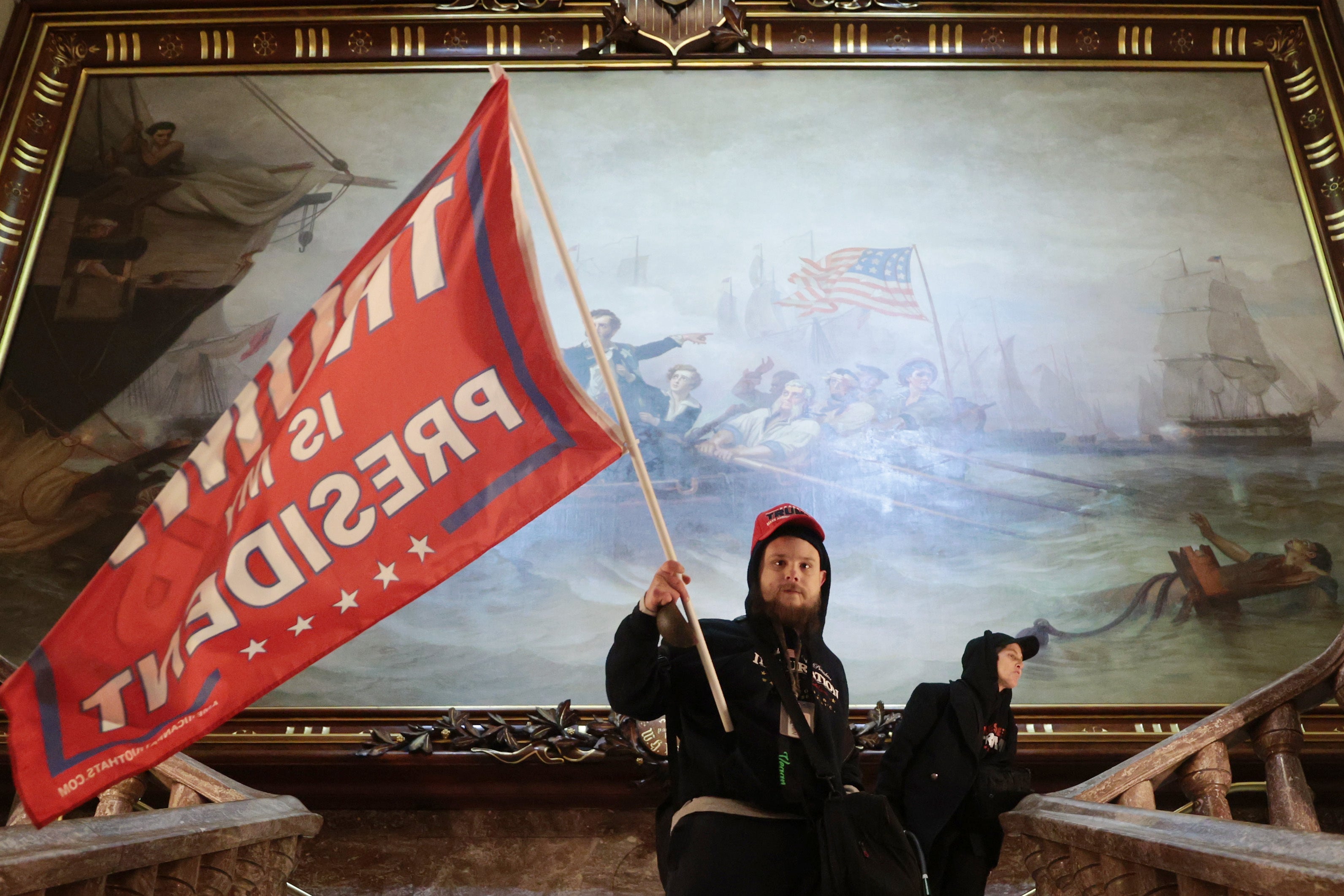
The 1814 incident gained renewed attention in 2021 following the January 6 Capitol riot. On that day, images emerged of rioters juxtaposed with historical narratives, including one individual waving a Trump flag in front of a large 19th-century painting inside the Capitol.
This artwork by William Henry Powell depicts the U.S. victory at the Battle of Lake Erie in September 1813, one of the few naval triumphs celebrated in American accounts of the conflict. Reflecting on the violence in Washington that day, Lambert offered another historical insight: he described the rioters’ actions as a “visceral reaction from a group who feel that the tide of history is against them.”