


Senate Crushes 7th Bid to Curb Trump's Iran War Powers, GOP Defector Joins the Fray
Washington — The Senate slammed the door on yet another Democratic effort to rein in President Trump's military powers regarding Iran on Wednesday, with one unexpected Republican senator siding with the opposition.
A motion to discharge the resolution from committee flopped with a nail-biting vote of 49 to 50. GOP Senators Rand Paul of Kentucky, Susan Collins of Maine, and Lisa Murkowski of Alaska broke ranks, joining most Democrats in favor of advancing the measure, while Sen. John Fetterman of Pennsylvania stood alone in opposition.
Murkowski, who previously voted against similar measures, expressed her frustration over the lack of clarity from the administration after a critical 60-day window passed earlier this month. "I expected to get more clarity from the administration," she told reporters, adding that it was "now time" to support the measure "so we can discuss our responsibilities" under the War Powers Resolution.
"We're in a different place than we were last time we voted on this," Murkowski stated, hinting at shifting political tides.
The resolution, spearheaded by Sen. Jeff Merkley of Oregon, aimed to force the president to "remove the United States Armed Forces from hostilities within or against Iran unless explicitly authorized by a declaration of war or a specific authorization for use of military force."
Since the conflict ignited on February 28, Senate Democrats have made six attempts to limit Trump's authority in Iran. Until now, Paul had been the lone Republican voice supporting these resolutions. With the 60-day threshold behind them, Democrats were hopeful for more GOP support this time around.
The War Powers Resolution of 1973 mandates that the president must report to Congress within 48 hours of deploying forces if Congress hasn't authorized a declaration of war, capping any unauthorized engagement at 60 days. However, as that deadline loomed, the administration claimed it didn't apply, arguing that hostilities ceased with a ceasefire reached on April 7. Trump even declared in a letter to congressional leaders on May 1 that "hostilities" with Iran had "terminated."
Democrats are pushing back against this interpretation. Merkley told reporters before the vote that he doesn't buy into the notion that the 60-day clock is suspended, asserting that the war is "at a different stage and may heat up again."
"But this will be the first vote in which we're looking at it through that lens," Merkley added, emphasizing the evolving nature of the conflict.
GOP Sen. Jim Risch of Idaho, chair of the Senate Foreign Relations Committee, echoed the administration's stance before the vote, insisting that hostilities referenced in the war powers resolution "do not exist today and have not existed for some time."
"My colleagues on the other side keep saying that somehow the administration is not in compliance with a 60-day clock," Risch argued. "The operations that began on February 28 have been terminated. The hostilities ended with the April 7 ceasefire. They're over — full stop."
However, Democratic Sen. Tim Kaine of Virginia, who has been at the forefront of the war powers initiative in the Senate, framed this vote as a crucial test of Republicans' commitment to their stated principles regarding Congress's role in military engagements.
Kaine pointed out that Republicans are feeling pressure from constituents concerned about the war's economic impact and soaring gas prices: "We're starting to hear doubt creep into their words and statements, not only just to us but more generally."
"There will be a day — and it might be soon — where this Senate will say to the president, 'stop this war,'" he asserted before the vote. "I don't know that today will be that day, but I believe that day is coming."
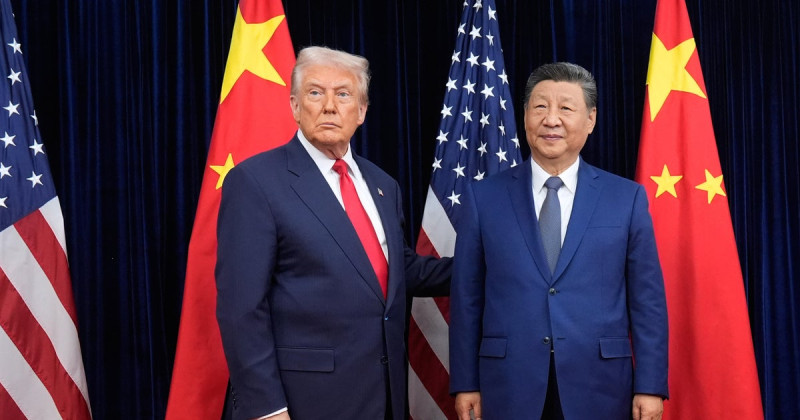
Merkley noted an "erosion of support and enthusiasm" among Republicans regarding this operation. He speculated that two factors may have influenced their votes: whether they acknowledge the ceasefire and Trump's presence overseas in China. He remarked that for Republicans, it "doubles the weight to switch positions while the president's abroad."
Senate Majority Leader John Thune emphasized before the vote that "right now, the president is overseas negotiating with the Chinese on various issues related to national security."
"And I think it would be best if everybody hung together and supported the president," said Thune. "But we'll see. People have their own minds about some of these issues."
Merkley believes many Republicans are ultimately "uncomfortable with where they stand but also uneasy about being on the wrong side of Trump."
Murkowski has indicated plans to introduce formal authorization for military force in Iran and questioned Defense Secretary Pete Hegseth about the administration's authority during a hearing on Tuesday. Hegseth maintained that if Trump decides to resume strikes against Iran, "we would have all the authorities necessary to do so."
When Murkowski asked if it would be "helpful to the president if it was made clear" he had full authority through congressional approval, Hegseth reiterated, "Our view is that he has all the authorities he needs under Article II to execute."