


Supreme Court Dismantles Voting Rights Act in Landmark Redistricting Ruling, Overturning Louisiana's Congressional Map
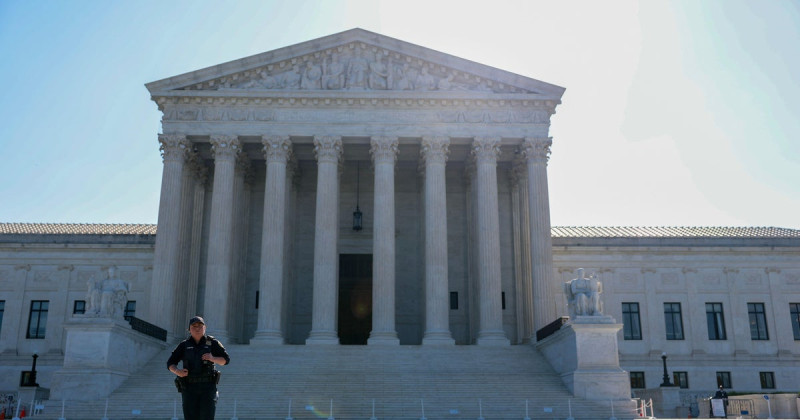
Washington — The Supreme Court's ruling on Wednesday dismantled Louisiana's congressional map, which featured two majority-Black districts, marking a pivotal win for Republicans and a substantial blow to the Voting Rights Act.
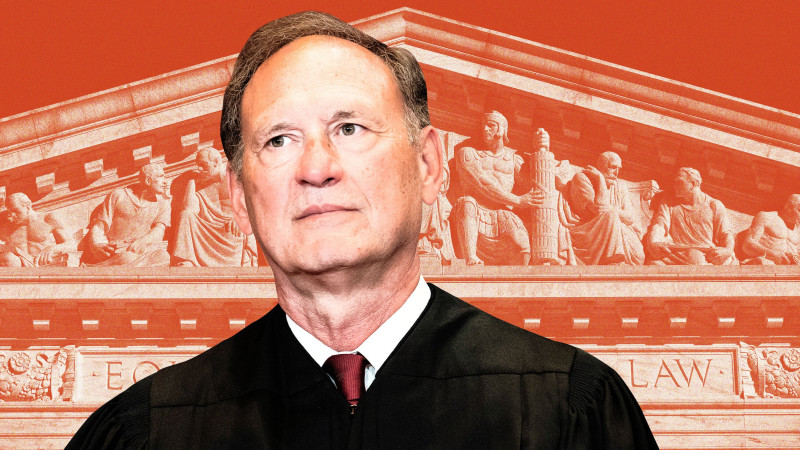
In a decisive 6-3 ruling, the justices upheld a lower court's finding that Louisiana's mapmakers had overemphasized race in their redistricting efforts to align with Section 2 of the Voting Rights Act. Justice Samuel Alito, writing for the conservative majority, asserted that adherence to Section 2 does not warrant the state's racial considerations in delineating House district lines.
"The Voting Rights Act did not mandate Louisiana to create an additional majority-minority district; thus, no compelling interest justified the state's racial considerations in crafting SB8," Alito stated, labeling the map an unconstitutional gerrymander that infringed upon the plaintiffs' constitutional rights.
This ruling extends its ramifications beyond Louisiana's political representation. The protections afforded by the Voting Rights Act have historically empowered voters to contest redistricting plans perceived as racially biased. The Supreme Court's decision is poised to complicate efforts by minority voters and advocacy groups to challenge voting maps under Section 2.
The conservative majority has redefined the legal standards for evaluating claims of vote dilution under the voting rights law, raising the threshold for plaintiffs to demonstrate a violation. Alito noted that this "updated" standard reflects significant developments since its inception four decades ago.
"Section 2 imposes liability only when evidence strongly suggests that the State intentionally drew its districts to disadvantage minority voters based on race," he elaborated. "This interpretation aligns with both the plain text of Section 2 and the limited authority granted by the Fifteenth Amendment."
In dissent, Justice Elena Kagan, joined by Justices Sonia Sotomayor and Ketanji Brown Jackson, argued that the majority's ruling effectively "eviscerates" Section 2. She cautioned that this decision renders the law nearly obsolete.
"With the Court's new interpretation of Section 2, states can systematically undermine minority citizens' voting power without facing legal repercussions," Kagan remarked, delivering her dissent from the bench.
Kagan emphasized that under the conservative majority's revised criteria, plaintiffs must prove that legislators acted with racially discriminatory intent—a task she deemed "nearly impossible." She warned that minority voters in Louisiana and beyond would face diminished opportunities to elect their preferred candidates, leading to a significant drop in minority representation.
"I dissent because the Court fails to uphold its duty to faithfully implement the vital statute Congress enacted," she stated. "This decision undermines the foundational right Congress established for racial equality in electoral opportunities."
As November midterm elections approach, candidates have already filed to contest across Louisiana's six congressional districts. The window for state Republicans to attempt a last-minute redistricting appears to have closed, with party primary elections scheduled for May 16 and early voting commencing soon.
However, this ruling could benefit Republicans nationwide, who have previously been required to create majority-minority districts in certain states to comply with the Voting Rights Act. The central question before the court was whether race-based redistricting contravenes the 14th and 15th Amendments of the Constitution.
The congressional map in question, utilized during the 2024 election cycle, comprised four majority-White districts and two majority-Black districts. A three-judge district court panel had previously invalidated it as an unconstitutional racial gerrymander.
The White House celebrated the Supreme Court's ruling as a "complete and total victory" for voters. Abigail Jackson, a White House spokesperson, stated, "The color of one's skin should not dictate which congressional district you belong in. We commend the court for ending the unconstitutional misuse of the Voting Rights Act and safeguarding civil rights."
The NAACP, representing plaintiffs who defended Louisiana's map with two majority-minority districts, urged voters to mobilize for the midterm elections to safeguard minority representation.
"Today's ruling is a devastating blow to what remains of the Voting Rights Act and a license for corrupt politicians seeking to manipulate the system by silencing entire communities," NAACP President Derrick Johnson declared. "The Supreme Court has betrayed Black voters, America, and our democracy. This ruling represents a significant setback for our nation and threatens to undermine our hard-fought victories."
This decision aligns with previous rulings from 2013 and 2021 where conservative justices have eroded protections under the Voting Rights Act. Advocates have warned that this ruling could influence upcoming midterm elections by prompting states with later primaries to hastily redraw congressional districts, potentially diminishing minority representation in Congress.
It remains uncertain whether Republicans in various states will attempt last-minute redistricting efforts. Lawmakers in states like Texas, California, North Carolina, Virginia, and Missouri have already engaged in mid-decade redistricting driven by political motives.
The contentious legal battle over Louisiana's congressional map began in 2022 when state Republican lawmakers adopted new House district lines following the 2020 Census. This map featured five majority-White districts and one majority-Black district, despite nearly one-third of Louisiana's population being Black according to Census data.
A coalition of African-American voters filed a lawsuit claiming that the map violated Section 2 by diluting Black voting strength and denying minority voters their chance to elect preferred candidates. A federal judge ruled in favor of these voters and mandated a remedial map with an additional majority-minority House district.
The revised plan was approved by Louisiana's legislature in 2024, adjusting the state's 6th Congressional District to ensure compliance with the Voting Rights Act. State Republicans claimed they also designed this map with political objectives in mind: protecting influential GOP incumbents such as Speaker Mike Johnson, Majority Leader Steve Scalise, and Rep. Julia Letlow.
Rep. Cleo Fields, a Black Democrat, was elected to represent Louisiana's 6th Congressional District in November 2024.
However, this new map faced its own legal challenge from a group of twelve self-identified "non-African-American" voters who contended it constituted an unconstitutional racial gerrymander. A divided panel of judges invalidated these new district lines, concluding that state legislators had relied excessively on race during their creation.
Louisiana Republicans and Black voters appealed this decision to the Supreme Court during its last term, urging justices to uphold the revised map. The court scheduled re-argument for June and requested parties address whether race-based redistricting aligns with constitutional principles.
When presented before the Supreme Court last year, Louisiana officials defended their new voting boundaries and urged justices to maintain them. However, after the court indicated it would evaluate race-based redistricting legality, state officials reversed their stance, asserting that intentionally creating a majority-minority district was unconstitutional.
The Supreme Court's ruling elicited responses largely split along party lines; Democrats condemned it while Republicans celebrated it.
President Trump hailed the decision as a "BIG WIN for Equal Protection under the Law" via a post on Truth Social, specifically thanking Alito for his brilliance.
Louisiana Attorney General Liz Murrill expressed satisfaction with the court's ruling as validation of the state's position. She pledged collaboration with the governor and state legislature to ensure compliance with constitutional requirements regarding congressional maps.
"The Supreme Court has ended Louisiana's long-standing nightmare of federal courts compelling the state to draw a racially discriminatory map," she stated. "This seismic decision reaffirms equal protection under our nation's laws."
GOP Rep. Richard Hudson, leading the National Republican Congressional Committee tasked with preserving Republican House majority, praised the ruling.
"The Supreme Court clarified that our elections should be determined by voters rather than manipulated through unconstitutional mandates," he asserted. "For too long, activists have exploited redistricting processes for political gain, dividing Americans instead of uniting them. This ruling restores fairness and strengthens confidence in our elections while ensuring every voter is treated equally under law."
Ken Martin, chair of the Democratic National Committee, criticized the ruling as a "gut punch." He stated, "Today marks a dark day for America—the Supreme Court has rolled back progress made during the Civil Rights Movement." He added that this decision effectively dismantles Section 2 of the Voting Rights Act, representing a significant regression in efforts toward racial justice and equitable representation.