

Trump Administration Confesses: $7.5 Billion in Clean Energy Grants Pulled from Blue States
Donald Trump’s administration has confessed to canceling approximately $7.5 billion in clean energy funding, explicitly stating it was “based solely” on the political affiliation of the states involved.
The Department of Energy acknowledged last week that the cuts were not influenced by any programmatic, statutory, cost-reduction, or performance-based factors. This admission came during early negotiations in a federal lawsuit involving University of California researchers.
Grants were axed as part of a list announced in October, with the sole criterion being the political identity of the grant recipient’s state—specifically, whether it was a Blue State or not.
Out of 284 terminated grants, nearly all were intended for projects in Democratic-led states or those that supported Democratic presidential candidate Kamala Harris in 2024. The remaining roughly 340 grants that survived were either in states that awarded electoral votes to President Trump in 2024 or had at least one Republican senator, according to court documents.

This revelation ignited outrage among lawmakers on Capitol Hill.
Democratic lawmakers stated, “This Administration has now admitted in court what has long been obvious: it terminated nearly 300 cost-cutting energy projects for no reason other than the fact that the states they were in did not vote for the President in the 2024 election.”
They further claimed, “This is an astounding admission that the President and his team corruptly abused their power to kill good jobs and punish hard-working families because of their political views.”
The Energy Department has been contacted for further comment.
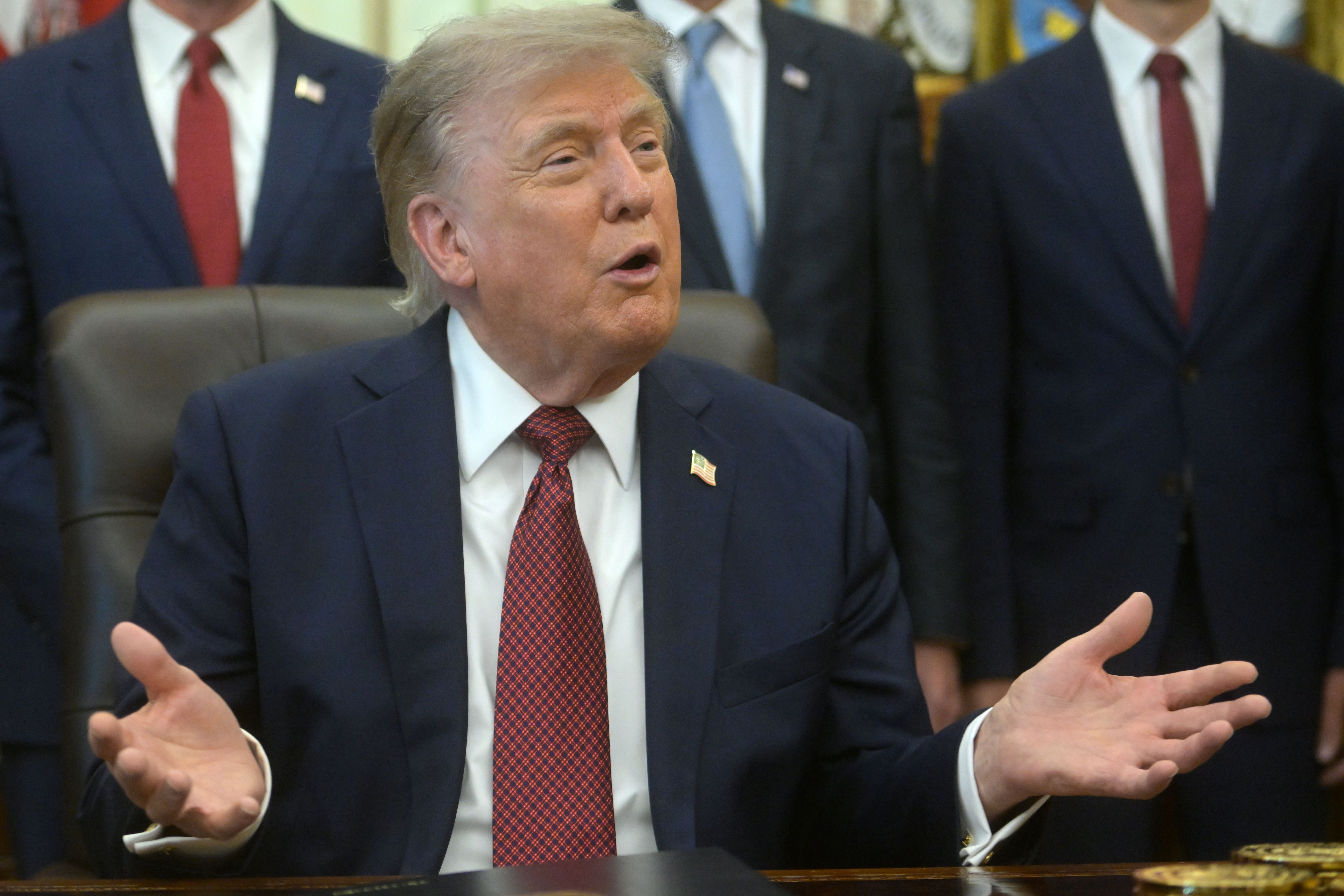
This striking admission contradicts previous claims from the Trump administration that cuts were not politically motivated and aimed at ensuring federal funds supported effective energy projects.
Energy Secretary Chris Wright previously stated, “President Trump promised to protect taxpayer dollars and expand America’s supply of affordable, reliable, and secure energy.”
At that time, the Department of Energy claimed its review aimed to “identify waste” and “safeguard taxpayer dollars.”
In another aspect of the lawsuit filed last year, the Trump administration admitted to using keywords related to diversity, gender, vaccine hesitancy, and COVID-19 to guide cuts that eliminated nearly $2 billion in grants to the University of California.
During the period when energy grants were canceled, top officials used overtly partisan language to describe their actions, coinciding with a government shutdown announcement.
Russell Vought, director of the White House Office of Management and Budget, declared on social media that “nearly $8 billion in Green New Scam funding to fuel the Left's climate agenda is being cancelled.”
The following day, Trump shared a video on Truth Social portraying Vought as the Grim Reaper, accompanied by music warning Democrats that the administration was “gonna tie your hands.”
Secretary Wright has denied any political influence over the funding review process.
“No decisions were made on politics,” he testified before Congress last month. “I keep hearing that charge. It’s bull****. We’re going to say it a million times.”
A spokesperson for the department asserted that the initial review of grants submitted to the White House was apolitical and maintained that the secretary’s testimony was accurate.
The allegations of political favoritism are particularly ironic given that the Biden administration’s climate funding law directed investments toward predominantly Republican-held districts, a strategy intended to ensure political durability for the Inflation Reduction Act.
However, Republicans in Congress have since dismantled significant portions of that law.
Increased scrutiny over the grant process arises as the Trump administration seeks to empower political appointees with greater authority to allocate federal grants, moving away from the current expert-led peer-review system used for many science- and defense-related opportunities.
Heather Pierce, senior director of science policy at the Association of American Medical Colleges, criticized this proposed rule, stating it would undermine scientific recommendations for reasons unrelated to science.