

Trump's Approval Ratings Plummet as He Hits 80: A State-by-State Breakdown
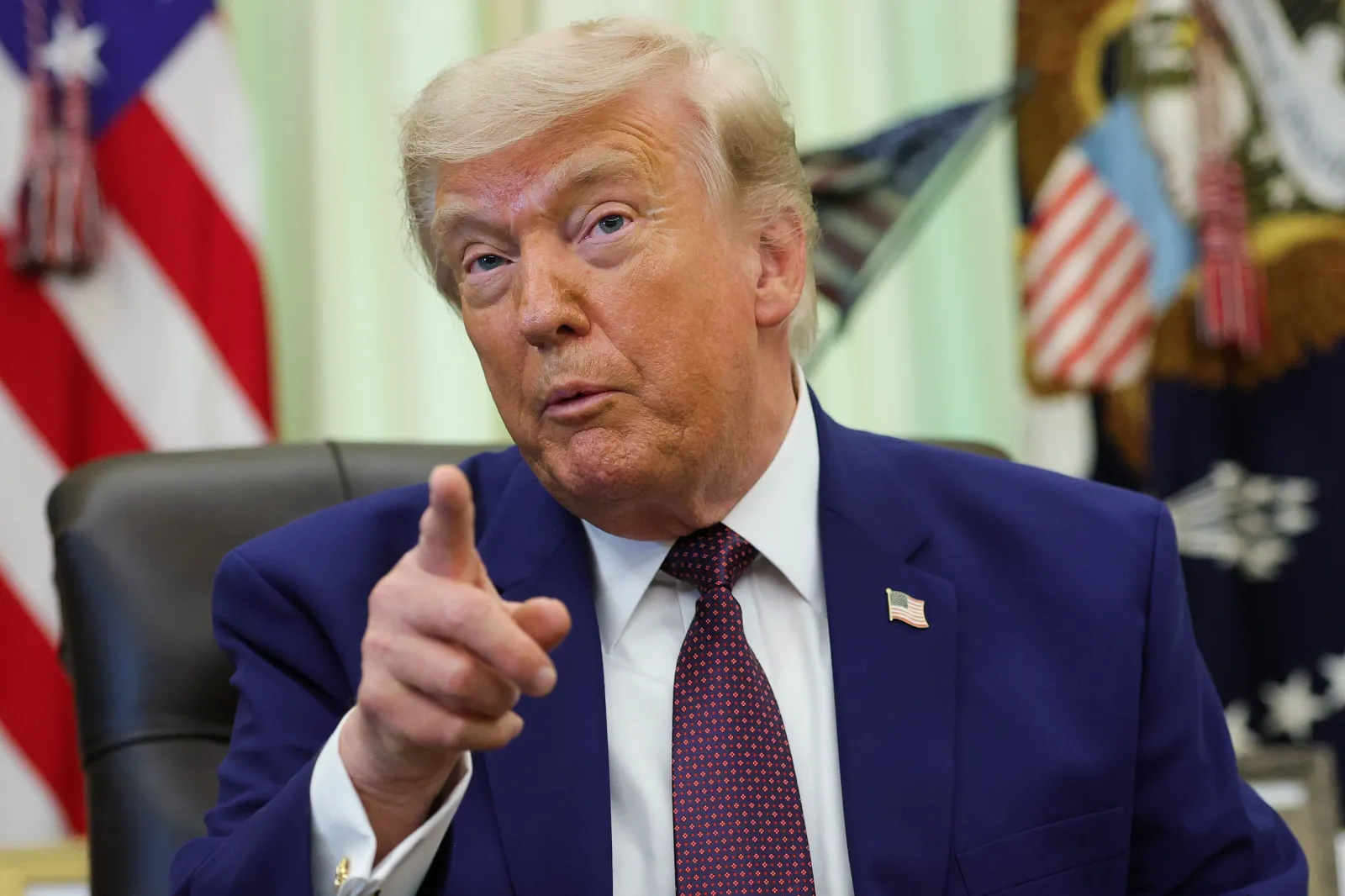
Trump's 80th birthday marks a grim milestone as his approval ratings sink to 36 percent nationally, with a staggering 59 percent disapproving. This is a far cry from the support he once enjoyed, now clearly underwater.
The polling data comes from Civiqs, which tracked 110,353 registered voters from January 20, 2025, to June 11, 2026. The net approval is calculated by subtracting disapproval from approval, revealing a stark partisan divide.
Comparing figures from January 20, 2025, the day Trump returned to office, to the latest data shows a troubling trend. The state map reflects strong Republican support but reveals significant erosion in many areas.
Among younger voters aged 18 to 34, only 21 percent approve of Trump, while a crushing 72 percent disapprove. For those aged 35 to 49, approval sits at 29 percent against a disapproval rate of 64 percent.
Independents are also turning against him, with just 28 percent approving and 64 percent disapproving. Women show a disapproval rate of 65 to 30, while men are split at 52 to 42.
Education levels further highlight the divide. Among postgraduates, Trump's approval is a mere 25 percent, with disapproval soaring to 71 percent. Non-college graduates show a narrower gap at 39 percent approval versus 55 percent disapproval.
Trump's strongest support remains in heavily Republican states, but even there, the margins have narrowed significantly. Wyoming leads with a net approval rating of +25, followed by North Dakota at +15, South Dakota at +14, and West Virginia at +13. Alabama and Idaho each sit at +11, while Oklahoma stands at +10.
However, these numbers are a stark decline from January 2025 when Wyoming boasted a +47 rating and Idaho had +34. West Virginia started at +35; all are now positive but by much slimmer margins.
Kentucky exemplifies this decline sharply. Trump began his second term with a net approval of +23; it has now plummeted to -4.
Key battleground states show even more alarming trends. Florida has dropped from +9 to -13. Ohio has fallen from +8 to -14. Nevada has plummeted from an even 0 to -20. North Carolina has shifted from 0 to -15. Pennsylvania has moved from -3 to -17.
Arizona now sits at -13, Wisconsin at -16, and Michigan at -21. Georgia is at -20. These deficits indicate that Trump is struggling across many battlegrounds that were once favorable.
Every state in this tracker shows a lower net approval rating than on the day Trump began his second term. The most significant declines are not just in Democratic strongholds but also in states that initially provided robust support.
The sharpest drops include states that were once solidly red or leaning red but have now turned against him.
At the bottom of the list, Hawaii shows the lowest net approval at -61, followed by Vermont at -56 and Maryland at -51. California and Massachusetts both sit at -46. Oregon is at -42, Washington at -41, and New York at -40.
In these areas, opposition remains entrenched rather than collapsing dramatically; Trump was already deeply unpopular there at the start of his term and continues to be so.
A notable aspect of the current map is the clustering of many states near the line between positive and negative territory. Indiana is just +1. Montana is +1. Kansas is +2. Mississippi is exactly 0. Louisiana and Nebraska are both at -3. Missouri and Kentucky are both at -4.
This suggests instability beneath the surface; while the partisan divide remains clear, many state-level margins are thinner than they were at the start of his term.
Trump's political landscape still resembles its previous form. His strongest states remain in the Republican heartland while his weakest are concentrated on the coasts and in solidly Democratic areas.
What has changed is the size of the margins. At the beginning of his second term, Trump was comfortably positive across much of the red-state map and competitive in several battlegrounds. Now many of those states are either narrowly positive, dead even, or clearly negative.
The result is a map that retains its broad partisan shape but offers less room for error almost everywhere.
New polling indicates Trump's support may be softening among rural Americans, a crucial part of his base. Approval among rural voters has dropped to 50 percent from 60 percent since early 2025 as concerns over rising fuel and food costs grow.
This decline poses a potential warning sign for Republicans ahead of the midterm elections in 2026.
The survey was conducted between June 3 and June 8 among 4,531 adults and carries a margin of error of 3 percentage points for rural respondents and 2 points overall.
Democrats currently hold a narrow edge in Congress control according to a recent poll showing that 49 percent of registered voters prefer Democrats compared to 44 percent for Republicans—a five-point advantage for Democrats.
Independent voters favor Democrats by a significant margin of 12 points, with 46 percent backing Democrats against 34 percent for Republicans. Democrats also enjoy majority support among Black and Hispanic voters, adults under 50, and college graduates. Meanwhile, Republicans perform better among men, white voters, and those without college degrees.
The poll sponsored by nonpartisan nonprofit More Perfect notes a margin of error of +/- 2 percentage points.
The White House claims Trump's victory in the 2024 election as evidence of public support, with spokesperson Davis Ingle asserting it reflects a mandate from nearly 80 million voters.
Ingle reiterated that “the ultimate poll was November 5, 2024,” emphasizing that Trump is delivering on a “popular and commonsense agenda” and that “this is just the beginning as his agenda continues taking effect.”