

Trump's China Trip: Americans Split on Tariffs, Iran, and Global Power Dynamics
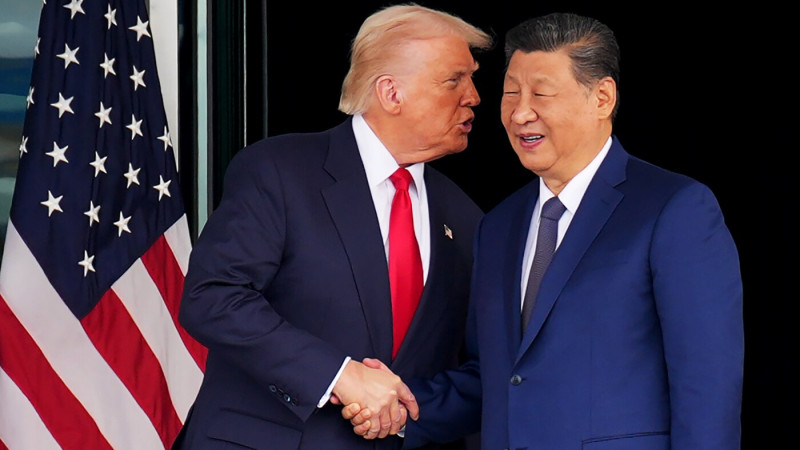
President Trump is set to meet with Chinese President Xi Jinping in Beijing this Tuesday, marking a pivotal moment in his second term. A recent poll reveals that Americans largely perceive China as an economic rival aiming for global supremacy.
Despite this rivalry, there's a strong desire among Americans to keep trade flowing with China, with many advocating for reduced tariffs to ease consumer costs. Nearly 80% of those surveyed believe China is gunning for world leadership, yet they view the threat as predominantly economic rather than military—56% to 29% agree on this point.
Only a mere 13% dismiss China as a non-threat. The majority categorize China as either a rival (37%) or an adversary (21%), while just 2% consider it an ally. Interestingly, Russia tops the list of antagonistic nations, with two-thirds of respondents viewing it unfavorably.
When it comes to tariffs, the sentiment is clear: 76% believe they negatively impact the cost of living, and 70% think they hurt the standard of living. Even among Republicans, who typically support Trump's tariff policies, there's a split—66% see tariffs as job creators, but independents and Democrats largely disagree.
As economic pressures mount, 62% oppose drastically cutting trade with China, fearing higher consumer prices. This marks a shift from previous years when many favored reducing trade despite potential cost increases. Now, with many goods sourced from China, Americans are feeling the financial strain.
A significant 58% oppose increasing tariffs on Chinese imports. In fact, 70% want tariffs lowered in exchange for increased purchases of U.S. agricultural products. However, there's a cautious approach regarding sensitive technology; 70% want U.S. firms barred from selling high-tech products to China.

On the education front, opinions diverge: 53% oppose limiting Chinese students in the U.S., but a strong majority of Republicans (75%) favor increasing tariffs on Chinese imports. Meanwhile, 60% of Republicans advocate for reduced trade even if it raises prices for Americans.
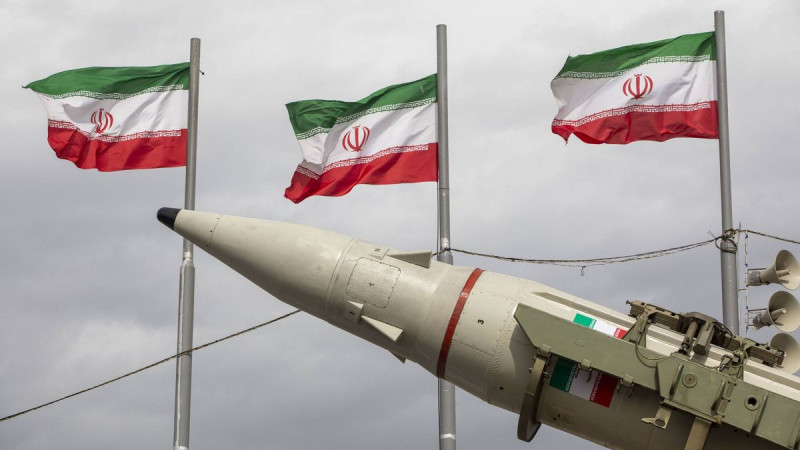
China's ties with Iran are also on the agenda for Trump’s discussions. As a key buyer of Iranian oil, China's relationship with Iran raises eyebrows among Americans. A staggering 86% believe the war in Iran has adversely affected U.S. living costs, while 65% see it as detrimental to national security.
Interestingly, while many think the war is bad for China too, a larger number believe it has bolstered China's global standing compared to its impact on U.S. security or relationships with allies. Political divides are stark: 63% of Republicans view the war positively for U.S. national security, while only 8% of Democrats agree.
As for Israel's role in the Middle East, 60% of Republicans see it positively, contrasting sharply with only 20% of Democrats who share that view. This reflects a growing trend where more Americans align their sympathies with Palestinians over Israelis, particularly among Democrats.
Despite these complex issues, only 42% of Americans are closely following U.S.-China relations. Domestic concerns like the economy and immigration take precedence—70% track economic news closely compared to just 43% who follow the Russia-Ukraine conflict.
The insights stem from two national surveys conducted by Ipsos: one focused on views of China with 1,025 adults surveyed and another on Iran involving 1,018 adults. Both polls have margins of error around +/- 3 percentage points.