Trump's Grip Tightens: Latin America Faces a Right-Wing Overhaul
Abelardo de la Espriella, a political outsider with zero prior elected office, just won the first round of Colombia's presidential election on May 31, and his first words were directed at U.S. President Donald Trump. "With my head held high and a heart full of patriotic gratitude, I receive your words and your steadfast support," he declared on X.
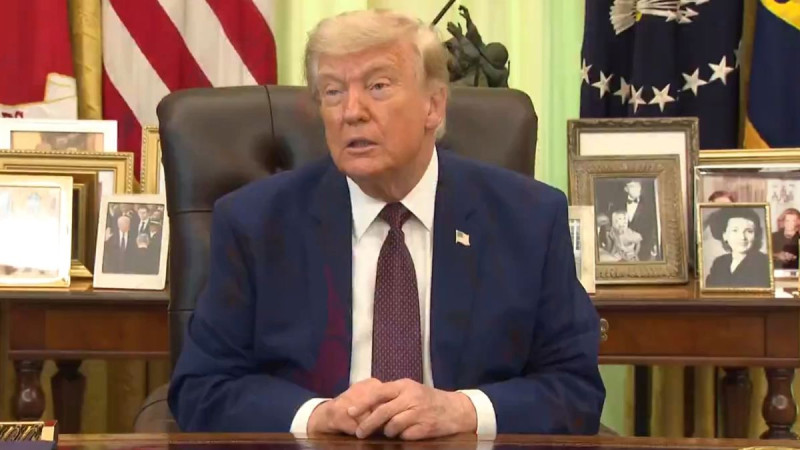
De la Espriella's campaign, branded "Defenders of the Motherland," is built on a hard-line anti-crime platform. He responded to Trump's endorsement on Truth Social, where Trump labeled him an "intelligent, strong and tough leader" while dismissing his leftist opponent Ivan Cepeda as a "radical leftist Marxist." "Thank you, Mr. President!" he exclaimed.
This exchange is more than mere politeness; it signals a seismic political shift in Latin America, one that Trump has accelerated more than any other figure. Colombia and Peru are on the brink of completing this transformation as they head into runoff elections.
In the past two years, right-wing governments have surged across Latin America, reshaping the political landscape and aligning it more closely with Washington than seen in decades. If this trend continues, the left-wing governments that dominated the previous era will dwindle to a mere archipelago: Brazil, Mexico, and the authoritarian regimes in Cuba and Venezuela, all struggling against a relentless tide.
"There are signs that the political winds in Latin America are blowing to the right," stated Michael Shifter, former president of the Inter-American Dialogue. "Trump is fortunate that more leaders and governments are aligning with his administration and its policies."
Once the most defiant adversary of Washington, former Venezuelan President Nicolas Maduro was a socialist autocrat who hosted Russian military assets and deepened ties with Beijing. Trump attempted to oust him during his first term but failed. This time, he and Secretary of State Marco Rubio had a different strategy.
In November, the Trump administration unveiled a National Security Strategy promising increased interventionism in the Americas. Following this, military pressure escalated: Warships and fighter jets were deployed to the Caribbean under Operation Southern Spear, resulting in at least 35 U.S. strikes on alleged drug boats from September to December, killing at least 115 individuals.

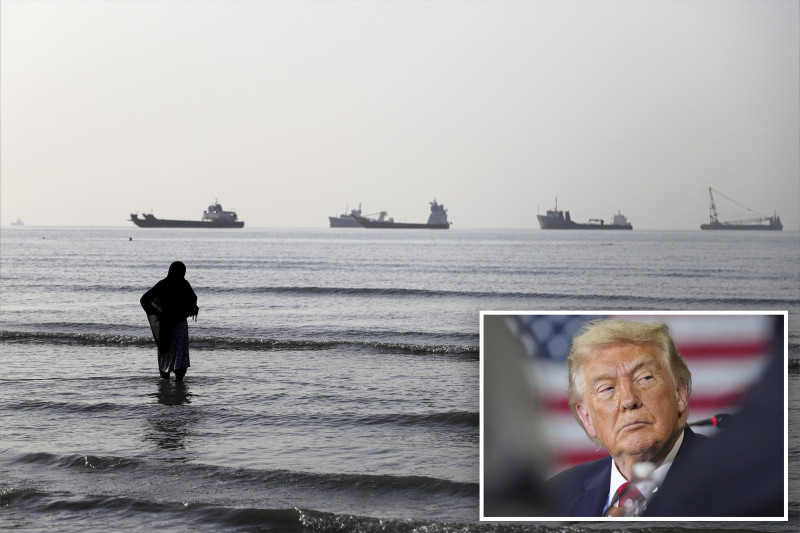
On January 3, U.S. special forces captured Maduro and his wife, Cilia Flores, transporting them to a warship before flying them to New York to face narcoterrorism charges. Trump invoked the Monroe Doctrine by name, claiming the U.S. had "superseded it by a lot," dubbing his approach the "Don-roe Doctrine." He asserted that the United States would be "running" Venezuela until an orderly transition could occur.
This operation starkly illustrated a realignment already underway across the region. In Argentina, libertarian president Javier Milei—an economist who wields a chainsaw as a prop—secured Washington's backing ahead of critical midterm elections in October 2025.
In Honduras, Trump endorsed National Party candidate Nasry "Tito" Asfura, who emerged victorious. El Salvador's Nayib Bukele—an authoritarian-leaning incumbent who won reelection in 2024—has become a key U.S. ally in Trump's deportation agenda and serves as a model for crime control across the region.
In Chile, right-wing candidate José Antonio Kast crushed a Communist challenger with 58 percent of the vote in December. His admiration for Trump parallels his praise for former Chilean dictator Augusto Pinochet, whom he defends as necessary for restoring order.
In March, Trump hosted the "Shield of the Americas" summit in Florida, gathering over a dozen Latin American leaders to form a security-focused coalition aimed at combating cartels and curbing migration. Milei, Bukele, and Ecuador's Daniel Noboa were present; Brazil's Luiz Inácio Lula da Silva and Mexico's Claudia Sheinbaum were notably absent.
A Konrad Adenauer Stiftung analysis revealed that of 15 Latin American democracies, nine have shifted political direction since 2022, with six moving from left to right. The proportion of Latin Americans identifying as center-right or right is now at its highest in over two decades.
Shifter attributes this shift to multiple factors: left-leaning incumbents' failure to deliver economically, rising crime rates, and the ideological momentum generated by Milei and Bukele's successes with Trump's endorsement. "The 'right' is a broad category that has different meanings in different contexts," he noted.

Former Colombian President Ernesto Samper likens today's landscape to Operation Condor—the U.S.-backed campaign of political repression in South America during the 1960s and '70s. He warns that Trump's tactics could provoke a nationalist backlash that undermines Washington's gains. "This is beginning to be reflected in the polls," he said.
Peru is set to vote for its ninth president in ten years. The runoff pits Keiko Fujimori—the conservative daughter of former authoritarian President Alberto Fujimori—against Roberto Sánchez, a leftist congressman allied with imprisoned former President Pedro Castillo.
Both candidates emerged from a chaotic first-round field of 35 contenders in April, each securing less than 20 percent of the vote.
Crime dominates the electoral discourse. Peru's homicide rate has doubled over five years; extortion complaints have surged fivefold. A 2025 government survey found that 84 percent of urban Peruvians fear becoming crime victims within the year.
"There is a large group of undecided voters," Peruvian political analyst Iván García stated. "I think that's where the emotionally driven anti-votes will play out the final battle."
Fujimori promises to militarize borders and deploy police and military forces in high-risk areas while requiring prisoners to "repay society" through mandatory labor.
Sánchez wears a peasant hat given by Castillo as a symbol of rural solidarity while trying to reassure investors about support for Chinese mining contracts—contradicting Washington's push against Beijing's influence.

A Fujimori victory would solidify Trump's regional influence; a Sánchez win would extend leftist resistance, providing Lula and Sheinbaum another ally in a country rich in copper reserves. The results are expected to be tight and may take days to finalize.
If Peru falls next, Colombia holds the highest stakes with visible U.S. involvement.
De la Espriella garnered 43.74 percent of the first-round vote, defying polls that had his rival—Senator Iván Cepeda—leading ahead of election day. His campaign relied heavily on social media with an anti-crime message and ties to Trump's political world.
"De la Espriella is capitalizing on widespread anti-establishment sentiment in Colombia," Shifter remarked. "Like other right-wing populists in the region, he lacks a strong political party but generates enthusiasm through effective social media use."
He is also an American citizen and registered Republican who has donated to Republican causes while maintaining close ties with Representative María Elvira Salazar—a prominent voice on Latin American policy.
Gimena Sanchez from the Washington Office on Latin America noted de la Espriella fits a global template: "This race follows a trend we've seen globally and played out in other parts of Latin America."
"A polarized context facing security challenges and an outsider candidate promising decisive action," she added.

The U.S.-Colombia relationship has deteriorated under Petro—a former guerrilla member who became Colombia's first leftist president in 2022. Washington decertified Colombia on drugs, revoked Petro's visa, cut economic aid—previously Colombia's largest recipient—and placed Petro's allies on sanctions lists.
"A conservative victory would quickly repair this strategic relationship," stated Benjamin Gedan from The Stimson Center. "But an opposite result would prolong diplomatic tensions."
While right-wing gains are notable due to Trump's influence, the left hasn't vanished entirely. Lula is vying for a fourth term in Brazil's upcoming election while Sheinbaum governs Mexico with significant independence from Washington.
Cuba and Nicaragua remain authoritarian outliers but resist managed transitions sought by Trump's administration.
Shifter cautioned against viewing this rightward shift as permanent: "The durability of conservative governments depends on their ability to meet citizen demands." If they fail, the left could easily return.
Gedan echoed this sentiment: "Conservatives are inheriting high debt and sluggish economies that will challenge voter expectations." Trump's highly partisan foreign policy risks alienating opposition movements that will inevitably regain power.
The president who vowed to make America great again is reshaping the Americas one election at a time. Colombia votes June 21.