



President Donald Trump has unleashed a brutal assault on environmental protections, slashing the Bears Ears and Grand Staircase-Escalante national monuments in Utah by a staggering one million acres each.
This drastic move resurrects controversial rollbacks from his first term, which the Biden administration promptly reversed. It directly defies proclamations from previous administrations that deemed these sites worthy of preservation under the 1906 Antiquities Act, a law empowering presidents to safeguard areas of cultural, historic, or scientific significance.
The battle over these lands underscores the fierce contention surrounding national monuments, which have become a pivotal front in public land management debates.
Trump's previous reductions during his first term were swiftly undone by his successor, but he is not the first president to shrink such monuments.
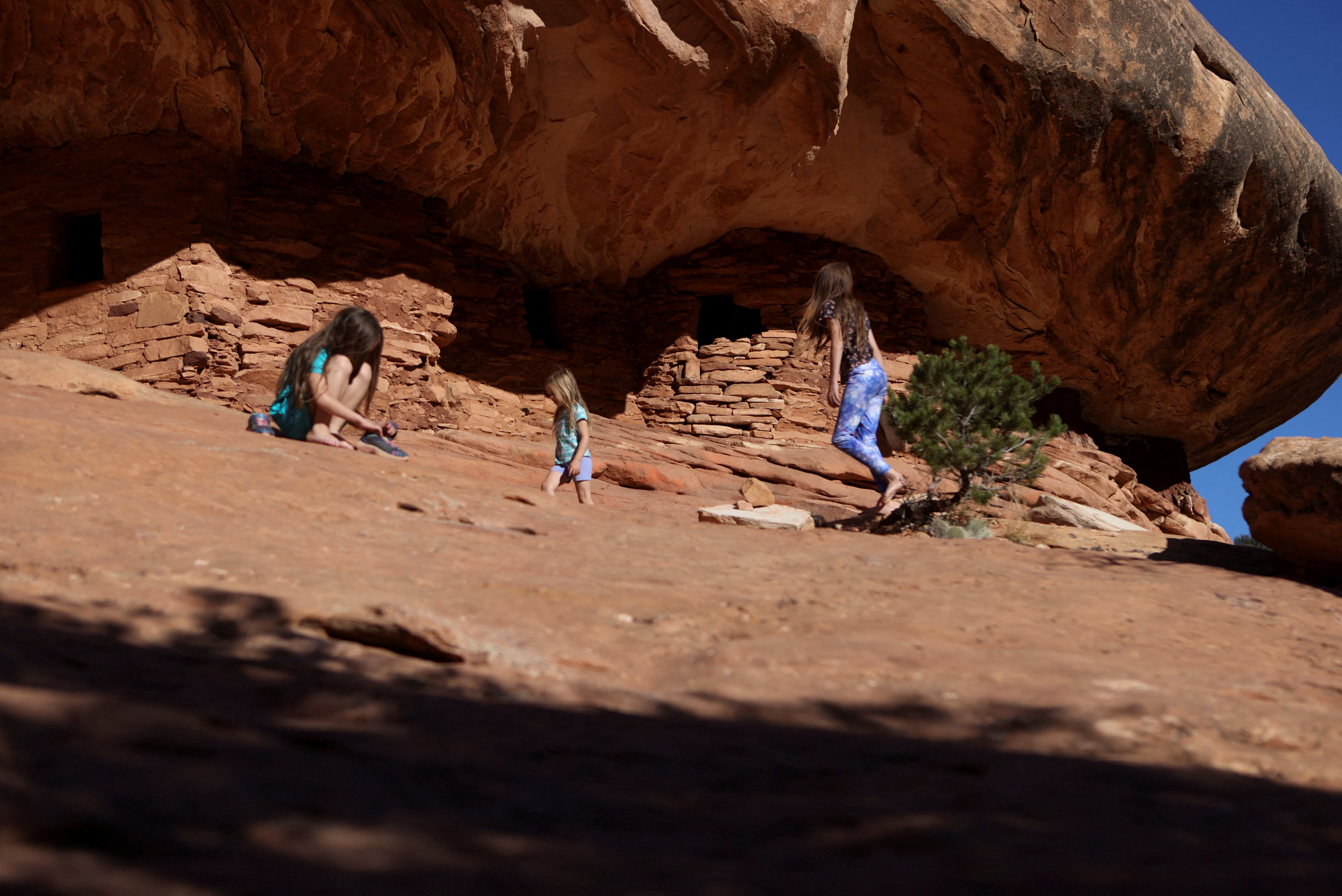
During his first term, Trump issued only a few proclamations under the Antiquities Act, notably reducing the size of Bears Ears and Grand Staircase-Escalante. These vast Utah monuments boast breathtaking natural features and hold sacred significance for various Native American tribes. The Grand Staircase-Escalante area is also rich in coal reserves, while Bears Ears contains uranium deposits.
Trump also designated the 340-acre Camp Nelson National Monument in Kentucky, a site that served as a Union Army hospital and recruiting center for African American troops during the Civil War.
Biden's initial use of the Antiquities Act restored the original sizes of Bears Ears and Grand Staircase-Escalante, emphasizing their spiritual, cultural, and prehistoric importance.
Biden established ten new monuments, including sites commemorating a 1908 race riot in Springfield, Illinois, and honoring Mamie Till-Mobley and her son Emmett, a Black teenager brutally murdered in 1955 after being accused of whistling at a white woman in Mississippi. Additional monuments were created in California's mountains and at a sacred Native American site near the Grand Canyon.
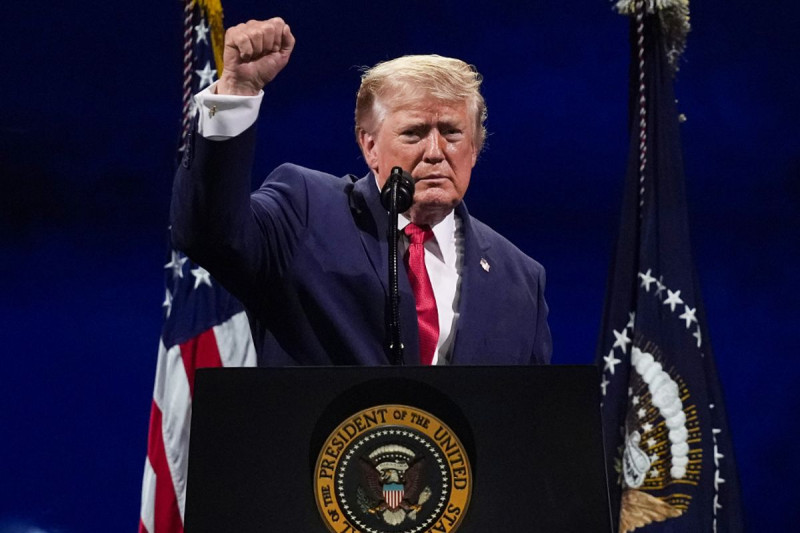
Supporters of the reductions argue that the protective boundaries are excessive and impede essential mineral mining. Trump framed his decision as a return of land to the people during a signing event at the White House.
Utah officials celebrated the order, asserting that the state should manage its own lands.
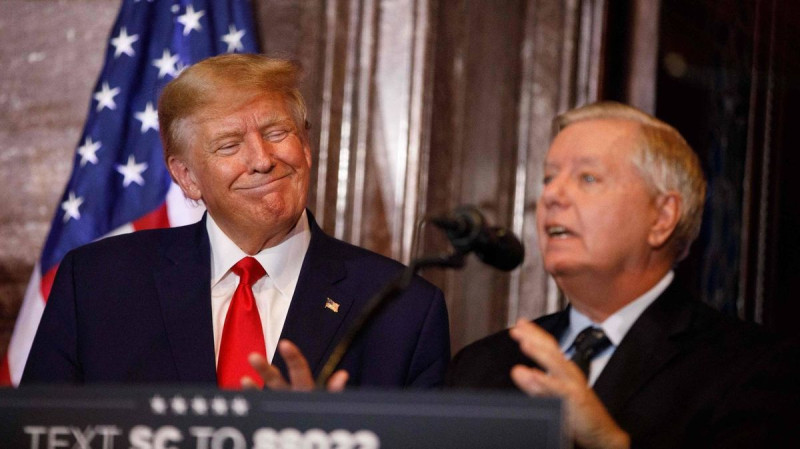
“The question has never been whether to protect them, but how to protect them best,” stated Gov. Spencer Cox, a Republican. His office assured that lands excluded from the modified boundaries “remain protected under existing federal and state law.”
However, conservationists and local tribal nations warned that this order paves the way for mining interests while undermining tribal co-stewardship. Bears Ears is managed through an agreement between tribal nations and federal agencies.
“Our connection to this place cannot be erased by the stroke of a pen,” declared Davina Smith-Idjesa, a citizen of the Navajo Nation and co-chair of the Bears Ears Inter-Tribal Coalition.
Environmental advocates contend that the Antiquities Act is a one-way street allowing presidents to create but not dismantle monuments. Yet there is a history of presidents enacting similar reductions.
Since 1912, more than a dozen proclamations have diminished national monuments, according to a National Park Service database.
In Washington state, Woodrow Wilson halved the acreage of Mount Olympus National Park—now Olympic National Park. Harry Truman similarly reduced Santa Rosa Island National Monument.
Dwight Eisenhower was particularly active in reversing his predecessors' proclamations, diminishing six monuments including Arches in Utah, Great Sand Dunes in Colorado, and Glacier Bay in Alaska—all of which have since achieved national park status.
Unlike national parks established by Congress, most of the over 100 national monuments were created by presidential action.
These monuments are overseen by various agencies such as the National Park Service, Bureau of Land Management, or National Oceanic and Atmospheric Administration.
A designation provides extensive protections not only for significant geological features or artifacts but also for surrounding landscapes, prohibiting drilling, mining, and new construction. Advocates for downsizing the Utah monuments argue that protective boundaries extend too far and obstruct critical mineral extraction.
The U.S. Forest Service, established in 1905, manages approximately 300,000 square miles of land, including 154 national forests and 20 national grasslands across 43 states.
Under federal law, forest lands are managed for renewable resources—timber, clean water, wildlife habitat, livestock forage, and recreation. However, many forests overlay valuable minerals that private companies can lease for nonrenewable resource extraction like oil, gas, and coal.
Certain forests contain specially designated wilderness areas where human activities are restricted. Even bicycles and hang gliders are prohibited due to their mechanical nature.
National parks enforce stringent development rules under a 1916 law known as the Organic Act. This law mandates that parks conserve their scenery, nature, history, and wildlife.
President Theodore Roosevelt enacted the Antiquities Act following extensive lobbying by educators and scientists seeking to protect sites from commercial artifact looting and careless collecting. It was the first U.S. law to establish legal protections for cultural and natural resources of historic or scientific interest on federal lands.
On September 24, 1906, Roosevelt utilized it to designate a national monument at Devils Tower—a massive rock butte in eastern Wyoming that later gained fame as the focus of the movie “Close Encounters of the Third Kind.”
For Roosevelt and others, scientific rationale underpinned the need to safeguard Devils Tower. Scientists have long theorized about how once-molten lava cooled into the massive columns forming this geological marvel. Native American tribes continue to conduct ceremonies there that recount its formation.
All but three presidents have invoked the act to protect unique landscapes and cultural resources.