

U.S. and Saudi Arabia Forge Controversial Nuclear Pact Amidst Regional Tensions
The U.S. has inked a nuclear cooperation agreement with Saudi Arabia, a move that could reshape the geopolitical landscape in the Middle East.
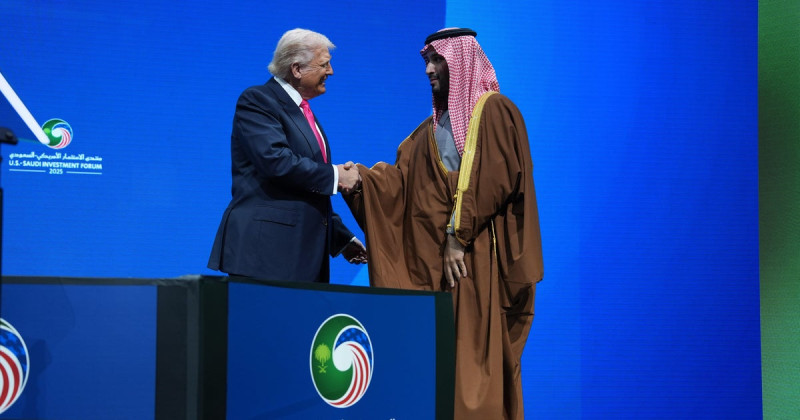
U.S. Secretary of Energy Chris Wright and Saudi Minister of Energy His Royal Highness Prince Abdulaziz bin Salman formalized this deal, known as a 123 agreement, which includes a bilateral safeguards agreement. This partnership is projected to span decades and involve billions of dollars, targeting economic and strategic goals, particularly in nuclear nonproliferation.
Wright emphasized that the agreements adhere to top-tier nuclear safety standards while leveraging advanced U.S. nuclear technology and expertise.
President Donald Trump reportedly approved the deal, which will see American firms spearheading the development of a nuclear power program in Saudi Arabia.
Insiders revealed that the agreement does not mandate stringent U.N. inspections nor impose restrictions on uranium enrichment or spent fuel reprocessing, raising significant concerns about nuclear proliferation.
The pact could enable U.S. companies to establish a uranium enrichment facility in Saudi Arabia, contingent on a joint feasibility study. However, the specifics of the deal remain undisclosed.
Congress must vote on the agreement, but blocking it would require a veto-proof majority, potentially allowing Saudi Arabia to pursue uranium enrichment independently, which could escalate fears of nuclear arms development.
Secretary of State Marco Rubio addressed proliferation concerns, asserting that the U.S. would not engage in any agreements that risk nuclear proliferation.
This agreement emerges amid ongoing hostilities between the U.S., Israel, and Iran, with Trump adamant that Iran must not acquire nuclear weapons, despite Iran's denials of such intentions.
Normalization of relations between Israel and Saudi Arabia was a prerequisite for any uranium enrichment deal, but Saudi leaders have insisted that progress toward a Palestinian state is essential.
Wright previously discussed advancing Saudi Arabia's commercial nuclear sector with Prince Abdulaziz during a visit last year, just before Trump's trip to the kingdom.
Darya Dolzikova, a senior research fellow at the Royal United Services Institute, expressed concern that any deal lacking robust nonproliferation measures would be alarming.
Dolzikova highlighted that nations with proliferation risks must enforce stringent nonproliferation provisions.
Saudi Crown Prince Mohammed bin Salman has indicated that the kingdom would seek nuclear capabilities if Iran does.
In September, Saudi Arabia signed a mutual defense pact with Pakistan, the only Muslim nation with nuclear capabilities, with Pakistani officials stating their nuclear program could be made available to Saudi Arabia if necessary.
As a member of the International Atomic Energy Agency (IAEA), Saudi Arabia is subject to inspections aimed at preventing clandestine nuclear weapons programs while promoting peaceful nuclear initiatives.
While uranium enrichment does not automatically lead to weaponization, it can facilitate the process. Countries pursuing nuclear arms must also master additional technologies, including synchronized high explosives.
Discussions have centered on whether the agreement will incorporate "gold standard" safeguards to prevent Saudi Arabia from enriching uranium or reprocessing spent fuel—both pathways to developing nuclear weapons.
The inclusion of the "Additional Protocol," which grants the IAEA enhanced oversight of a nation's nuclear activities, remains uncertain.
Experts warn that if Saudi Arabia retains enrichment rights, it could pose significant proliferation risks.
The timing of this U.S.-Saudi agreement coincides with social media affirmations of unity between Saudi and UAE officials, following months of tensions stemming from their differing stances in the Yemen conflict and disputes over oil quotas.
Saudi Media Minister Salman Al-Dosary and UAE National Media Authority Chairman Abdulla bin Mohamed Alhamed called for a focus on their shared history and heritage amidst ongoing regional divisions.