
Democrats Gear Up for a Black Voter Surge Amid Supreme Court Fallout
Democrats are revving up their engines, aiming to transform outrage over a Supreme Court ruling that slashed the Voting Rights Act and obliterated Black-majority congressional districts into a tidal wave of Black voter turnout this November. This could mark a dramatic turnaround for a party that has recently struggled to energize one of its most steadfast voter bases.
“They are adding fuel to the fire,” declared former Atlanta Mayor Keisha Lance Bottoms, a leading contender in Georgia’s Democratic gubernatorial primary, as she crisscrossed the Black Belt cities of Albany and Thomasville. “It’s coming up at every stop we’re making.”
Polling data from Alabama’s Zac McCrary reveals that Black voters are acutely aware of the Supreme Court’s decision in Louisiana v. Callais and the rapid Republican efforts to dismantle Black-held congressional seats. “This isn’t some behind-the-scenes political maneuver,” McCrary asserted. “This is out in the open, and it’s front and center with Black voters.”
The result? A surge in Black voter enthusiasm, just as white liberal turnout had previously propelled Democrats to victory in special and off-year elections throughout 2025 and early 2026. With the political landscape already tilting in their favor and President Trump’s popularity plummeting, Democrats believe they’ve unearthed the missing ingredient for a wave election.
“We know that the MSNBC Democrats are angry and turning out,” McCrary noted. “We know that Stephen Colbert Democrats are angry and turning out. Now that anger is extending to Church Pew Democrats and Divine Nine Democrats.”
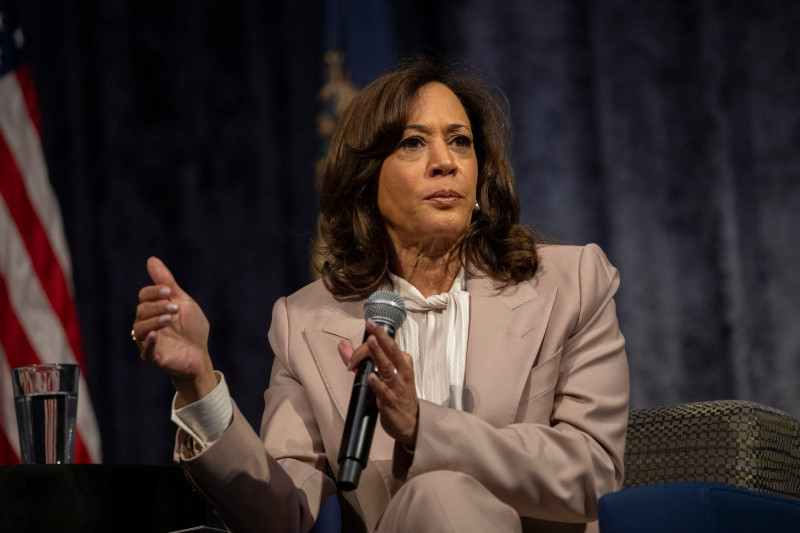
If this surge materializes, it would starkly contrast recent election cycles. Despite being the Democratic Party’s most loyal voting bloc, exit polls indicated that then-Vice President Kamala Harris captured only about 80% of the Black vote in 2024, with Trump making notable gains among Black men. Turnout was dismal: Black voters constituted roughly 11% of the overall electorate, the lowest since 2000.
However, there are significant hurdles for Democrats hoping to capitalize on increased Black voter turnout. Republicans are aggressively gerrymandering Southern states with large Black populations, while many Northern districts with substantial Black communities are already solidly blue. Democrats hope this momentum can help them snag a few House seats but may prove crucial in key gubernatorial and Senate races.
“I think Republicans have created some problems for themselves in places where things might turn out to be more competitive than they had hoped,” said Adrianne Shropshire, executive director of BlackPAC. “It’s putting the Senate at risk for them.”
Shropshire emphasized that Republicans erred by showcasing the influence of Black voters, inadvertently providing a clear antidote to deep-seated cynicism about voting's impact. “When you make it too obvious, people start to see — even if they were questioning before — the power their vote holds,” she explained. “Where they’ve really overreached is in their blatantly racist attempts to reduce Black representation.”
For now, Republicans seem content with any trade-offs they might be making. Winning the Senate remains a steep climb for Democrats, and the party’s swift elimination of Democratic seats across the South — targeting at least three so far — has given Republicans a glimmer of hope to maintain control of the House.
Former Rep. Elaine Luria, challenging GOP Rep. Jen Kiggans, noted that the protracted redistricting battle has only fueled voter anger — starting with “insensitive” GOP mailers suggesting Democrats’ proposed map was “Jim Crow 2.0” to frustration over the Virginia Supreme Court invalidating votes shortly after the federal ruling in Callais.
“The Supreme Court made that decision, and my phone was ringing off the hook with people saying: ‘They stole my vote,’” Luria recounted. “Each of these events is just making people more motivated.”
Luria is running in a House district where an uptick in Black turnout would be particularly beneficial: Virginia Beach’s voting-age population is about 15% Black. Other GOP-held districts where Democrats could gain ground include Virginia’s neighboring 1st District; Michigan’s 10th District outside Detroit; and several conservative seats in Ohio. One target discussed by Democratic strategists is North Carolina’s 3rd District, a solid red area with a voting-age population that is 30% Black.
However, if Republicans can go on offense this cycle, increased Black turnout could bolster several vulnerable Democratic incumbents, including North Carolina Rep. Don Davis, whose potential electorate is one-third Black; Rep. Laura Gillen from Long Island, where 19% of her district is Black; and long-serving Ohio Rep. Marcy Kaptur, whose Toledo-centric seat is 12% Black.
Some swing-seat Democratic incumbents are emphasizing this issue: Rep. Greg Landsman, representing a Cincinnati district with an 18% Black voting-age population, traveled to Selma and Montgomery for an emergency protest over voting rights this past weekend.
A surge in Black turnout could also impact several Senate races where Democrats aim to conquer Trump-won states: Ohio and North Carolina are already deemed essential for the party's path to a majority, but challenges loom in Texas, where state Rep. James Talarico awaits the winner of a brutal GOP primary, and a longshot race in Mississippi between prosecutor Scott Colom and incumbent Sen. Cindy Hyde-Smith could soon become viable.
“It’s not hyperbolic to say yes, Republicans will win some House races short-term but this absolutely opens doors for Democrats to capture Senate seats in places that wouldn’t have been on their radar six months ago,” McCrary stated. “This is going to be an accelerant.”
If anyone stands to gain from this backlash, it might be Bottoms. As the frontrunner for Georgia’s gubernatorial nomination — where an influx of college-educated voters has combined with a 33% Black population to shift politics leftward — she could become Georgia’s first Democratic governor in over two decades and the first Black female governor anywhere in the nation if elected.
In an interview, Bottoms noted that voters remain uncertain about the rulings' impact since Georgia won’t redraw its lines until after Tuesday’s primary election, which will determine whether she advances to the general election or faces a runoff against one of three potential challengers within her party. But anxiety is palpable.
“We know that Sanford Bishop has been especially powerful in securing funds for our agricultural community and HBCUs,” she said, referring to the veteran Black congressman whose district could face drastic redistricting before the 2028 election. “As I move around these areas, people are genuinely concerned he may lose that ability.”
In one of her campaign's closing ads, Bottoms lists her agenda items — universal pre-k, expanding Medicaid — while asserting Trump “doesn’t care” about everyday Georgians.
“He’s rigging the system, trying to erase us, and thinks we won’t fight back,” she declares, adding emphatically: “We’re still here, and it’s time they heard.”