

Georgia's Primary Showdown: Republicans Splash Cash While Democrats Ignite Voter Fire
ATLANTA — Tuesday's primary elections in Georgia were a spectacle of cash and chaos, with Republicans flexing their financial muscles while Democrats rallied an unprecedented wave of voters.
As the dust settles, many marquee races are gearing up for June 16 runoffs. Republicans are scrambling to determine who will challenge incumbent Democratic Sen. Jon Ossoff, while both parties navigate a crowded field for the governor's seat, now open due to term limits on Republican Gov. Brian Kemp. Expect these contests to be among the fiercest battles come November.
In the wake of a recent Supreme Court ruling that weakened the Voting Rights Act, two nonpartisan Georgia Supreme Court seats are under scrutiny, with Democrats eager to flip them.
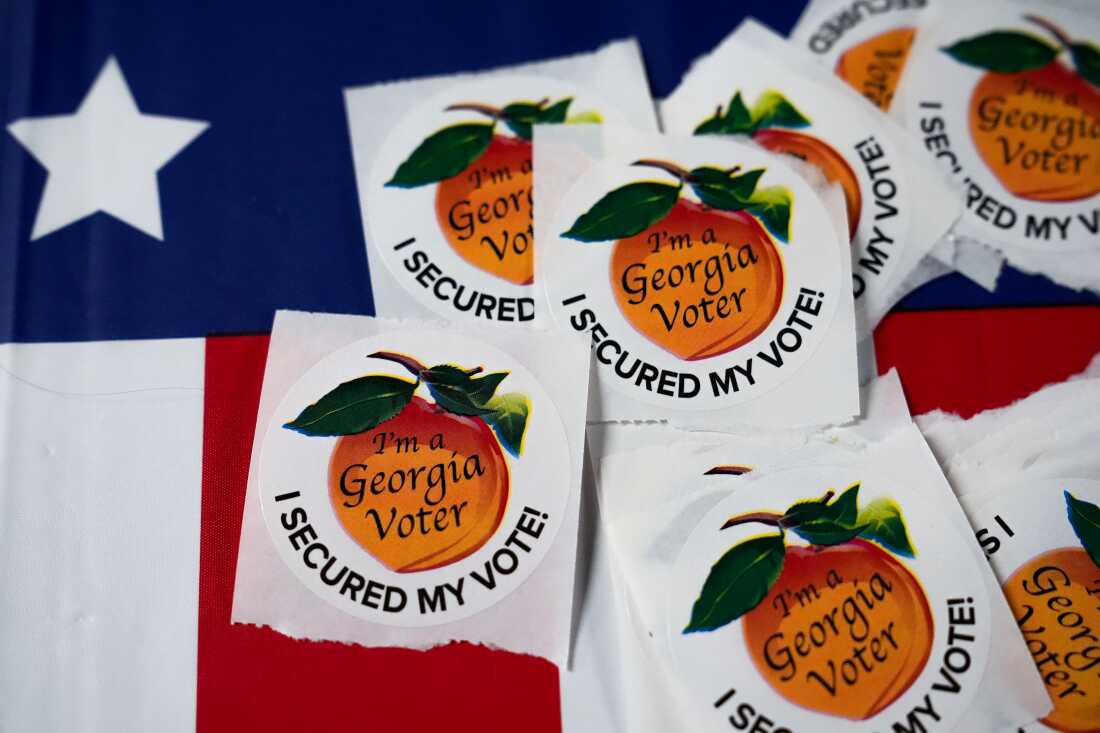
Like a wildfire, Democratic turnout has surged, with over a million Georgians casting their ballots before Election Day. Democrats are reveling in a nearly 15% turnout advantage over their Republican counterparts.
Ossoff stands as the most vulnerable incumbent this fall, yet the spotlight has been hijacked by a divisive Republican primary that’s consumed the narrative.
Leading the pack is Rep. Mike Collins, with Derek Dooley—son of legendary University of Georgia football coach Vince Dooley—hot on his heels. Dooley boasts the backing of Gov. Kemp, who opted out of the race himself. Rep. Buddy Carter is also in the mix.
Trump’s endorsement remains elusive, likely due to the impending runoff.
The governor's race is shaping up to be one of the most competitive in the nation, with both parties embroiled in debates over electability.
On the Republican front, Lt. Gov. Burt Jones has Trump's nod and has maintained a seemingly insurmountable lead over state Attorney General Chris Carr and Secretary of State Brad Raffensperger for much of the campaign.
But billionaire healthcare mogul Rick Jackson has crashed the party, pouring over $80 million into ads that paint him as the true Trump loyalist. Jones, heir to a gas station empire, has also loaned himself nearly $20 million, making this primary the priciest in Georgia's history.
With national unpopularity looming over the GOP, candidates argue they’re the only ones capable of energizing the base and swaying moderates to keep control of state government as Georgia grows more politically competitive. The governor's race is widely viewed as a toss-up.
Both Republican and Democratic primaries are likely headed for runoffs. On the Democratic side, former Atlanta mayor Keisha Lance Bottoms, former state Sen. Jason Esteves, and former Republican Lt. Gov. Geoff Duncan are among those vying for attention.
Democrats are acutely aware that nominating the wrong candidate could derail an otherwise winnable race, especially given Bottoms' tumultuous tenure as mayor and her ties to the unpopular Biden administration.
One critical decision expected from Tuesday’s election involves two seats on the Georgia Supreme Court. Although nominally nonpartisan, Republican-appointed incumbents Charlie Bethel and Sarah Warren face challenges from Democrats Jen Jordan and Miracle Rankin, who have garnered endorsements from heavyweights like Barack Obama and progressive groups.
The stakes rose last week when Kemp announced that Georgia lawmakers would reconvene on June 17—just a day after primary runoffs—to consider redistricting for the 2028 election cycle.
While other Southern states have rushed to redraw districts to diminish Democratic representation, Kemp previously stated that Georgia's primary was already underway. The current House map features nine Republican districts and five Democratic ones, with no competitive races even in a year that favors Democrats.
A recurring theme since Trump’s return to power in 2025 is evident in Georgia: overwhelming Democratic enthusiasm and voter turnout. Of the record-setting one million early voters in Georgia's primary, approximately 56.7% chose Democratic ballots compared to 41.7% for Republicans—a staggering 15% gap. The remainder opted for nonpartisan races.
Georgia Democrats are also looking to capitalize on November 2025 results that saw two challengers flip seats on the Public Service Commission with about 63% of the vote in stunning upsets.
In states that have already held midterm primaries this year, reports indicate that Democrats are experiencing a turnout surge compared to 2022 midterms, including record numbers in Texas and strong showings in North Carolina and Ohio.
This aligns with polling indicating widespread dissatisfaction with the national Democratic brand; however, voters are flocking to Democrats in droves due to their discontent with Republicans and Trump’s second-term agenda.