
Hakeem Jeffries: The First Black Speaker Faces a Political Minefield

John Boehner, former Speaker of the House, once described his role as “the loneliest place in the world.” After stepping down in 2015, he reflected on the challenges of negotiating with President Barack Obama without the backing of his own party. “It’s hard to negotiate when you’re standing there naked,” he bluntly stated.
His successors have faced similar struggles. Paul Ryan dealt with threats from conservative factions before Republicans lost their majority in the 2018 midterms. Kevin McCarthy needed 15 ballots to secure his position in January 2023, only to be ousted after just 269 days when eight Republicans sided with Democrats to remove him—the first time in history a Speaker was ousted by a House vote.

“I knew at the time I probably wouldn’t be able to end the job, I mean, not on my terms,” McCarthy admitted post-removal. “I never said it’d be fair.”
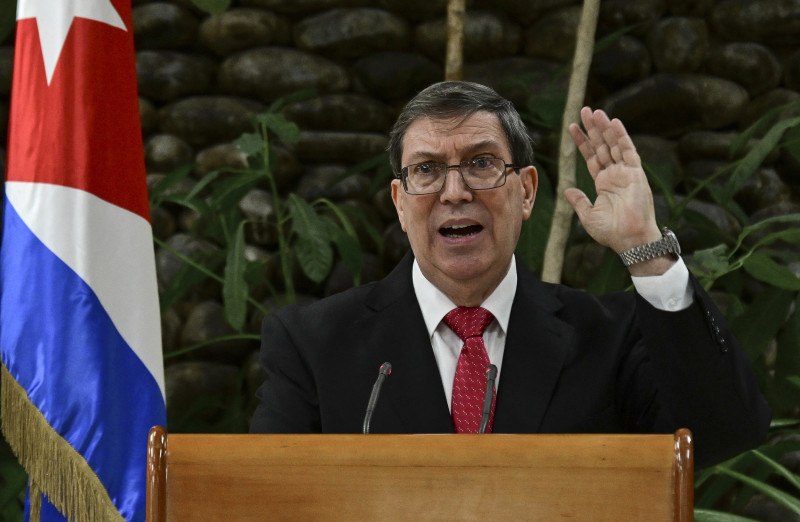
Across the aisle, Democratic leader Hakeem Sekou Jeffries watched as McCarthy’s name echoed over 3,000 times during the contentious voting process. Every Democrat rallied behind their leader while Republicans splintered into factions. Following McCarthy’s ousting, it took House Republicans three weeks and four nominees to settle on Mike Johnson as their current Speaker.
If projections hold true for the midterm elections, Jeffries could become the first Black American to assume the role of House Speaker in U.S. history.

“We take nothing for granted, but we’re on the verge of taking back control of the House of Representatives,” he declared at a campaign event in Pennsylvania. However, achieving this historic milestone may not shield him from the intra-party conflicts that have plagued his Republican predecessors.
Cornel West, a prominent philosopher and civil rights advocate, remarked, “A Black face in a high place is still very limited in a corrupt system... But Blackness should never serve as an excuse to downplay one’s own moral and political convictions.”
The Republican wave of 2010 handed Boehner a commanding 242 seats, bolstered by 87 freshmen driven by a Tea Party movement that viewed its own leadership with skepticism. This energy surged from outside Washington—rallies, talk radio, and insurgent primary challengers targeting both Democrats and establishment Republicans. By 2015, committed members formed the House Freedom Caucus, approximately 40 strong and pivotal in any Republican speaker race.

The emerging Democratic majority mirrors this dynamic. Its momentum stems from grassroots movements like the Democratic Socialists of America (DSA), which recently propelled Zohran Mamdani to the New York City mayoralty. Voters across red and purple districts express frustration with both President Donald Trump and their own party leaders, seeking to dismantle the status quo.
“Having unity doesn’t mean being unanimous,” Representative Jim Clyburn, Jeffries’ mentor and former third-ranking House Democrat, stated. “If everybody agreed all the time, there is no opportunity for growth.”
Jeffries will need to manage his caucus’s most fractious members. Some allies dismiss the insurgency as confined to liberal strongholds. Yet few understand this dynamic better than Jeffries, who has navigated it in Brooklyn for over 25 years.

The Democratic Party transformed following their 2024 loss of the White House, Senate, and House, ushering in a new generation of more populist and grassroots political participants—many of whom belong to Jeffries’ generation.
Democrats currently lead the generic congressional ballot by over eight points, yet Jeffries holds a negative ten-point favorability rating according to polling aggregates. This places him twelve points above Senate Democratic Leader Chuck Schumer, who is underwater by twenty-two points. Both leaders symbolize broader discontent with a Democratic Party carrying a negative fifteen-point favorability rating.
“While the country is fully enveloped in a populist moment, the political class is still stuck looking at things in an outdated right-left spectrum,” political strategist Mike Madrid observed. “This has nothing to do with ideology—it’s absolutely populist, and it’s about a system. People want systemic reform.”

The size of Jeffries’ majority will be crucial. In 2010, Tea Party freshmen claimed a strong mandate due to their numbers. The Freedom Caucus needed only to outnumber the Speaker’s margin.
Currently, Republicans hold 219 seats compared to Democrats’ 214. Democrats require a net gain of just three seats for control. The Cook Political Report projected on October 23 that Democrats could flip between twelve and twenty-two seats, potentially granting them a majority ranging from nineteen to thirty-nine seats.
The difference between these outcomes translates into two distinct speakerships. A nineteen-seat majority would leave Jeffries with only nine votes to spare on party-line votes—similar to recent Republican speakers facing slim margins requiring near-unanimity for legislation. Conversely, a majority of thirty-nine seats or more would dilute individual bloc influence due to increased voting power.

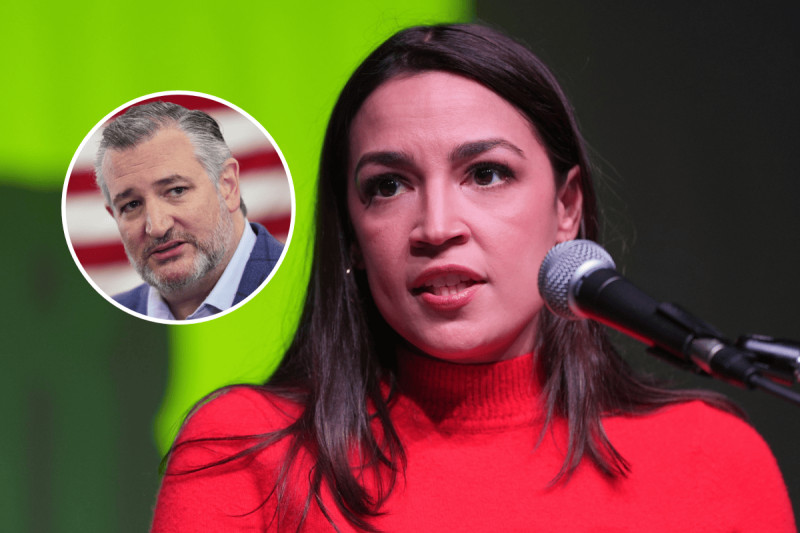
Currently, only two DSA members serve in the House: Alexandria Ocasio-Cortez and Rashida Tlaib. They align with five other progressive members as “The Squad.” An analysis by the Brookings Institution identified eighteen other Democratic candidates endorsed by the DSA running this year across various states.
By Newsweek’s count, thirteen of these candidates are highly likely to win in the general election, potentially forming a DSA-aligned bloc of twenty members in Congress—right at the low end of estimates for a Democratic majority.

Following DSA candidates’ primary victories in New York this past June, Jeffries expressed support while maintaining distance from their agenda. He stated that individual members elected in Democratic primaries would join a broad caucus.
Jeffries has campaigned for Democrats nationwide: supporting candidates in marquee swing districts like Pennsylvania’s Bob Harvie and Texas’ Johnny Garcia. He also backed conservative Democratic Blue Dog Coalition whip Adam Gray in California’s redrawn district.
“He’s not trying to force ideological purity but rather embrace a big tent Democratic Party that could potentially govern for a long time,” Gray noted.

However, big tents can develop holes. Recently, Blue Dog Representatives Marie Gluesenkamp Perez and Jared Golden provided Republicans with necessary votes to advance legislation—a significant breach of party lines. Jeffries initially promised a “serious response” but later opted for leniency.
Jeffries’ record as minority leader strengthens his case for maintaining unity within his caucus. His tenure has seen more discharge petitions passed than since the New Deal era and record fundraising hauls for House Democratic groups.
“He believes that he can work with anybody,” Jaime Harrison remarked. “He’s going to be pushing folks... to understand that none of the things that you are fighting for will happen without the majority.”

Drew Hammill praised Jeffries for mastering behind-the-scenes consensus-building—a demanding aspect of leadership often overlooked.
However, Hammill expressed concern about how this approach will resonate with leftist factions: “The nature of the left is to be inherently discontent.”
Jeffries began his political career as an outsider in Brooklyn’s Crown Heights neighborhood—a historically significant area that produced notable leaders like Shirley Chisholm and Jackie Robinson. Raised middle-class by college-educated parents involved in unions, Jeffries’ faith played an integral role in his development as a leader.

After earning degrees from Binghamton University and Georgetown University, Jeffries entered public service by challenging long-time Assemblyman Roger L. Green in 2000. Despite losing twice to Green, he eventually won after redistricting allowed him to run again.
Jeffries broke with party lines to support Barack Obama over Hillary Clinton while still passing significant legislation during his time in the state assembly.
In 2018, he capitalized on an opening created by Ocasio-Cortez’s defeat of Joe Crowley—an influential figure within the party—to secure his leadership position against Barbara Lee.

The election of Donald Trump ignited a demand for populist resistance among progressives. In the 2018 midterms, Jeffries helped craft messages appealing more to suburban voters than urban activists.
The DSA’s membership surged from under 4,100 at the start of 2020 to over 15,000 today—culminating in Mamdani’s election as mayor in 2025.
In Jeffries’ district, demographic shifts have introduced younger, whiter voters who align more closely with Mamdani’s base—prompting tensions between these new constituents and Jeffries’ established support base.