Israel Enacts Controversial Death Penalty Law Targeting Palestinian Offenders
JERUSALEM — On Monday, Israel's parliament enacted a law that allows the death penalty for Palestinians found guilty of murdering Israelis, a decision that has sparked intense backlash from international observers and human rights organizations, who label it as both discriminatory and inhumane.
This legislative move represents the culmination of a prolonged campaign by far-right factions within the government to intensify punitive measures against Palestinians accused of nationalistic crimes. Prime Minister Benjamin Netanyahu personally attended the Knesset to cast his vote in favor of the bill.
The newly passed law establishes hanging as the default punishment for West Bank Palestinians convicted of such offenses. It also permits Israeli courts to impose the death penalty on Israeli citizens charged with similar crimes, although legal experts argue that this effectively limits the application of capital punishment to Palestinian individuals, thereby excluding Jewish citizens from its reach.
Notably, the law will not be applied retroactively to current prisoners, including those affiliated with Hamas who were involved in the October 7, 2023 attacks that ignited the ongoing conflict in Gaza.
Following the final vote tally of 62-48, lawmakers erupted in applause and cheers. Netanyahu remained seated, offering no immediate comment or reaction.

Itamar Ben-Gvir, Israel’s national security minister and a key proponent of the legislation, celebrated by brandishing a bottle. Limor Son Har-Melech, a far-right lawmaker and one of the bill's original sponsors, expressed mixed emotions, smiling through tears as she recalled her late husband, who was killed in a Palestinian attack.
The legislation is set to take effect in 30 days but is expected to face significant legal challenges that could delay its implementation. Almost immediately after the bill's passage, the Association of Civil Rights in Israel announced it had filed a petition with the country’s highest court to contest the law. They described it as “discriminatory by design” and argued that the Knesset lacks legal authority over West Bank Palestinians, who are not Israeli citizens.
Amichai Cohen, a senior fellow at the Israel Democracy Institute, emphasized that under international law, Israel's parliament should refrain from legislating in territories like the West Bank, which are not recognized as sovereign Israeli land.
Many members of Netanyahu’s far-right coalition have expressed intentions to annex the West Bank into Israel.
The vote concluded a lengthy debate within parliament. During discussions, lawmakers raised various concerns about the bill's provisions, including its lack of clemency options, which contradict established international conventions. Opposition members frequently urged their colleagues to reconsider their support for the legislation.
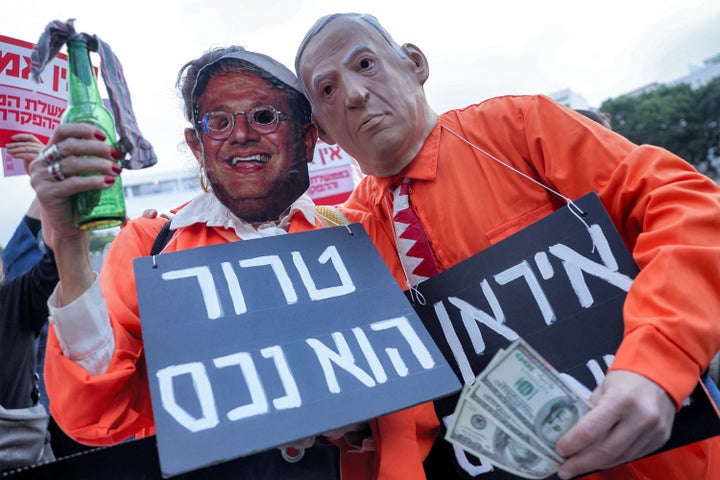
Before the vote, Ben-Gvir characterized the law as a necessary measure that reflects national strength and pride. “From today, every terrorist will know—and the whole world will know—that whoever takes a life, the State of Israel will take their life,” he declared to his fellow lawmakers while wearing a pin shaped like a noose on his lapel.
Gilad Kariv from the Labor Party criticized the bill's provision allowing for death sentences without unanimous jury agreement. “A law where someone can be sentenced to death without unanimous conviction—does this represent justice? Is this what we consider the sanctity of life?” he questioned.
He further asserted that the legislation violates international law and risks transforming Israeli soldiers and prison guards into “war criminals against their will.”
Some lawmakers, including Aida Sliman from Hadash, a leftist Jewish-Arab political party, left the chamber in frustration before voting concluded.
Experts have identified two critical aspects of the legislation that effectively restrict its application to Palestinians. First, it designates death as the default punishment for nationalistic killings tried in military courts, which exclusively handle cases involving West Bank Palestinians. The bill stipulates that military judges can only alter this sentence to life imprisonment under exceptional circumstances.
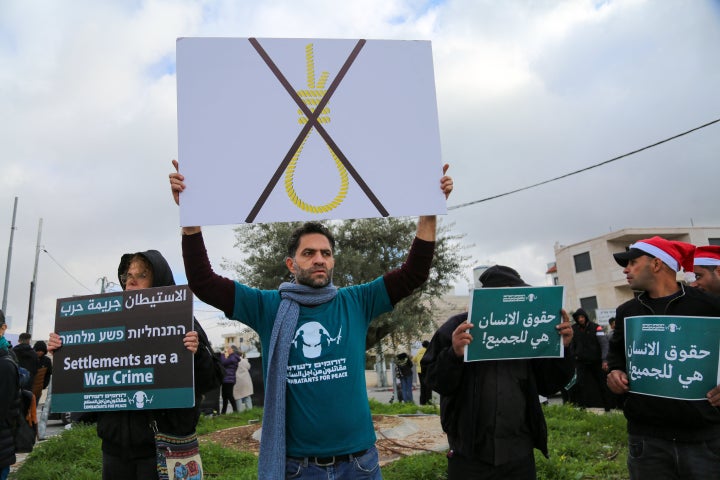
In contrast, Israeli civilian courts are granted more discretion in sentencing, allowing judges to choose between death and life imprisonment. The second key element lies in how the law defines offenses punishable by death: killings motivated by a desire to undermine Israel's existence.
“It will apply in Israeli courts but only to terrorist activities aimed at challenging Israel's existence. This means Jews will not be prosecuted under this law,” Cohen explained.
Foreign ministers from Australia, Britain, France, Germany, and Italy issued a statement urging Israel to reconsider its decision to pass this law, labeling it “de facto discriminatory” and asserting that capital punishment is unethical and lacks any deterrent effect.
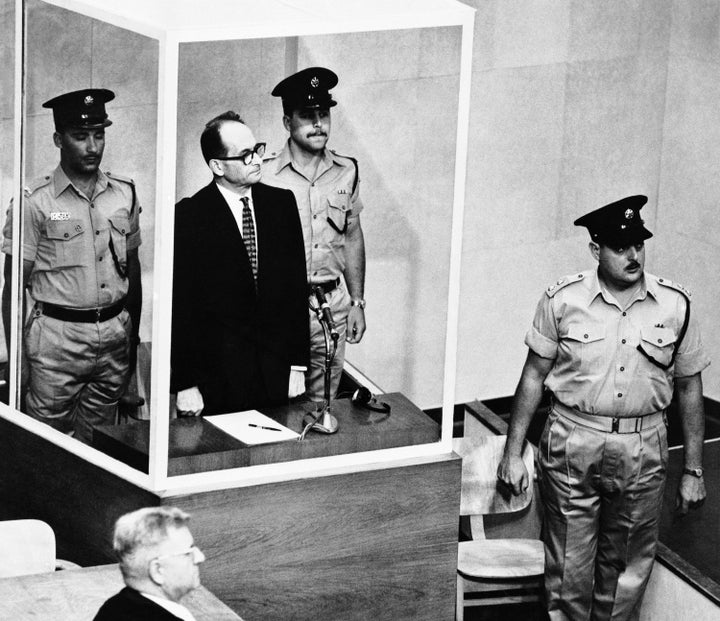
While Israel has provisions for capital punishment related to genocide, wartime espionage, and certain terror offenses, it has not executed anyone since Nazi war criminal Adolf Eichmann in 1962.
The Public Committee Against Torture in Israel noted that the state has consistently supported abolishing the death penalty at international forums. Until recently, Israel's Shin Bet security agency opposed capital punishment due to concerns it could incite further retaliatory violence from Palestinian militants.
Some opposition lawmakers have expressed fears that this new law could jeopardize future negotiations regarding hostages. Following the October 2023 attacks, Israel negotiated the release of approximately 250 hostages in exchange for thousands of Palestinian prisoners.
A separate bill addressing penalties for those involved in the October 7 attacks is also under consideration within parliament.