

Supreme Court's Confounding Rulings: A Corporate Power Play Unveiled
On Monday, the Supreme Court delivered two contradictory rulings that appear to bolster President Donald Trump's agenda while simultaneously undermining regulatory oversight. One ruling grants Trump sweeping authority, while the other curtails it in a bizarre twist.
In Trump v. Slaughter, the court dismantled nearly a century of precedent, declaring that presidents can fire agency officials without restriction, obliterating for-cause removal protections established by Congress.
Chief Justice John Roberts stated, “We hold that such protection from removal is contrary to the separation of powers enshrined in the Constitution.”
However, in a stark contrast during Trump v. Cook, Roberts asserted that this executive power does not extend to the Federal Reserve. Trump attempted to dismiss Federal Reserve Board Governor Lisa Cook based on fabricated allegations of mortgage fraud.
Roberts countered, “The protection from removal enjoyed by Governors of the Federal Reserve is consistent with the Constitution.”
This contradiction raises eyebrows, but Roberts attempted to rationalize it.
He noted, “Our prior cases do not necessarily implicate the constitutionality of such arrangements,” referring to the Federal Reserve's unique status. “Our opinion today should not be read to do so either.”
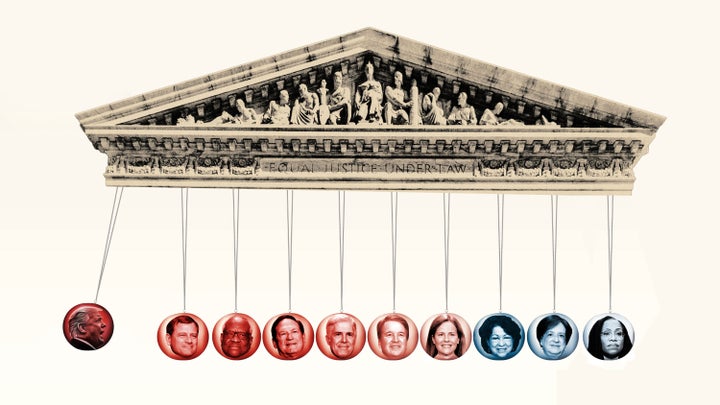
The rulings create a dubious distinction rooted in a questionable historical narrative about central bank independence, setting the Federal Reserve apart from other executive agencies. The Federal Reserve is seen as a successor to the First and Second Banks of the United States, despite those institutions lacking monetary regulation and not being part of the executive branch.
Roberts emphasized that “What matters is that the Federal Reserve remains ‘consistent with the principles that underpin’ the First and Second Banks—namely, that monetary policy should not be subject to political interference.”
This entire differentiation hinges on a flawed analogy. The Federal Reserve was established similarly to other executive branch agencies, including the Federal Trade Commission, which was created just one year later and granted identical for-cause removal protections.
So what’s really going on?
Justice Brett Kavanaugh, the only conservative joining Roberts in both rulings, offered a more pragmatic explanation in his concurrence in Cook. He urged the court to affirm that the Federal Reserve could retain its for-cause removal protections.
Kavanaugh warned that failing to do so would “create significant uncertainty” and expose the Federal Reserve to political pressures, jeopardizing U.S. monetary policy effectiveness. He stressed that the Federal Reserve’s role is critical for economic stability.
“I would not go down that road,” Kavanaugh declared.
The integrity of the financial system, supported by the Federal Reserve’s monetary authority, hangs in the balance. In essence, tampering with the Federal Reserve equates to tampering with capital.
Graham Steele, a former Treasury Department regulator, remarked on the court’s stance: “The court’s position that the Federal Reserve is special and has special protections while other regulatory agencies are at the mercy of partisan whims underscores that, for this court, capital has a special status.”
This pattern has become typical for the Roberts Court. As it maneuvers to achieve desired outcomes, contradictions like those in Slaughter and Cook reveal less fidelity to originalism and more alignment with a conservative interpretation of living constitutionalism.
By safeguarding the Federal Reserve’s for-cause removal protections, the court shields banks, investors, corporations, and capital flows. Conversely, by neglecting protections for agencies like the Federal Trade Commission, it simultaneously protects these same entities.
The Federal Trade Commission wields significant power as the chief antitrust and consumer protection regulator. It can dismantle monopolies, investigate and penalize large corporations, and enforce consumer rights. Before Trump’s presidency, it was scrutinizing major companies like Amazon and Meta—entities that capital does not favor.
Trump has exploited claims of unitary control over such agencies for his advantage. Amazon contributed $1 million to his inauguration and paid $28 million to first lady Melania Trump for a documentary about her. The FTC settled an investigation into Amazon favorably before it reached trial. Numerous pay-to-play scandals emerged during Trump’s administration.
“What this decision will do is let what has been a powerful corporate watchdog become a little lapdog for the president’s golfing buddies,” said Alvaro Bedoya, a former FTC commissioner dismissed by Trump in 2025. “It’s telling that this Supreme Court believes bankers on Wall Street need their independent regulator while everyone else gets stuck with loyalists.”
This is how the court reconciles its apparent contradictions.