Supreme Court Betrays Public Trust: MAHA Leaders Outraged Over Roundup Ruling
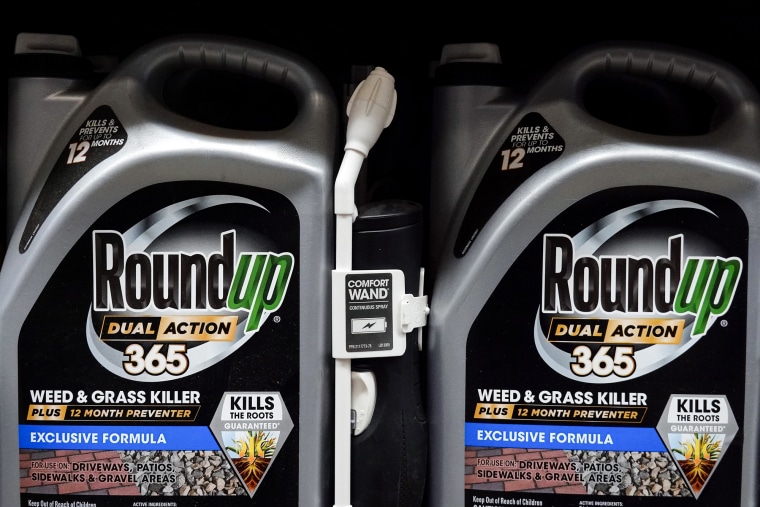
MAHA leaders erupted in outrage Thursday as the Supreme Court ruled that Bayer, the maker of Roundup, is not obligated to warn consumers about potential cancer risks linked to its weed killer.
This ruling effectively blocks thousands of lawsuits in state courts arguing that Roundup should carry a cancer warning label.
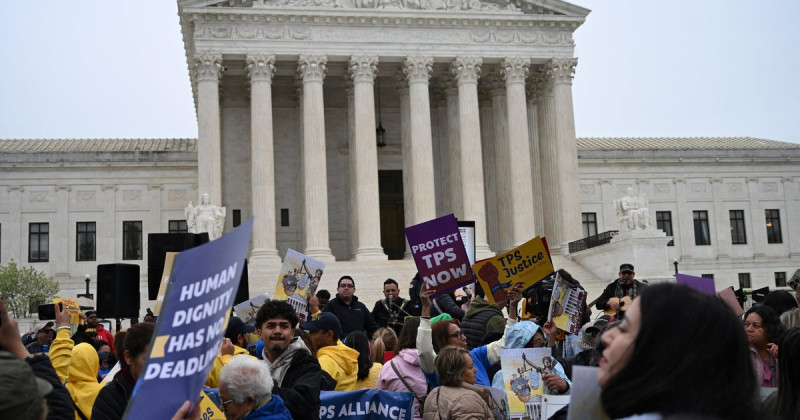
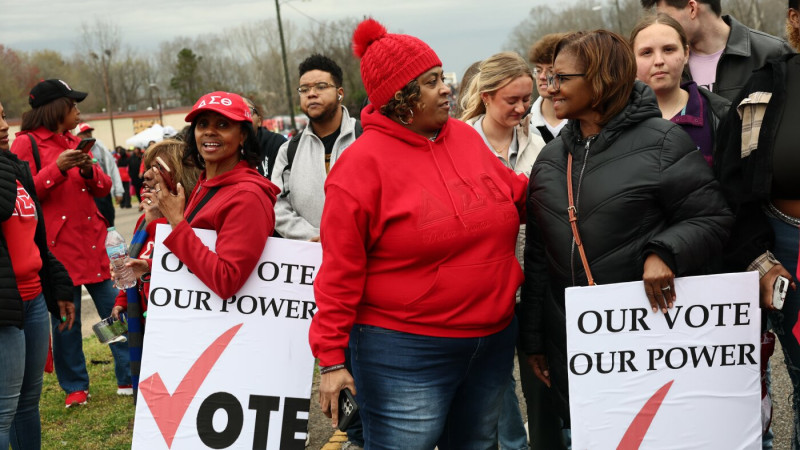
Scientific evidence increasingly indicates glyphosate, Roundup's active ingredient, is associated with cancer. This has alarmed a faction of Health Secretary Robert F. Kennedy Jr.’s followers, dubbed “MAHA moms,” who are determined to purge chemicals from the food supply. They rallied outside the Supreme Court during oral arguments in April and confronted Kennedy and President Donald Trump at a White House meeting that month over pesticide regulation.
The ruling intensified fears within the movement that the Trump administration favors the agrochemical industry over public health.
Vani Hari, a prominent MAHA figure known as “Food Babe,” slammed the decision as “sickening,” asserting it would not have occurred without the administration’s favoritism towards Bayer Monsanto, which Bayer acquired in 2018.
“Congress must act to remediate this,” she demanded.
The White House ignored inquiries regarding the Supreme Court’s decision. The Health and Human Services Department also failed to respond to requests for comment.
The case originated when John Durnell from Missouri sued Monsanto in 2019, claiming two decades of Roundup use led to his non-Hodgkin lymphoma, a blood cancer. A jury awarded him $1.25 million in 2023, but the Supreme Court accepted the case on appeal, with the Trump administration supporting Bayer’s petition. The Biden administration previously opposed Bayer in another Roundup-related case.
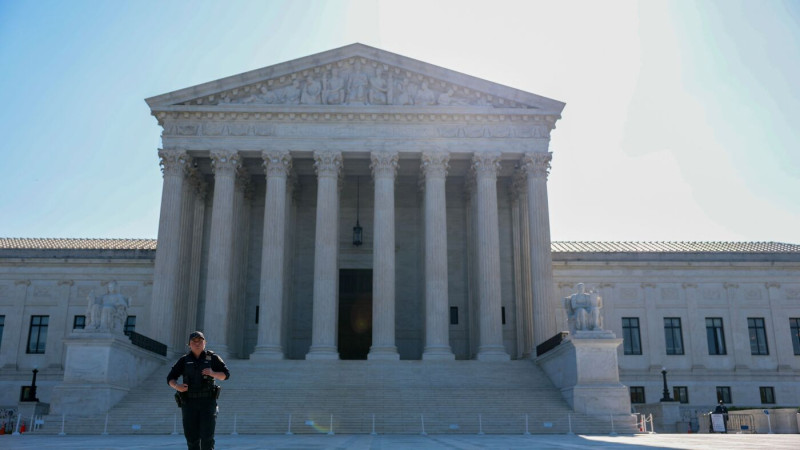
In a 7-2 ruling, the court declared Bayer immune from state lawsuits because federal regulations deem a cancer link to Roundup unlikely, negating the need for warning labels.
The Environmental Protection Agency (EPA) concluded in 2020 that glyphosate is unlikely to be a human carcinogen. Environmental groups contested this, leading to a federal appeals court ruling that the EPA failed to adequately justify its analysis. The EPA agreed to reassess glyphosate but has yet to release an updated evaluation.
In 2015, the International Agency for Research on Cancer, part of the World Health Organization, classified glyphosate as “probably carcinogenic to humans.”
Kelly Ryerson, known as “Glyphosate Girl,” stated that the Supreme Court ruling has eroded loyalty among MAHA supporters towards the Trump administration.
“Never in history has an administration so blatantly and willingly sold out our fertility, vitality, and health to corporate interests,” she declared on X. “It is unforgivable. We will make sure all voters know exactly how this domestic chemical attack happened.”
MAHA has clashed with the Trump administration on multiple fronts recently.
In February, Trump infuriated MAHA leaders by signing an executive order invoking the Defense Production Act to increase glyphosate supply. Kennedy supported this move as a means to boost domestic agricultural production but labeled pesticides as “toxic by design.” He previously sued Monsanto as a lawyer representing plaintiffs claiming Roundup caused their non-Hodgkin lymphoma.
MAHA figures also criticized FDA regulatory changes in May that expanded access to fruit-flavored e-cigarettes. They condemned the EPA’s rollback of mercury emissions standards and its decision to rescind drinking water limits for certain PFAS, known as “forever chemicals.”
Michaela Bardossas, a nutritionist with Moms Across America, a MAHA advocacy group, expressed disillusionment: “MAHA moms are not as motivated to vote at this point because we’re not getting what we expected.”
“If these Republicans want to stay in power, then they need to step up and show their support for the people that voted them in,” she added. “The pesticide issue has been a huge slap in the face.”
The dissenting justices were Ketanji Brown Jackson and Neil Gorsuch. Jackson criticized the majority’s decision for “unjustifiably closing the courthouse doors” to plaintiffs like Durnell.
Bayer responded to the ruling by stating it “is good for science, farmers, and industries that depend on regulatory clarity for innovation.”
As MAHA activists shift their focus to Congress, Rep. Anna Paulina Luna from Florida announced plans to introduce legislation stripping pesticide companies of liability protections.
“These companies purposefully omit labeling information knowing their products cause cancer and other health problems. It is time they are held accountable,” she asserted on X.
Luna previously led efforts to defeat a provision in the farm bill that would have shielded Bayer from allegations regarding its herbicide containing potentially cancer-causing ingredients.
Scientists studying glyphosate's health risks criticized the EPA’s 2020 analysis as lacking robust evidence. At a symposium in Seattle in March, numerous international scientists concluded glyphosate can cause cancer, particularly increasing non-Hodgkin lymphoma risk.
Researchers noted discrepancies between studies used by IARC and those cited by the EPA; IARC relied on peer-reviewed research while the EPA referenced unpublished studies funded by the pesticide industry.
“IARC got it right, and the evidence since the IARC review that happened in 2015 has only gotten stronger,” stated Lianne Sheppard, a professor at the University of Washington environmental and occupational health sciences department.