


Trump Claims Iran Peace Deal Could Reopen Strait of Hormuz and Tackle Nuclear Threat
Negotiators are buzzing over a potential Iran cease-fire deal that could reopen the Strait of Hormuz without tolls, halt fighting for 60 days, and kick off intense discussions on Iran's nuclear ambitions. Details of this draft surfaced Sunday, igniting speculation about its implications.
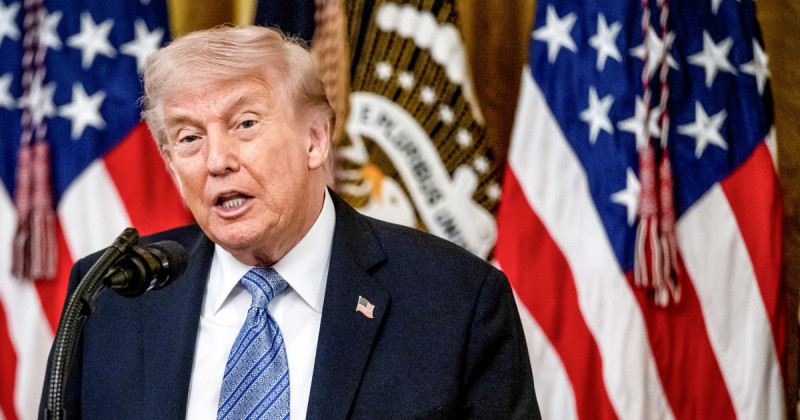
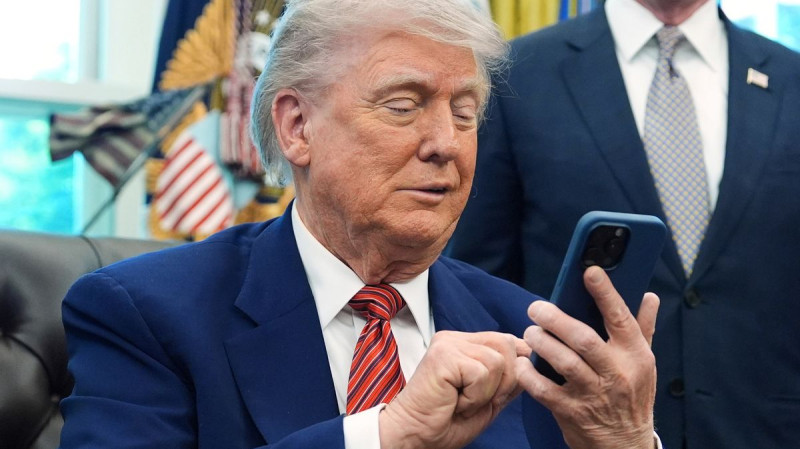
On Saturday, Trump declared that the US and Iran were on the brink of finalizing a “Memorandum of Understanding pertaining to PEACE.” But come Sunday, he seemed to pump the brakes, emphasizing that any agreement must be solid. “If I make a deal with Iran, it will be a good and proper one,” he posted on Truth Social.

He slammed the previous Obama-era deal, claiming it “gave Iran massive amounts of CASH, and a clear and open path to a Nuclear Weapon.” In contrast, Trump insists his proposed deal is “the exact opposite,” though he admits, “nobody has seen it, or knows what it is.”
Eliminating Iran’s nuclear program is non-negotiable for Trump in these cease-fire talks. He argues that preventing the Islamic Republic from acquiring nuclear weapons justifies the war's costs. If Tehran fails to surrender its entire stockpile of enriched uranium dust—crucial for weapon development—sanctions crippling its economy will remain intact.
US officials estimate that lifting the blockade on Hormuz could take up to a week to implement. Under this Trump-brokered deal, the Strait would be open for the full 60-day ceasefire without tolls. Iran would need to clear mines from this vital chokepoint, allowing ships to navigate freely, as reported by Axios.

In exchange, the US would ease its blockade on Iranian ports and lift some sanctions, enabling Tehran to resume oil sales. Reports indicate that Iran would also commit to never pursuing nuclear weapons, suspend its uranium enrichment program, and eliminate its enriched uranium stockpile.
However, Iranian officials have countered that no agreement exists regarding their nuclear program, which will be a topic during the 60-day ceasefire negotiations. Sticking points reportedly include unfreezing Iranian assets and the scope of a ceasefire in Lebanon, according to Al Jazeera.

Iran has accused Israel of pressuring the US to include terms that would permit further military actions in Lebanon. Both nations are expected to sign a memorandum of understanding lasting 60 days, with the possibility of extension by mutual consent.
US forces mobilized in recent months will remain in the region throughout this period and will only withdraw if a final deal is reached. The draft also calls for an end to hostilities between Israel and Hezbollah in Lebanon.
As Trump announced on Saturday, the US is nearing an agreement with Iran to conclude the war and reopen the Strait of Hormuz. “An Agreement has been largely negotiated, subject to finalization between the United States of America, the Islamic Republic of Iran, and various other Countries,” he stated on Truth Social.

“Final aspects and details of the Deal are currently being discussed and will be announced shortly. In addition to many other elements of the Agreement, the Strait of Hormuz will be opened,” he added.
This tentative agreement follows US talks with multiple Arab leaders over the weekend. “Suffice it to say some progress has been made, significant progress, although not final progress,” Secretary of State Marco Rubio remarked during a visit to India on Sunday, hinting at more updates from Trump later.
Pakistan’s Prime Minister Shehbaz Sharif, acting as a mediator between Washington and Tehran, expressed hopes for hosting “the next round of talks very soon” via social media. Earlier, an Iranian foreign ministry spokesman indicated that both nations are in the “final stage” of drafting a deal and may reach a mutually acceptable solution.