



Trump's Conflict with Iran Triggers Gas Price Spike: 'We've Had Enough'
Gas prices in suburban Atlanta have surged more than $1 per gallon in just a few weeks, leaving local residents like Joshua Elliott feeling the financial strain. Each morning, Elliott delivers meals for DoorDash before heading to his full-time job, and the increased fuel costs have added approximately $15 weekly to his expenses—nearly equivalent to an hour's earnings from food delivery.
“It’s not life-changing, but it’s probably about an extra hour or hour and a half of working,” said Elliott, 33, who is saving for an engagement ring. “That’s time I was going to relax. Now I’ve got to go out and work instead. I feel the grind more.”
Nationally, gasoline prices have jumped around 30% since the U.S. and Israel initiated surprise military actions against Iran. Crude oil prices have skyrocketed above $100 per barrel as Iran restricts access to the crucial Strait of Hormuz shipping corridor. Recent Israeli strikes on Iranian oil facilities have raised concerns about potential long-term disruptions in fuel production.
President Trump has not provided clarity on when the conflict might conclude or what a U.S. victory would entail. In Georgia, Elliott has seen prices leap from roughly $2.71 to $3.77 per gallon, mirroring the national trend. This marks the second-largest monthly increase in gas prices in three decades, trailing only the supply shock from Hurricane Katrina in 2005.
Trump's administration appears to be banking on Americans accepting higher fuel costs as part of his foreign policy strategy. However, if a resolution to the conflict is not found soon, these elevated fuel prices could ripple through the economy, leading to increased consumer prices, sluggish job growth, and greater sacrifices for working-class individuals.
“I think we’re likely to see it fairly quickly. It’s a big hit to people’s pocketbooks,” remarked Dean Baker, an economist at the Center for Economic and Policy Research. “Maybe something will happen with the war and prices will plummet back down and this will prove to be a temporary thing. But I don’t think it’s likely.”
Those with long commutes or who cover their own fuel costs, like Elliott, are among the first to feel the impact. Baker noted that rising gas prices will inevitably increase transportation costs for goods, leading consumers to cut back on discretionary spending—perhaps forgoing vacations due to higher airfares or opting to cook at home instead of using delivery services.
Ashley Brown, a hairstylist in Seattle, has had to rethink her daily commute as gas prices in Washington state have soared to around $5.15 per gallon from $4.18 just a month ago. She drives 15 miles each way to her rented workspace but has decided to switch to light rail, which costs $3 per ride. Although this change will double her commute time, she believes it will save money on gas and reduce wear and tear on her vehicle.
“I feel like we’re being squeezed everywhere else,” said Brown, 39. “The cost of doing business, the cost of groceries, the cost of living. And now with gas going up, there’s just no room.”
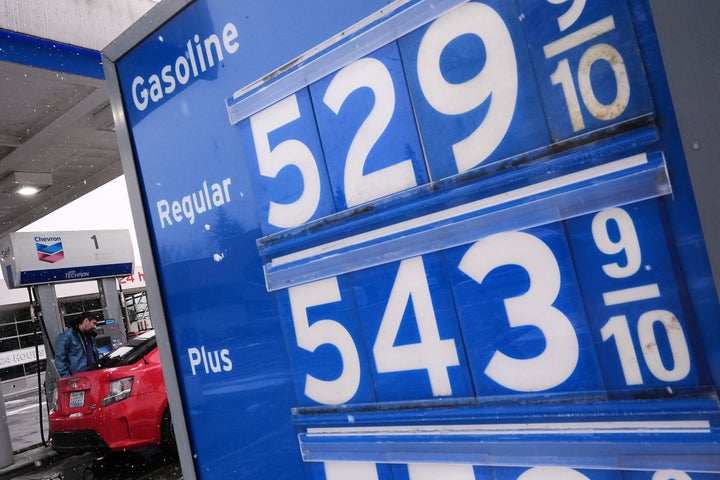
As a self-employed stylist, Brown has already experienced shrinking profit margins due to tariffs that have increased prices on foreign-made hair products. She has tried not to pass these costs onto her clients, but the unexpected rise in fuel expenses has added another layer of difficulty.
“This feels like enough is enough,” she expressed.
The ongoing conflict has complicated inflation predictions for policymakers. The producer price index, which tracks wholesale prices, reached its highest level in a year last month, driven primarily by rising food and energy costs—including a 14% increase in diesel fuel prices that power trucks and farm equipment.
“The rise in energy prices in February is just the beginning,” warned Oxford Economics in a memo, noting that these figures do not yet account for diesel's increase since the war began.
Elliott plans to continue driving for DoorDash despite the rising fuel costs but does not expect customers to increase their tips—everyone is feeling the pinch at the pump. His girlfriend commutes 44 miles round trip daily and has already noticed the impact on her budget.
One of Elliott's frustrations is that this price surge seems avoidable. He opposes what he describes as “a pointless war that we never should have gotten into.”
“It’s one of many things where I’m like, ‘Why are we doing this?’” he said.