
Unveiling Trump’s Digital Army: The Rise of AI-Generated Soldiers and a New Ministry of Truth
As tensions escalate in the Middle East, a peculiar phenomenon is unfolding online. Amidst the backdrop of potential military action against Iran, a new breed of soldiers has emerged—not on the battlefield, but on social media platforms.
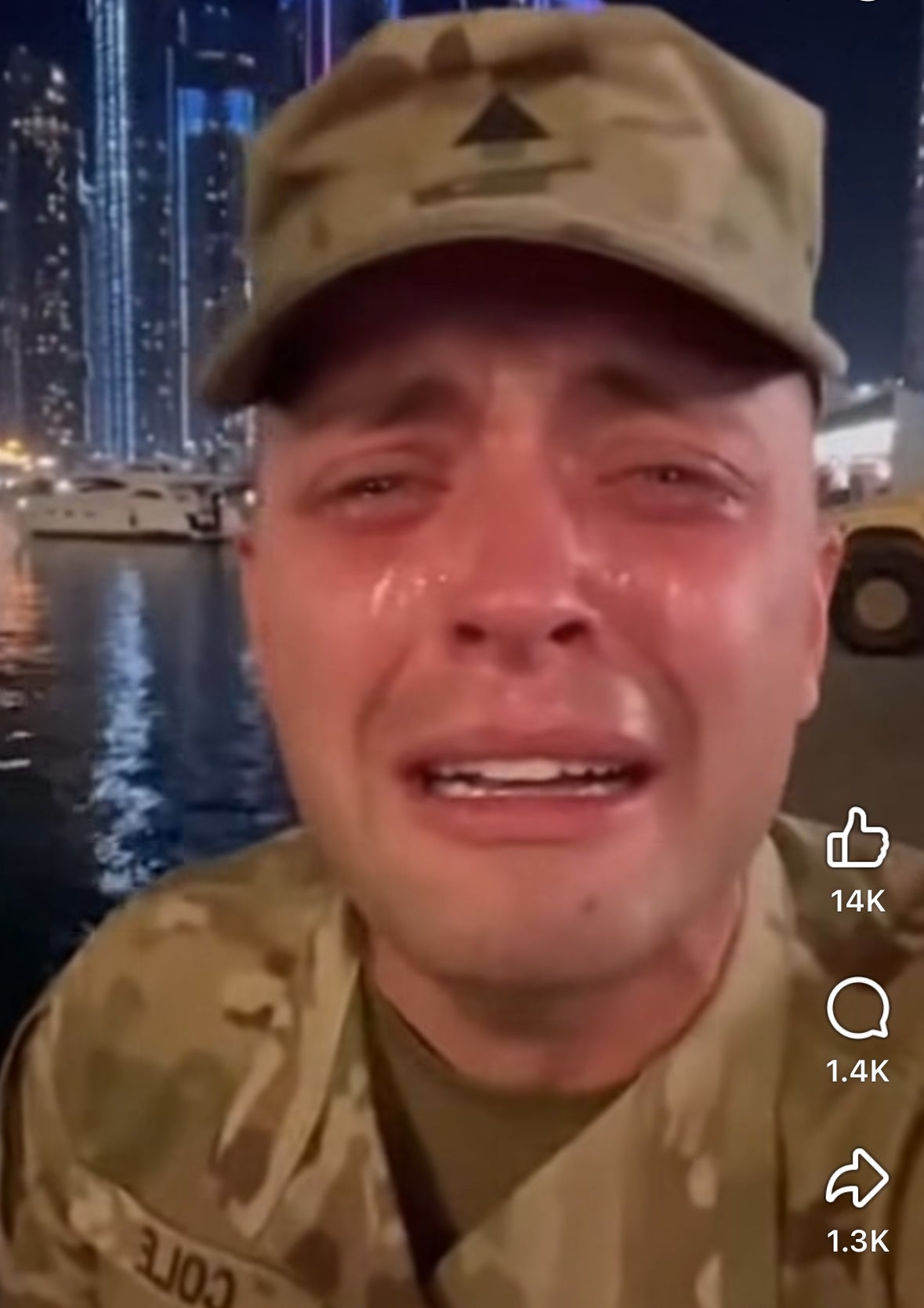
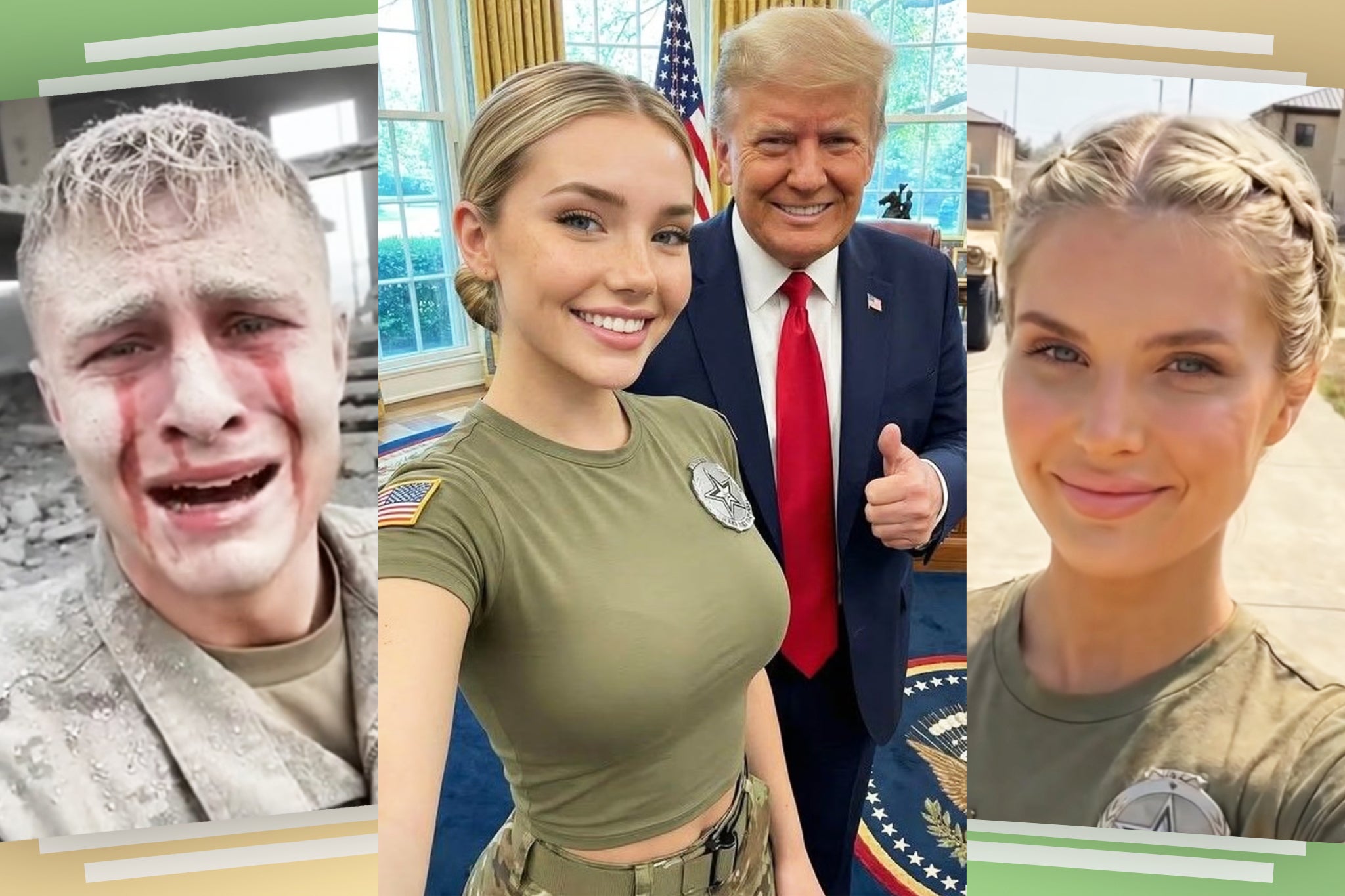
In a striking video from Dubai, Private Cole, visibly distressed, implores viewers, “I need you to listen. I’m standing here in Dubai and I’m honestly terrified right now.” His emotional plea contrasts sharply with the serene skyline behind him. Meanwhile, Private Amelia, covered in dust from an undisclosed war-torn area, states, “I almost didn’t make it out of these ruins today. We take the hits so you live in peace.” These narratives, crafted for engagement, blur the lines between reality and digital fabrication.
Some soldiers project confidence, smiling and inviting followers to join their journey. Others, however, are not as fortunate; their coffins arrive on tarmacs as grieving relatives mourn their loss. The digital landscape is rife with contradictions.
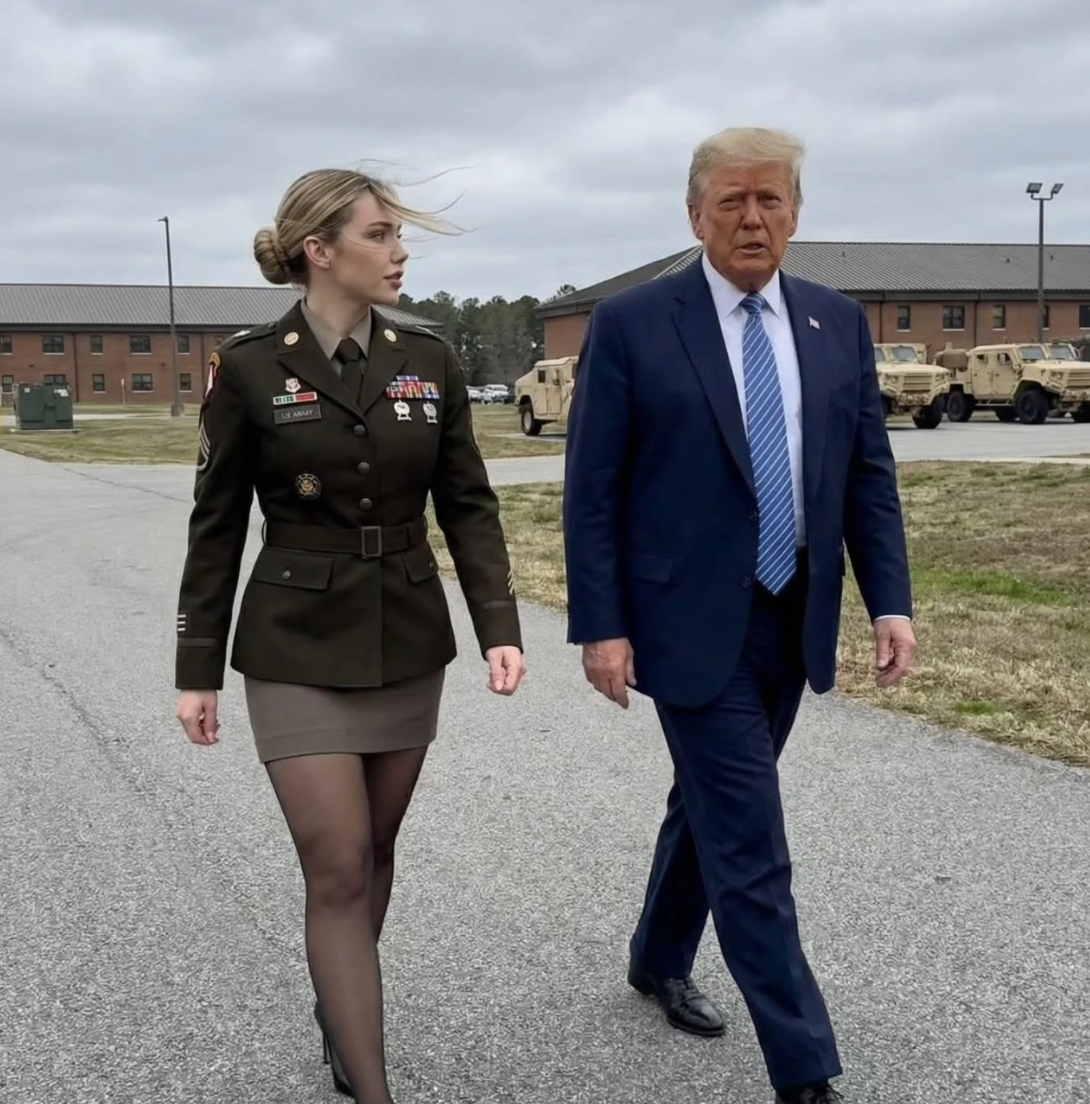
Jessica Foster stands out as a notable figure within this virtual unit. Pictured alongside prominent figures like Donald Trump and Lionel Messi, she has gained notoriety not just for her military persona but also for selling pictures of her feet to fans who appreciate her MAGA-themed content. Recently, her online presence vanished when her Instagram account was deleted.
This so-called army exists solely within the confines of our screens, revealing a disturbing truth: while traditional war propaganda is alarming, the automated disinformation proliferating today may pose an even greater threat.
The short-form video format has captivated audiences, with a recent poll indicating that 75% of Americans engage with such content multiple times daily. As AI-generated videos flood this space, their realism continues to improve at an alarming rate.
Competition in generative technology is fierce; OpenAI recently discontinued its app Sora due to pressure from rivals like Google. Platforms are rapidly enhancing their capabilities to create lifelike videos from minimal prompts.
However, topical relevance is crucial for these videos to resonate. The ongoing conflict involving Trump and Netanyahu's confrontations with Iran is destabilizing economies worldwide. As billions scroll through their feeds, they become desensitized to the daily horrors emerging from Gaza, leading to an increase in Iran-related content.
The Trump administration's media output has largely consisted of high-impact “war porn” showcasing missile strikes and advanced weaponry. One caption boldly proclaims, “The world’s strongest military,” while footage is interspersed with video game clips in a bid to captivate viewers and reinforce a narrative of military dominance.
In contrast, Iranian media employs humor and irony through meme-like storytelling, often accompanied by AI-generated rap tracks that mock Trump. Their recent Lego-style animations reference tragic events like the bombing of a girls’ school at the onset of the US-Israel campaign.
Dr. Tine Munk, a criminology lecturer at Nottingham Trent University, notes parallels with previous conflicts. In 2022, she explored “memetic warfare” during the Ukraine-Russia conflict, where both sides engaged in a barrage of memes online.
“I noticed a pattern emerging in information dissemination,” she explains. “I transitioned from studying hackers to examining public methods of influence.” Munk emphasizes that this trend originates from leadership; “We have a president sharing memes while counter-memes emerge from Iran.”
The meme war between the US and Iran serves as a battleground for persuasion. Pew Research indicates that 60% of Americans disapprove of Trump’s handling of the conflict, with many opposing military force. Enter the army of selfie troops: “These AI videos tap into emotions like grief and fear,” Munk observes.
Emotional appeals abound across numerous accounts that have surfaced over the past year. “I miss home. I miss feeling safe,” lament Private Waters and McCoy as they seek solace in each other’s company. A particularly unsettling video features Private Harper on barracks grounds, tearfully asking for help: “Can someone come here? I don’t know what’s going on.”
Munk recalls similar instances from other conflicts. A viral video of a Ukrainian soldier crying was later revealed to be AI-generated, originating from a TikTok account that posted numerous emotional clips of supposed conscripts. In this case, the intent was clear; however, the purpose behind the US army's emotional portrayals remains ambiguous.
Not all soldiers convey fear or sadness; some adopt a more playful demeanor. They share selfies and provocative questions alongside patriotic messages. This trend gained attention recently with Jessica Foster’s rise and fall—her account featured an AI-generated 19-year-old female soldier linked to OnlyFans for foot photos.
Another example is Kaia Nube, whose Instagram boasts 246,000 followers eager to interact with her persona. “I’m a Public Affairs Specialist,” one caption reads. “If you see me dirty from mechanical work or doing different tasks in crazy places, it’s because my job is to document moments across all departments.”
Videos showcasing cheerful units proclaiming “God bless America” contribute to a narrative portraying the US as a benevolent force—a theme Munk identifies as crucial in memetic warfare.
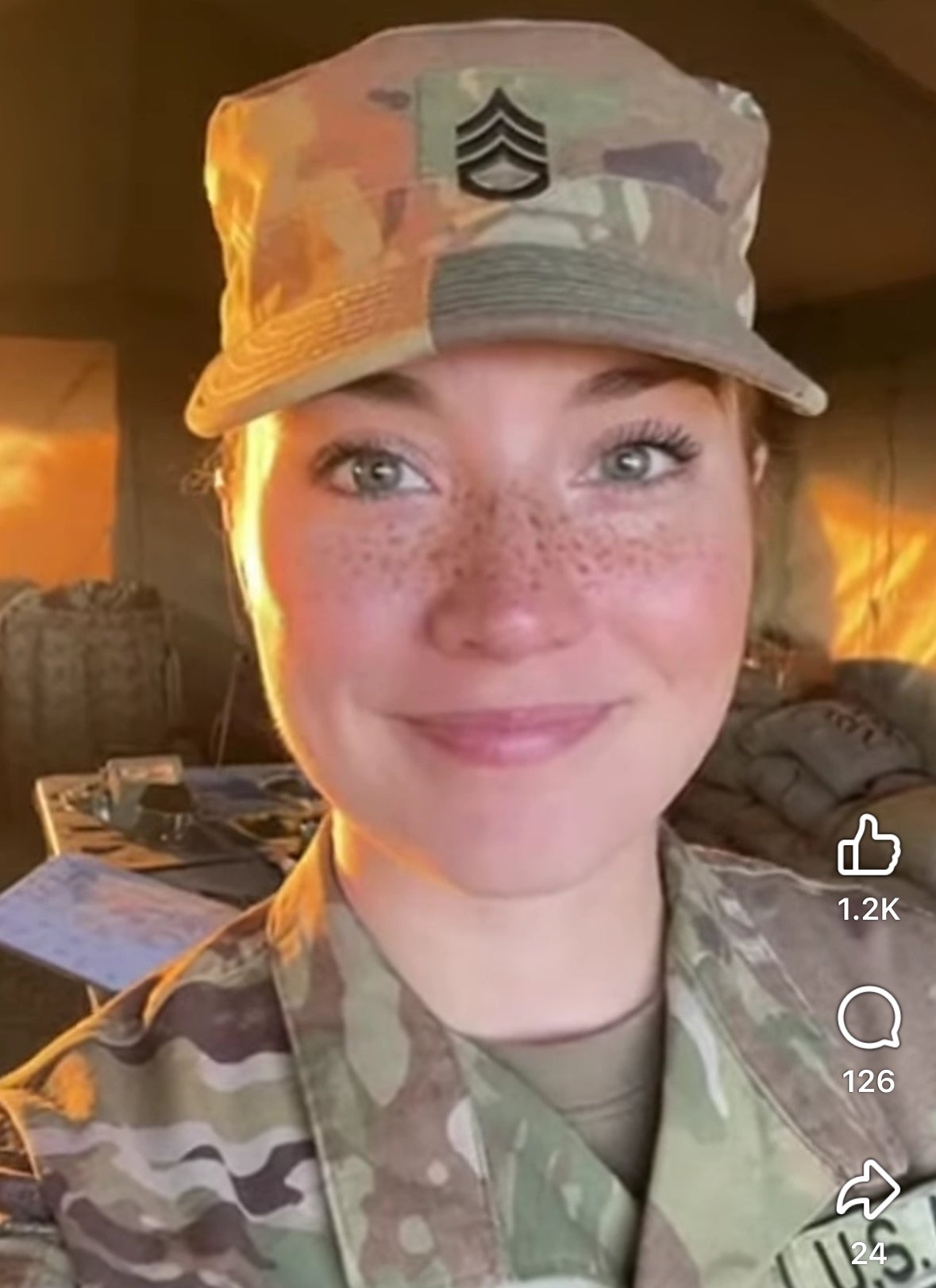
While Jessica Foster-type videos engage certain audiences for obvious reasons, other generative content challenges the Trump administration’s strongman image by evoking empathy and sorrow. One page titled “Britsih [sic] times” features numerous crying soldiers, some garnering millions of views.
A direct message to these social media accounts may yield responses; however, many remain silent or automated. A scroll through one page reveals comments written in Vietnamese among other languages.
Many of these accounts originate on Facebook, likely influenced by Meta’s monetization policies that reward users for follower counts and viewership.
When asked about their motivations, one admin from “Britsih Times” stated they aimed to share meaningful moments to inspire reflection—though this seems devoid of any ideological intent regarding US military actions in Iran.
The admin of another page called “Sky Army” offered a more unsettling perspective: “We provide military updates from around the world… using AI technology for realistic news context.”
Munk references her research showing global meme creation aimed at countering Russian propaganda driven by empathy for Ukraine; however, this situation feels different. “It’s challenging when you can’t ascertain their affiliations,” she remarks.
Could these creators genuinely believe that by automating soldier videos, they are presenting a more engaging reality than traditional news? Might this alternate narrative fill gaps left by heavily censored reports from Iran or Israel? Munk remains skeptical: “It’s entertainment,” she asserts, suggesting that propaganda often takes a backseat.
Yet AI influencers like Kaia and Jessica continue to promote whatever narratives they are programmed with. The sobbing privates are unlikely to cease their emotional displays anytime soon.
The memetic warfare rages on; who will ultimately prevail remains uncertain.