

US Mint Unleashes Controversial $1 Coin Featuring Trump's Face Amidst Legal Gray Area
The U.S. Mint has launched production of a $1 coin emblazoned with President Donald Trump's face, scheduled for release in the fall, according to the Treasury Department.
This commemorative coin, designed to mark America’s 250th birthday, received final approval earlier this year from the U.S. Commission of Fine Arts, appointed by Trump himself. However, the unveiled design diverges from the original concept; it features a gold finish rather than being made of gold.
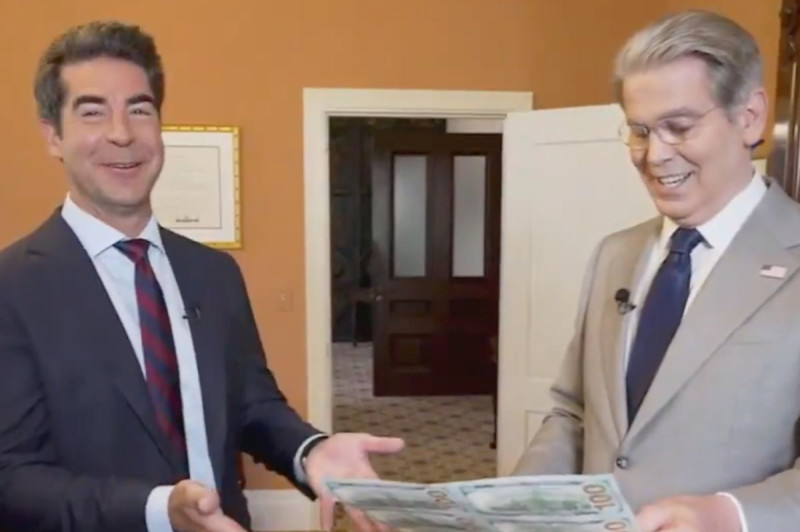
Treasury Secretary Scott Bessent stated that the coin aims “to honor the enduring legacy of liberty and a lasting symbol of patriotism.” He emphasized that it celebrates American values and the commitment to freedom for all.
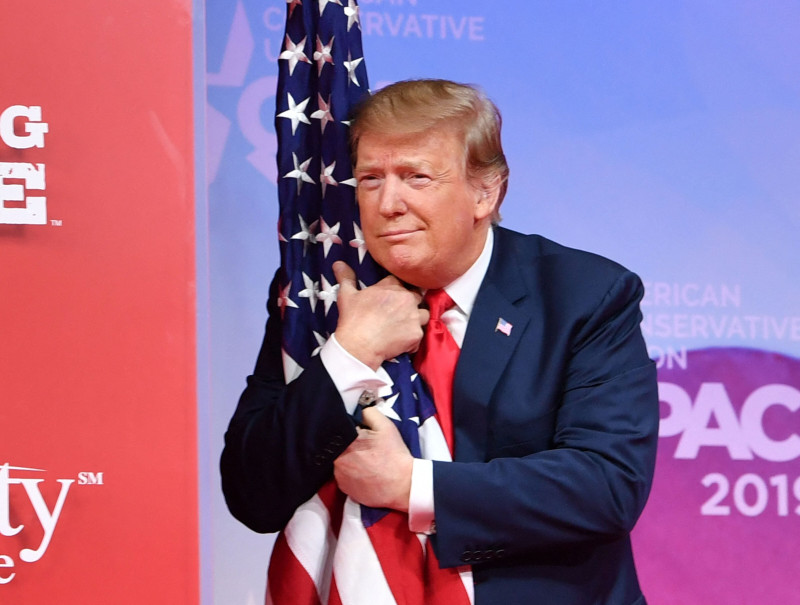
Trump's obsession with embedding his name and image into history is evident. He has previously renamed institutions like the U.S. Institute of Peace and the Kennedy Center, alongside a new class of battleships. The decision to feature his likeness on this coin has sparked backlash, particularly since federal law prohibits depicting a living president on U.S. currency. Nonetheless, the treasury secretary holds the power to authorize minting under certain conditions.
The coin's obverse showcases Trump in a suit and tie, sporting a stern expression. The top arc reads “LIBERTY,” while the bottom arc displays the years 1776-2026. The phrase “IN GOD WE TRUST” is prominently placed in the center.
The reverse side features the iconic bald eagle from the Great Seal of the U.S., with “UNITED STATES OF AMERICA” inscribed above and “E PLURIBUS UNUM,” translating to “Out of many, one,” on the eagle's breast shield.
Notably, the final design differs from the approved version; Trump is not depicted leaning forward with his fists resting on a desk. The Treasury Department did not clarify why these changes were made.
In March, the Treasury announced that Trump's signature would appear on all new U.S. paper currency, a departure from tradition where only the treasury secretary and treasurer's signatures are featured.
Traditionally, U.S. paper currency carries the signatures of the treasury secretary and the treasurer, not the president.