



Court Greenlights Trump’s White House Ballroom Project Amid Legal Dispute
A federal appeals court has granted permission for the construction of President Donald Trump’s White House ballroom to proceed, despite ongoing legal challenges regarding the project’s legitimacy. The ruling, issued on Saturday, allows work to continue until April 17, as the administration contests a lower court's decision that deemed the project beyond the president's authority.
The 2-1 ruling from a three-judge panel in Washington, D.C., comes after a lower court had ordered a halt to construction by April 14. Trump's legal team contends that the ballroom is essential for “the safety and security” of the president and his family, a claim that the appeals court found difficult to assess based on the current record.
U.S. District Judge Richard Leon previously sided with a preservation group opposing the demolition and reconstruction of the East Wing, asserting that congressional approval is necessary for such a significant $400 million project. The administration argues that national security necessitates the ballroom's construction, emphasizing its importance for hosting foreign leaders and large events without resorting to temporary structures.

“No taxpayer dollars are being used for this beautiful, desperately needed ballroom,” the administration stated in court filings, asserting that decisions regarding presidential safety should not involve Congress. The filing further noted that historical precedents exist where past administrations did not require congressional input for similar projects.
The National Trust for Historic Preservation, which is challenging the ballroom's construction, argues that congressional approval is mandatory for federal property projects and dismisses the administration's security claims as exaggerated. They pointed out that the absence of a ballroom has not hindered any president from fulfilling their duties or hosting events at the White House.
National Trust President Carol Quillen expressed satisfaction with the appeals court's swift action, emphasizing the importance of preserving the historic integrity of the White House. “We await further clarification from the district court,” she stated, reinforcing their commitment to stewardship and public consultation in such matters.

Judge Leon's preliminary injunction highlighted that the trust is likely to succeed in its case, noting that no statute grants the president the authority he claims. “He is not, however, the owner!” Leon remarked, underscoring the president's role as a steward for future generations.
Trump has shown considerable enthusiasm for the ballroom project during his second term, frequently discussing its significance and showcasing models to reporters. Initially claiming it would not disrupt existing structures, he later ordered the East Wing's demolition, citing its poor condition.
The Justice Department has outlined various security features and materials already procured for the project, including missile-resistant steel and blast-proof glass. However, the preservation group contends that much of this work pertains to an underground bunker rather than the ballroom itself, arguing that the administration's claims of urgency are unfounded.
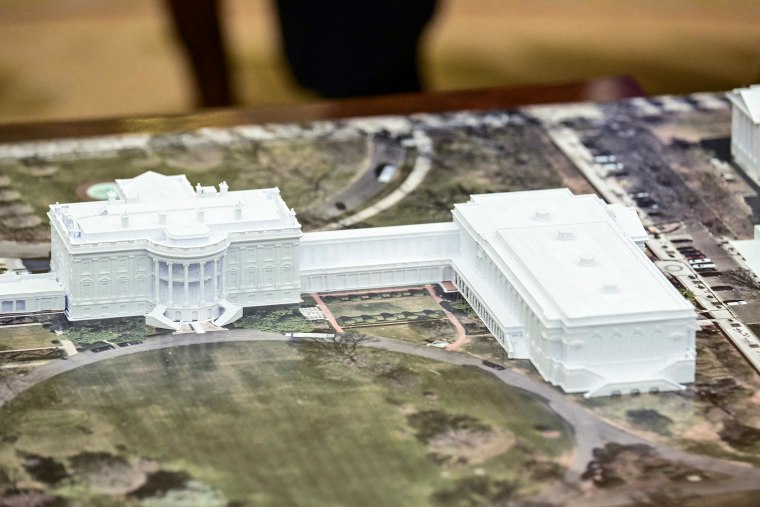
In late March, Trump described an extensive underground complex being constructed by the military, suggesting that the ballroom would serve as a cover for these operations. The ongoing legal battle continues to unfold as both sides prepare for further proceedings in court.