


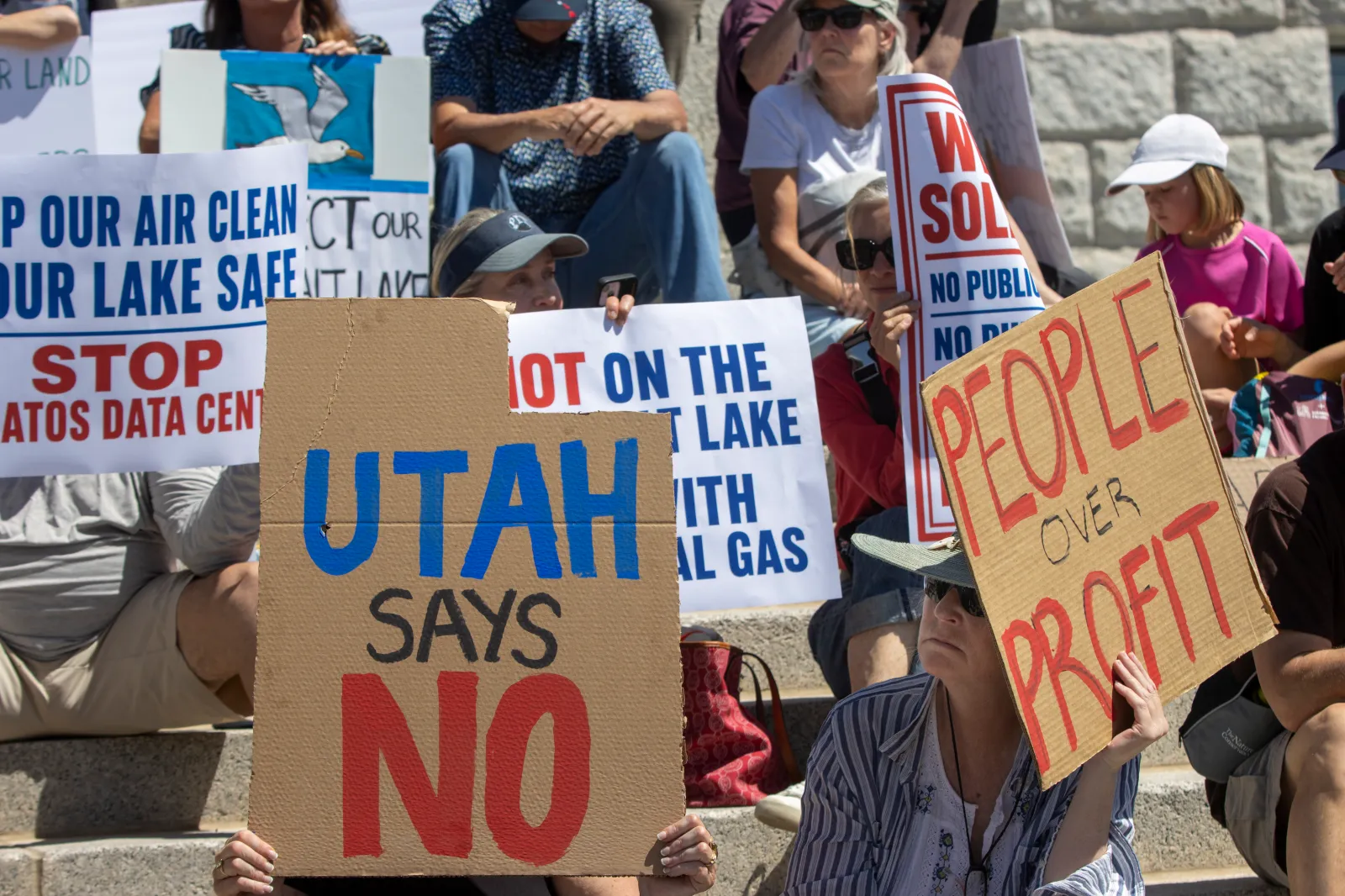
The fallout from a proposed data center campus near the Great Salt Lake has obliterated the political careers of powerful Republicans, with State Senate President J. Stuart Adams and Box Elder County Commissioner Lee Perry both losing their primary elections. Voter fury over artificial intelligence infrastructure is reshaping the political landscape as the midterms approach.
Perry openly admitted, "Do I think that the data center vote cost me the election? Yes I do," after conceding defeat. This stark acknowledgment highlights the dramatic shift in voter sentiment regarding data centers.
The rapid transformation of local planning disputes into a national political liability is evident. The potential for flipping congressional and statehouse seats stretches from Florida to Michigan to Pennsylvania, as candidates face backlash over their support for data centers.
Utah joins a growing list of locations where backing data center projects has led to electoral losses. In Cascade Locks, Oregon, two port commissioners were recalled in 2023 for supporting negotiations on a proposed data center. In Warrenton, Virginia, five town council members who endorsed an Amazon project were ousted over two election cycles. Festus, Missouri, saw half its city council replaced after backing a $6 billion proposal, with one winning candidate labeling the outcome an "uprising."
Gary Marcus, an emeritus professor at New York University, stated that the political reckoning surrounding data centers was inevitable and is just beginning. He emphasized that public awareness is growing regarding how AI primarily benefits a select few rather than society as a whole.
The backlash extends beyond local elections. A Democrat won a Georgia Public Service Commission seat in 2025 by opposing a 10,000-megawatt grid expansion intended to meet data center electricity demands. Virginia's state legislative races that year demonstrated the power of organized opposition, with candidates who opposed data centers winning their contests.
Threats have escalated beyond the ballot box. A township treasurer in Saline, Michigan, resigned after receiving death threats linked to a 1.4-gigawatt data center project associated with OpenAI and Oracle's Stargate initiative. Recall efforts against local officials followed suit. In Wisconsin, four data center proposals were canceled and one paused due to local resistance, with Healthy Climate Wisconsin's executive director noting that data centers are now the top concern among policymakers statewide.
New York's recent Democratic primary sent a different message. Over $26 million from pro-AI and pro-regulation super PACs flooded the race to replace retiring Representative Jerry Nadler. Both leading candidates supported AI regulations and expressed skepticism about unchecked data center growth, proving that money alone cannot sway public opinion.
A Food and Water Watch organizer in Pennsylvania's swing districts reported unprecedented opposition to data centers, particularly in communities targeted for projects. Political ads mentioning data centers this cycle have been overwhelmingly critical, primarily attacking Republicans for their support.
Once hailed by politicians from both parties as engines of tax revenue and job creation, data centers have become a unifying issue in a polarized political climate. Environmentalists, populist Trump supporters, and suburban parents concerned about rising electric bills are all rallying against them.
A May Gallup poll revealed that 71 percent of Americans oppose having a data center built in their community—marking the highest opposition rate recorded for nuclear power plant construction since 2001. A Reuters and Ipsos survey found 57 percent opposition, with only 14 percent of respondents comfortable living near one.
Dan Cassino, a professor of government and politics at Fairleigh Dickinson University, noted that data centers have emerged as a significant issue in primary elections as affordability takes center stage in U.S. politics. Energy prices are now viewed as the "current face of affordability."
Cassino stated, "In our polling, voters support anything to bring down their energy bills, but banning data centers is pretty much the most popular option." This sentiment reflects growing frustration over rising costs.
Natalie Kerby from AI Forensics explained that opposition to data centers stems from their embodiment of broader anxieties about AI. She stated that these facilities encapsulate concerns about environmental impact, energy costs, and economic factors, making them prime targets for existing movements.
A Pew Research Center survey of over 8,500 U.S. adults found that Americans overwhelmingly view data centers negatively regarding their effects on energy bills and environmental strain. More respondents labeled them harmful rather than beneficial for both the environment and household electricity costs.
Democratic candidates are also linking data centers to rising electricity costs. In Michigan’s U.S. Senate race, Abdul El-Sayed unveiled a plan demanding “No rate hikes,” insisting that data centers should bear their own energy costs without passing expenses onto ratepayers.
The industry is receiving stark warnings as well. Billionaire entrepreneur Mark Cuban remarked on social media that the fight against data centers transcends the facilities themselves; it has become "a proxy for the hate towards AI and the concentration and accumulation of wealth it's creating." He urged major AI companies to redirect their efforts toward affected communities instead of attempting to buy political influence.
Of the 69 House districts anticipated to be competitive this election cycle, 40 have data centers either planned or under construction. Republicans currently hold most of those seats and maintain a five-seat House majority heading into November.
Pennsylvania exemplifies this exposure, with four Republican-held seats rated competitive by major forecasters. Democratic Governor Josh Shapiro has concentrated his data center expansion plans—including a $20 billion Amazon investment—in the same eastern districts represented by these incumbents.
In the Lehigh Valley's 7th District, held by freshman Republican Ryan Mackenzie after a narrow victory in 2024, opposition is mounting against a proposed six-building, 5-million-square-foot data center complex across from a high school in South Whitehall Township. Cook Political Report rates this seat as a toss-up.
Chris Borick from the Muhlenberg College Institute of Public Opinion stated that this issue compounds an already challenging environment for Republican incumbents. He noted that challengers hold an advantage as voters increasingly associate these concerns with sitting officials.
Iowa Republican Zach Nunn represents a district with 31 planned and 33 operational data centers. He acknowledged hearing from constituents who oppose higher utility bills and sweetheart deals for out-of-state tech companies. "And they're right to be cautious," Nunn stated in a press release.