



Louisiana GOP Dismantles Majority-Black District, Redraws Map for Republican Gain
Louisiana Republicans obliterated one of the state’s two majority-Black districts, reshaping the congressional map to create an additional Republican-leaning district. This move comes as part of a calculated strategy to solidify GOP power in Congress.
The newly approved map is designed to elect five Republicans and one Democrat, following its passage through the state Senate after modifications in the House. Currently, Republicans hold a 4-2 advantage in Louisiana’s U.S. House delegation.
This redistricting effort responds to the U.S. Supreme Court ruling in Louisiana v. Callais, which deemed the previous congressional map a racial gerrymander and further eroded the Voting Rights Act. The new lines maintain one majority-Black district stretching from New Orleans to Baton Rouge, but voting rights advocates are expected to challenge this arrangement.

“We have a map here that meets all the traditional redistricting criteria; it’s not racially gerrymandered,” asserted Republican state Sen. Jay Morris, the bill's author. He expressed confidence in the map's defensibility.
During extensive debates, Republicans emphasized their focus on partisanship over race, aiming to enhance GOP representation. “We focused on the Democrat numbers, not the racial numbers when drawing,” stated state Rep. Beau Beaullieu, who led the map-drawing efforts in the House. He claimed this approach aligns with the Callais ruling.
Despite claims of neutrality, Democrats raised alarms about the racial implications of a partisan map. “We are being asked to take one of two minority opportunity districts in this state — where Black Louisianians are nearly one-third of the population — and to reduce that minority opportunity representation to a single seat out of six,” protested Democratic state Rep. Kyle Green Jr. during Thursday's debate. He characterized the situation as a moral failure in representation.
In a significant procedural shift, Louisiana postponed its House primaries originally set for May 16, discarding approximately 40,000 votes already cast. This delay was necessary to allow lawmakers time to redraw congressional maps following the Supreme Court's directive.

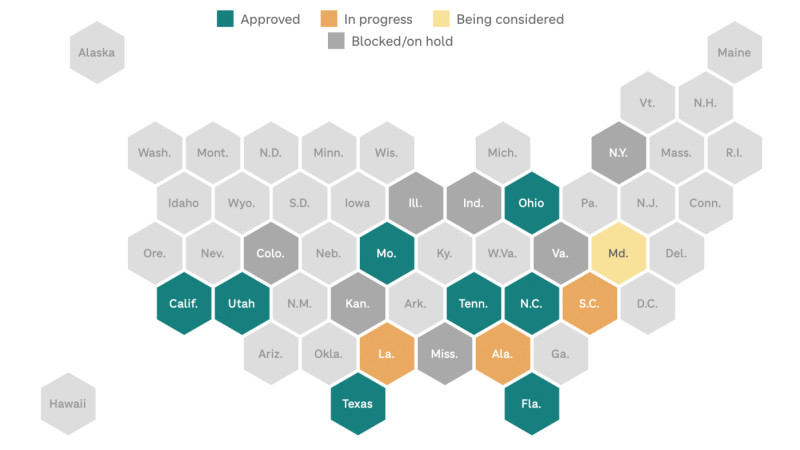
The new map is likely the last one enacted by a state legislature before the 2026 election cycle, as primary season heats up nationwide. In South Carolina, Republican opposition recently halted a redistricting bill, complicating their electoral strategy.
Litigation surrounding these changes is anticipated to persist for years, as political battles over district lines continue.
Last year, President Donald Trump ignited a mid-decade redistricting push, urging Republican-led states to redraw maps to bolster his party's slim House majority.
Democrats countered with their own redistricting efforts in various states, but court rulings—including the Callais decision and a Virginia Supreme Court ruling blocking a Democratic gerrymander—have significantly favored Republicans.