


Louisiana GOP Strips Majority-Black Districts, Redraws Congressional Map for Power Grab
Republicans in the Louisiana legislature have executed a calculated move to dismantle a majority-Black congressional district, aiming to secure an additional seat in the House. This comes after a U.S. Supreme Court ruling deemed the existing map unconstitutional, effectively gutting Section 2 of the Voting Rights Act of 1965.
In a frantic bid to reshape electoral boundaries, Louisiana lawmakers acted swiftly to erase one of two majority-Black districts. This decision followed a court ruling that found the previous map diluted Black voting power, despite Black voters constituting roughly one-third of the state's population.
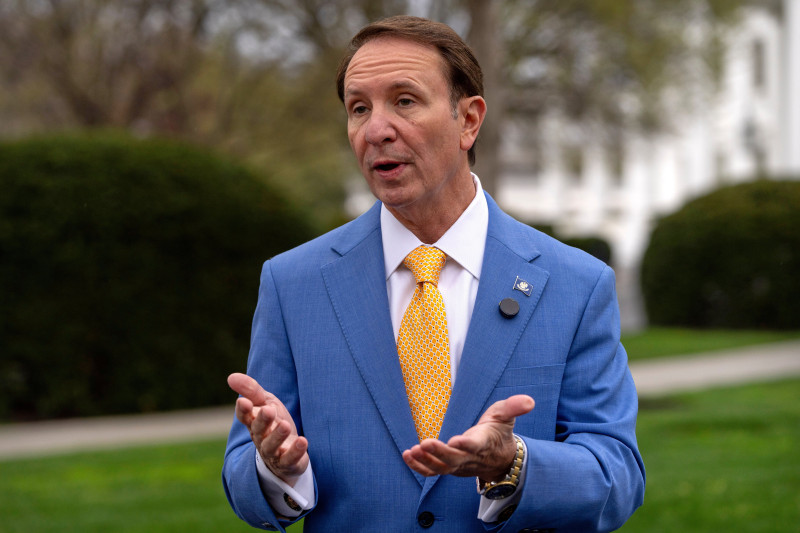
Just days before early voting was set to kick off, with tens of thousands of mail ballots already returned, Republican Governor Jeff Landry pushed for a delay in the House primary elections originally scheduled for May 16. The primaries have now been rescheduled for November 3.
The newly approved map obliterates a district that previously stretched from Baton Rouge to Shreveport, a product of a 2022 lawsuit that argued for the necessity of a second majority-Black district. The court sided with this argument, leading to the creation of the now-defunct map.
The Supreme Court's ruling clarified that Section 2 of the VRA only protects against political boundaries drawn with explicit racial discrimination in mind. "The best way to end race-based discrimination is to stop making decisions based on race," Landry stated in his executive order delaying the primaries.

Some Republicans urged for a map that would ensure GOP dominance across all six congressional districts. Ultimately, legislators chose to eliminate just one majority-Black district held by Democrats, wary that further changes could jeopardize Republican-held districts represented by incumbents like House Speaker Mike Johnson and Majority Leader Steve Scalise.
The revised map retains one majority-Black district primarily encompassing New Orleans and extending into predominantly Black neighborhoods in Baton Rouge. However, Baton Rouge's Black population is now split between two districts, while Shreveport is absorbed into the broader northwest Louisiana area.
The current district based in Baton Rouge is represented by Democratic Rep. Cleo Fields, who reclaimed his seat in 2024 after previously holding a similar position from 1992 until it was dismantled by a federal court in 1996. Democratic Rep. Troy Carter oversees the other majority-Black district centered around New Orleans.
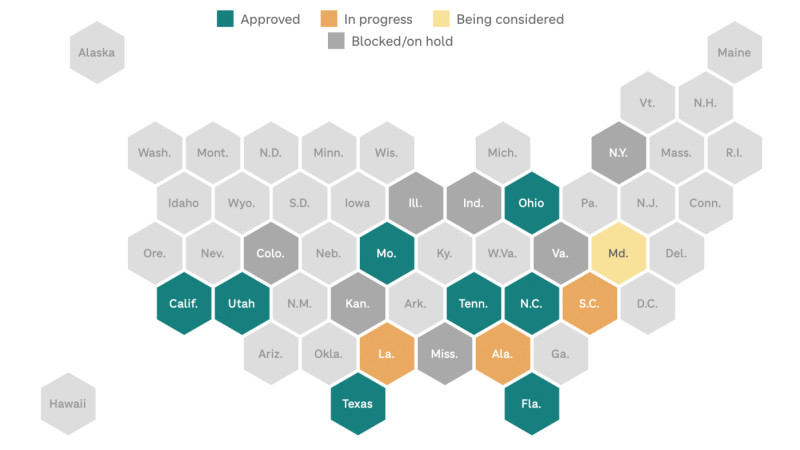
Louisiana joins other Southern states in redrawing maps targeting Black Democrats following the Supreme Court's decision. Tennessee has eliminated its only Democratic-held seat, a majority-Black district in Memphis. Alabama received Supreme Court approval to revert to its 2023 map, which also eliminates a largely Black district but faces new legal challenges. Governors in Georgia and Mississippi are also preparing to propose congressional map redraws post-midterms.
This aggressive redistricting across the South is part of a larger national strategy fueled by President Trump's efforts to solidify Republican control in a narrowly divided House this fall.